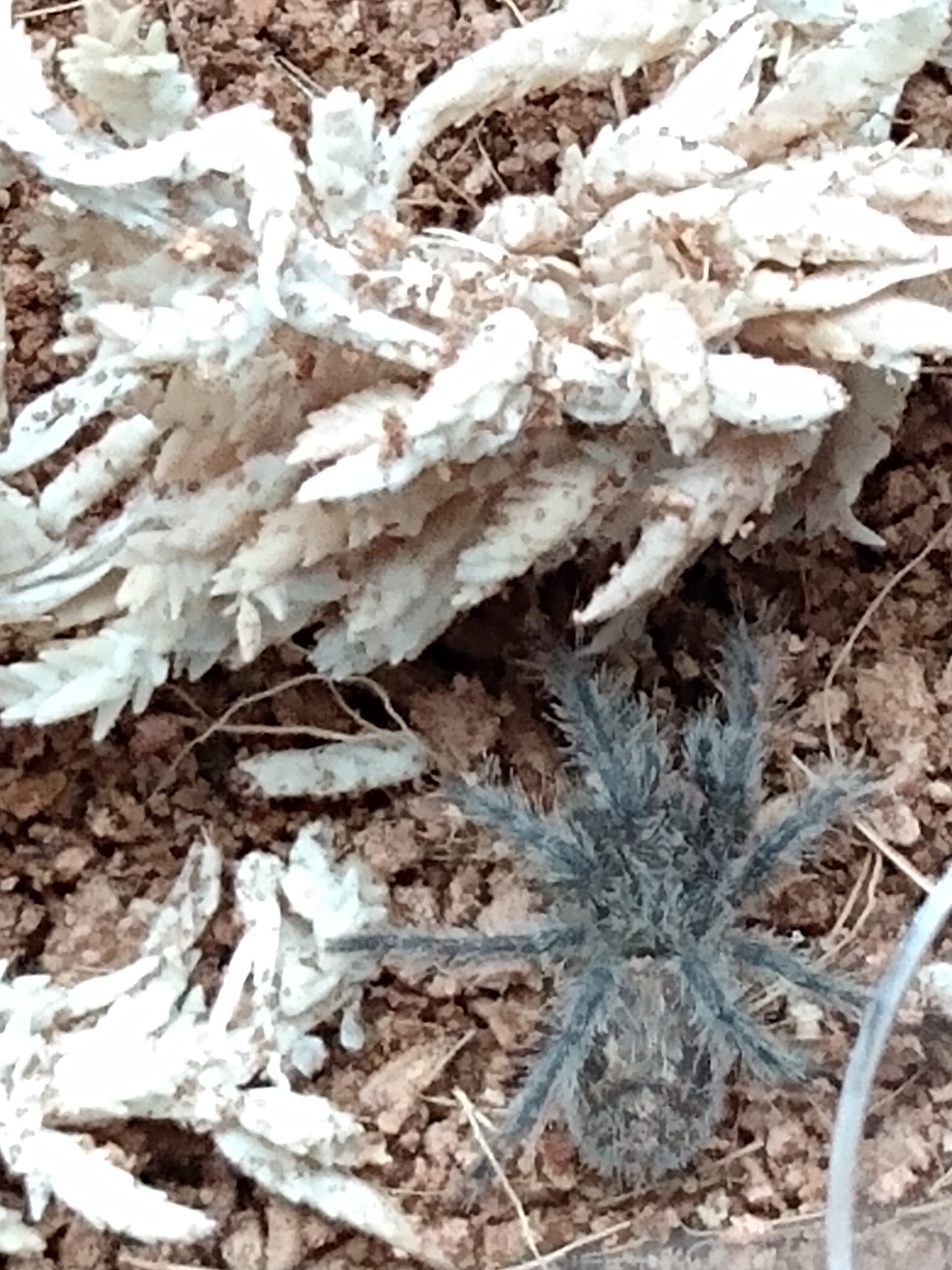
A better pic of our chilean copper.
4 Likes
P scrofa in its new enclosure.
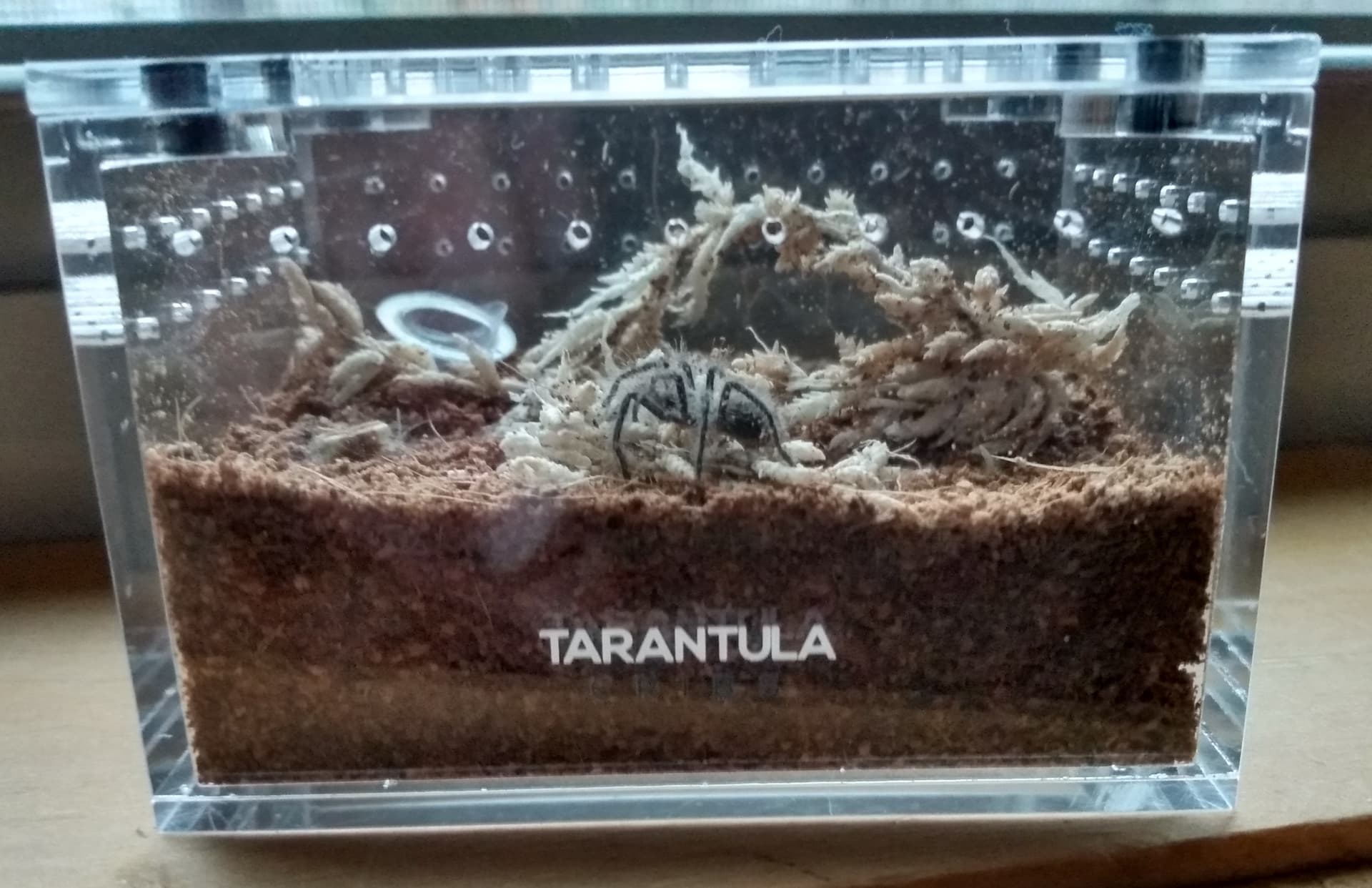
Sits out in the open most of the time, sometimes doesn’t move from exact spot for 1/2 day, slow moving.
4 Likes
It was good actually seeing him or her actually moving, got video of walking to drink water
4 Likes
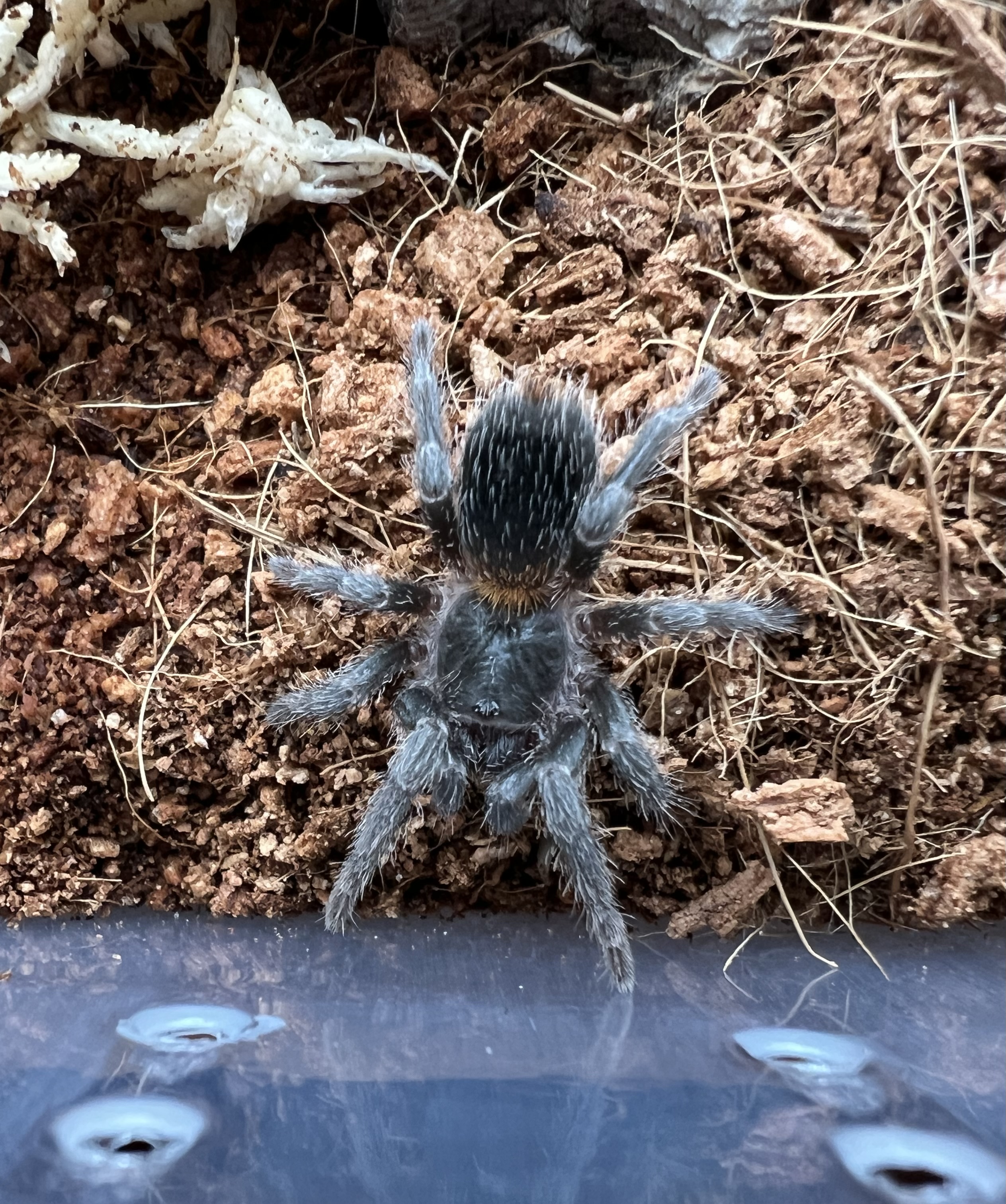
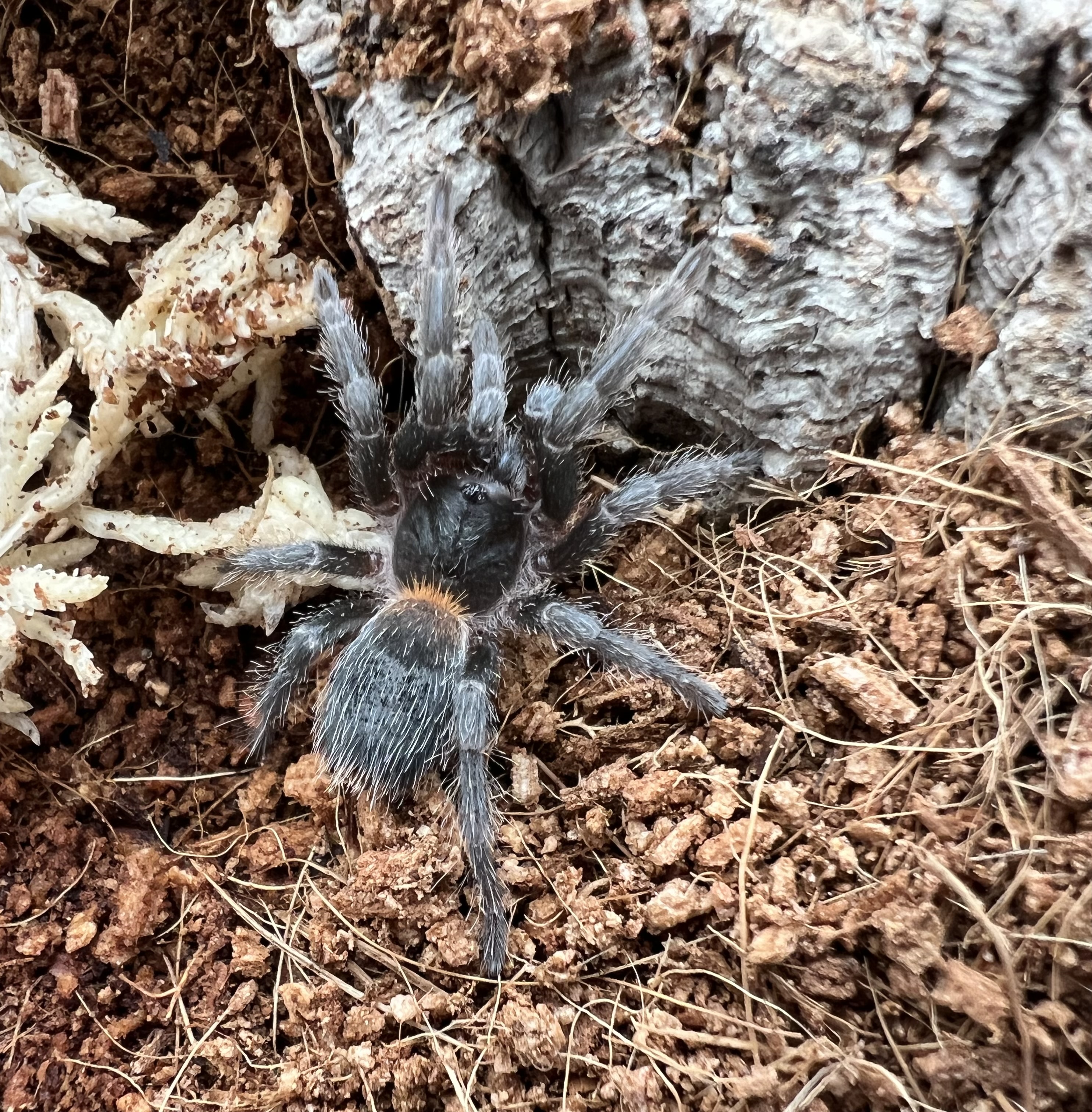
Our h chilense.
We’ve had it a week, got it from the guy at repticon who sold us our chilean copper.
It’s a cool spiderlling, even though I’m new to t’s I can see the reason people say they’re fun to have.
Most of the time it’s active and walking around. The 2 times I’ve had the top of it’s enclosure off it crawled right out and over my hand.
It was fast enough that the second time when I moved it from the cup it was in when I bought it to its temporary enclosure we did it in the bathtub, it still climbed up my sleeve and onto my shoulder before my wife got it and put it in its enclosure. It’s certainly is bold and inquisitive like I’ve read they are.
It has a tarantula crib ordered.
The guy I bought it from, classic jurassic exotics, thought this is a male, because the others there, he had 5 or 6 others, were maybe slightly bigger but didn’t have color like this 1, so he thinks it might be maturing faster because it’s a male.
I know people prefer the females, this 1 already has personality though and I’m good if it’s m or f.
4 Likes
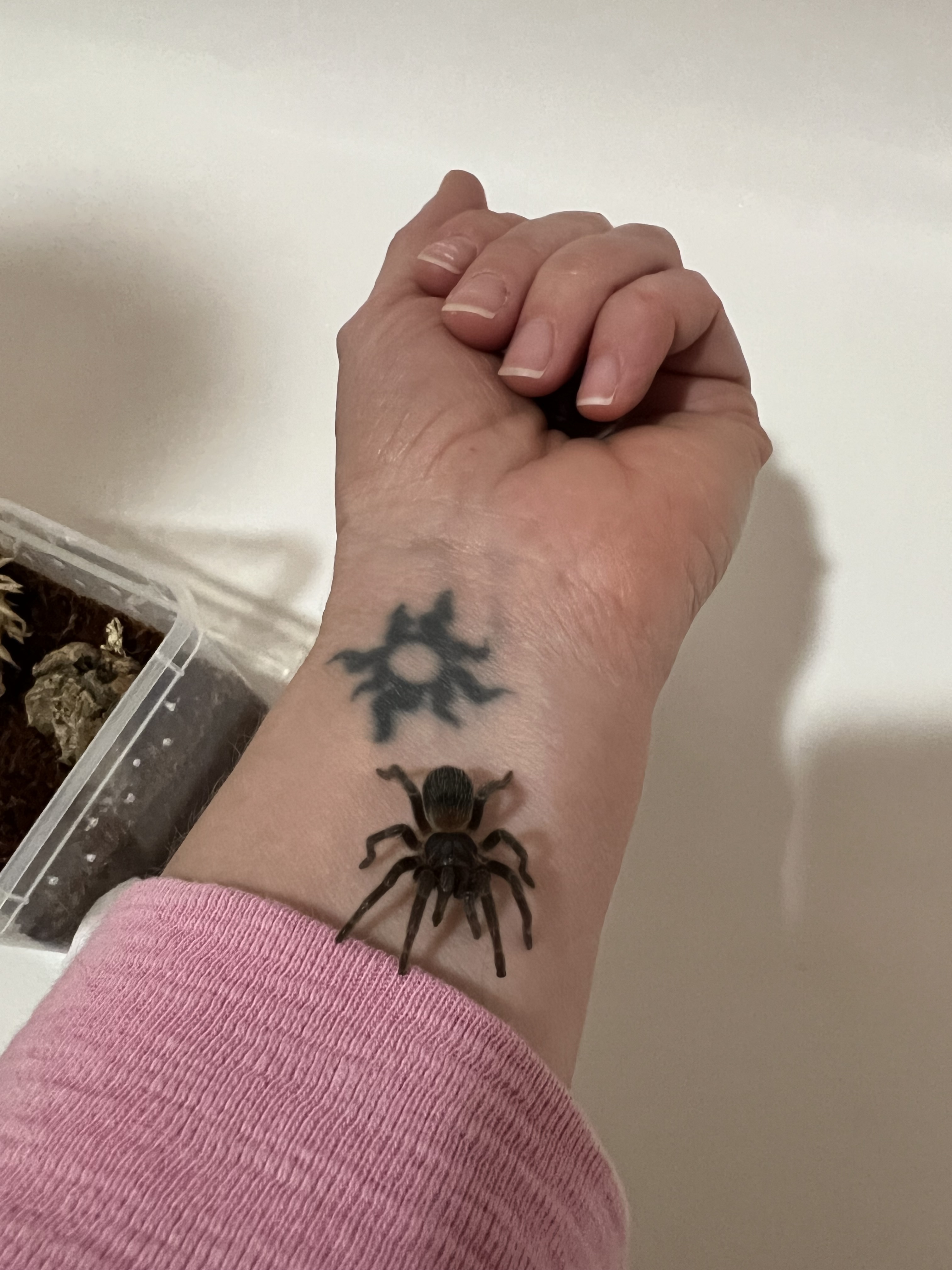
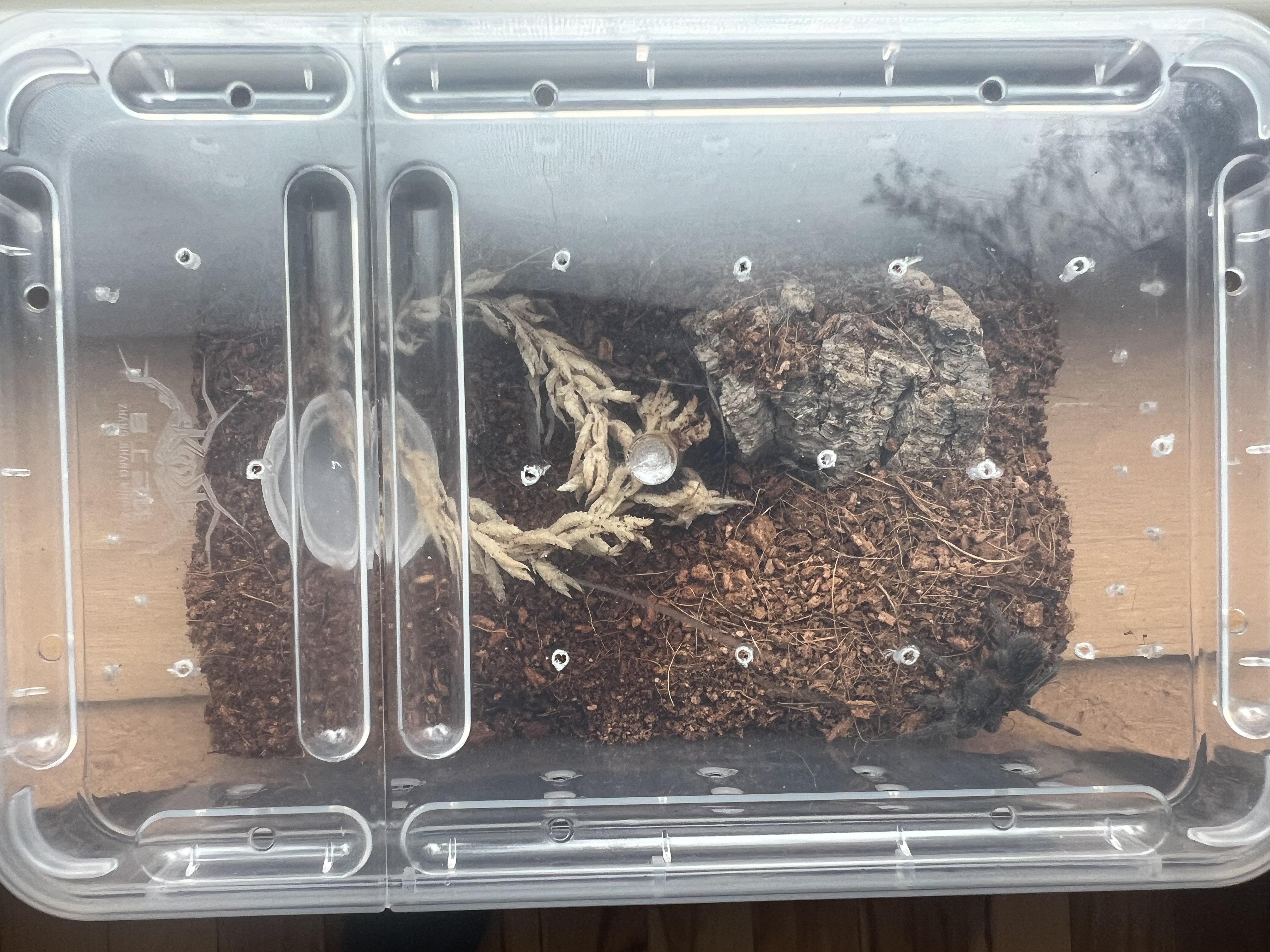
h chilense in its new enclosure.
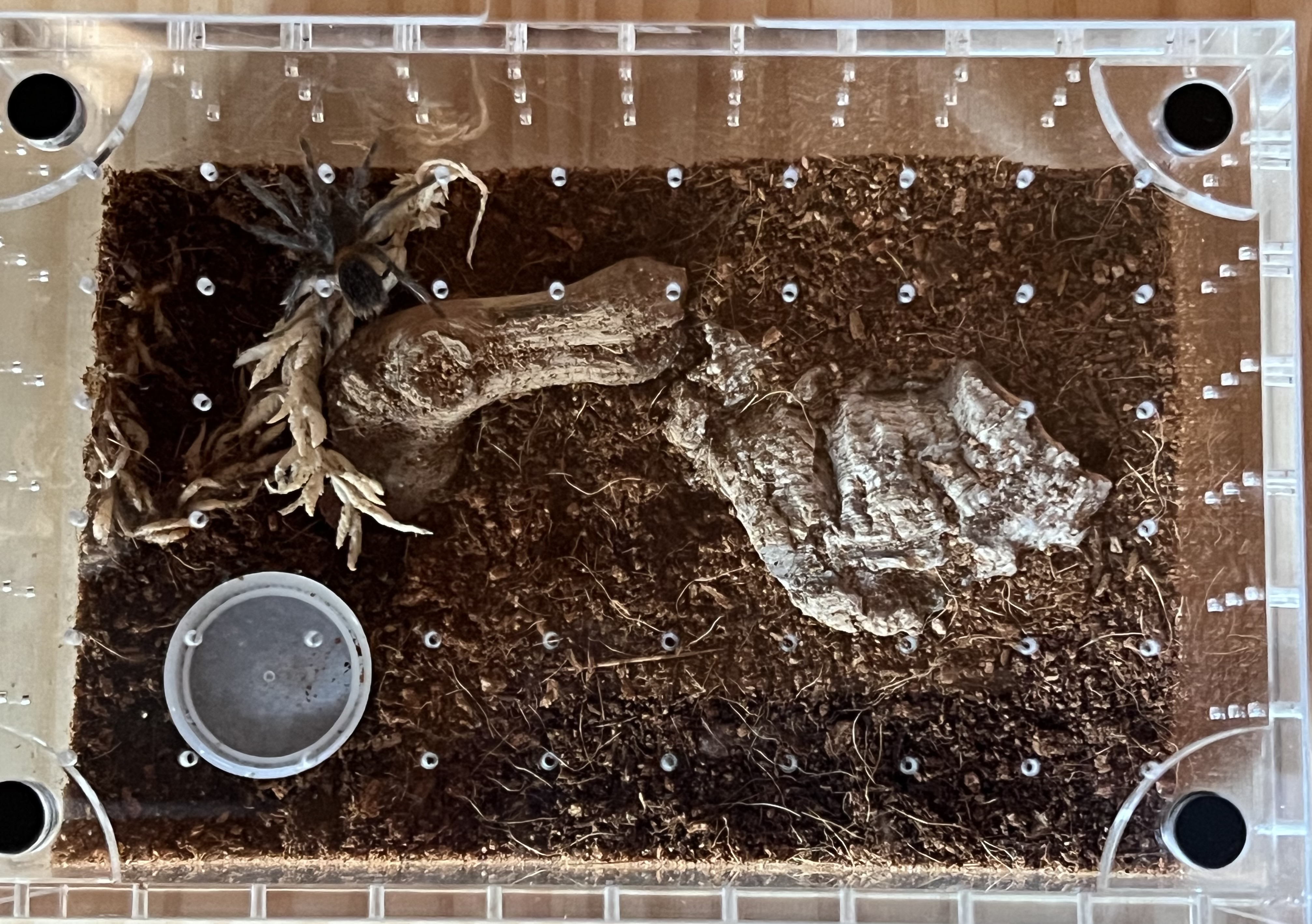
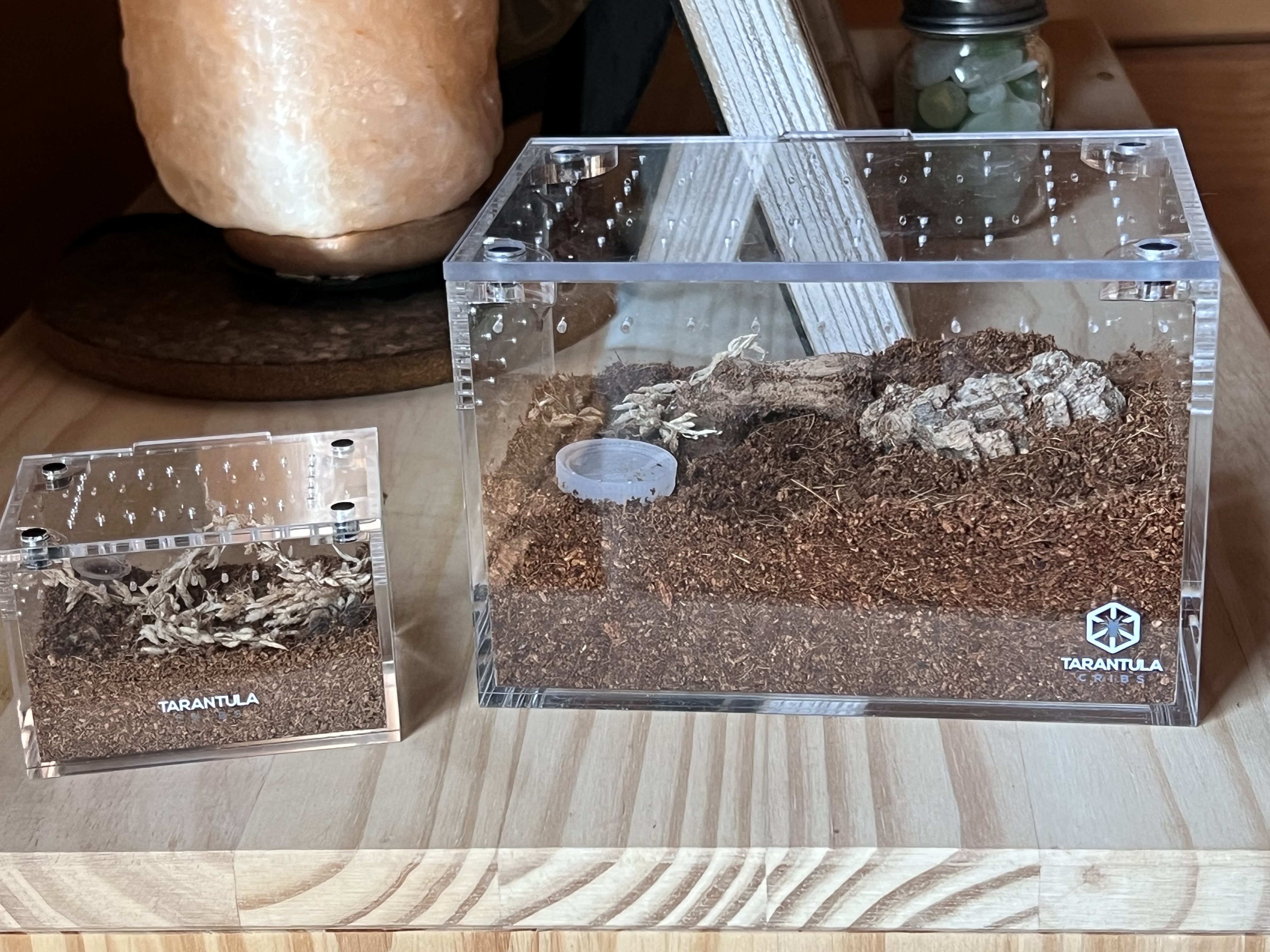
I got an enclosure that’s slightly bigger for its size, 4 by 4 by 6, but it’s so active, always crawling around, walking the perimeter along the ground and on the wall, it can grow into it too.
It seems to like it.
3 Likes
Update on the girl I had. I traded her to a keeper who has tons of tarantulas and was willing to find her a male. I wanted to see her bred since she was getting older. So she’ll keep me updated on that. She had a cresty in her stock that matched perfectly to my projects and I needed to freshen up my line anyway.
It’s funny though a month after and I’m seeing some more people with these. It makes me happy they are an under appreciated species.
4 Likes
How is she doing?
2 Likes
Our p scrofa molted.
It’s looked scraggly in recent weeks, like it was covered in coconut fiber or something.
These are my first t’s so don’t really know much about them being in pre molt or anything, but it didn’t seem to act any differently, still sitting out in the open much of the time and moving slowly around.
Since yesterday evening it’s been sitting on the side of its enclosure, then today I looked closer and I was think why does it look so black?
Then I realized it looked slightly bigger, it was 1/2” before, so it was just enough to tell.
Then I realized it was different and must have molted. Then looking at the moss I saw what looked like its scraggly legs, got tweezers and certain enough it was its exoskeleton.
Anyhow, the first t I’ve had molt, exciting.
Something else that’s exciting is that I can see its 2 patches of hairs, which is signature of a real p scoff.
Any thoughts on the reason it’s almost black though? I know these can vary in colors and shade but blackish?
How do people get such clearer close ups of them when they’re tiny?
Don’t feed after they molt, just water?


4 Likes
No advice, as I’ve never kept spiders but congrats on the molt!
4 Likes
Tarantulas will often go through various colour changes as they molt and mature. Some will even continue to change colour after reaching sexual maturity, but colour changes are especially common in many species as they’re growing to maturity. My P. reduncus used to have a green abdomen and green tint to her body, then she molted, and now she’s orange. She’ll probably be yet another colour after her next molt.
After a molt, a spider’s new exoskeleton will be soft and delicate. This includes their fangs, so they’re physically incapable of taking down prey until the new exoskeleton hardens. Definitely don’t try to feed them during this time, as prey insects can actually injure or even kill a freshly molted tarantula. Something like a cricket can chew right into their new, soft exoskeleton. How long it takes for them to harden up depends on their size. For tiny slings, it probably only takes a few days, though I usually give them a week just to be safe. For juveniles, I’ll give them more like 10-14 days, and for older juveniles and adults, I’ll often give them close to a month. Do ensure they have water, because they lose a lot of moisture when they molt, but give it some time before you offer food. And if you offer food and the T doesn’t pounce on it pretty quickly, remove the prey item and try again in a few days.
Edited to add that with most of my Ts, they tend to hide themselves away while their new exoskeleton is hardening. They’ll kick out the molt, so I know they molted, but then I often won’t really see them out and about for a while after that. When they reappear, I usually take that as my cue that they’re ready to eat. Not all tarantulas will behave this way, but many do. As you observe your spiders more, you’ll start to learn their little habits and behaviours that can often clue you in to things like when they’re ready to eat after a molt.
3 Likes
I appreciate the response, that’s really cool to know about t’s having different coloring through different phases, that make’s sense about our p scrofa being so dark when it was tan before. It makes sense too because I’ve seen different colors of mature Chilean coppers in pics, seems it’s a unique t with unique coloring.
1 thing it hasn’t done is hide since it molted, it spent days on the side of the enclosure and if not there just sits. I’ve never seen this t burrow or even dig, it seems to live 100% on the top of the substrate. It was more in the moss though before it molted.
1 of the characteristics of a Chilean copper I’ve read about and like is that it says they spend most of their time sitting out in the open, and that they’re really slow moving. Our’s hardly ever moves even when I open the enclosure to fill the ink containers with water.
As for feeding I’m certainly not going to feed it for an another week or 2. It might not even eat then as I’ve read these rarely eat.
To this point the 4 T’s we have, the 3 slings and the 1 1/4th” Chilean red flame have only been fed pre deceased mealworms or dubia roaches, they haven’t hesitated to scavenge. The only 1 that eats consistently is the bigger red flame.
You’re right about learning their habits the longer we have them.
Anyhow I appreciate it and best to you and your t’s and your loved ones.
3 Likes
That’s so cool! My T’s will drink water from the sides or top when I spritz their enclosures. Esp. my Trinidad Chevron and my GBB. But the others do it toi
2 Likes
I recently bought a Chilean rose hair. My phone doesn’t take very good pictures unfortunately and the little one is very tiny.
2 Likes
I’ve read the Chilean copper described as a miniature Chilean rose hair.
Where did you get yours?
3 Likes
Right, my iphone has a good camera but it still doesn’t get good detailed pics of them close up.
2 Likes
I answered you privately because I don’t want to get flagged again by posting a seller on MM. 
3 Likes
On the note of drinking. Even with misting when you need to for humidity I always had a tiny clean bowl of water in my setup. I saw her drink from it plenty of times through the years so I know it was used well. I used tiny glass candle holders for the little bowls. I use them in my cresty tubs too.
3 Likes
Yeah, I always keep a little dish of fresh water in my spider enclosures. Yes, they sometimes flip it over and/or fill it up with dirt, and yes, that’s annoying, but I just feel like all animals need free access to water. And I do see them drink from the dishes pretty regularly, which reinforces my decision to use them. For my smaller enclosures, I just use little bottle caps. For larger enclosures, I usually try to get some cute little naturalistic dishes that look like rocks or logs. I have some I got from Tarantula Cribs, and some others I got off Etsy.
My only spider who doesn’t have a water dish is my black widow, because they really only drink from droplets and not standing water, so she just gets a weekly mist. But if it’s a species that will drink standing water, they get a water dish.
4 Likes
That’s the thing I do more than anything else is fill their water cups with a dropper. The 4 we have bring chilean t’s from dry environments I never mist, sometimes I put the excess water from the dropper on the substrate or leaves but that’s it and they seem to do well with that.
2 Likes