2027 Western Hognose Breeding plans: Seeking tips to ensure a smooth process

I’ve had my breeding plans set out for the next few years as I always have, but next year is going to be different as this will be my first venture diving into Hognose snake breeding- Western/Plains Hognose snakes specifically.

I’ll preface this with the fact that I have about 7 years experience in breeding other Colubrids, Hoggies are just new for me so I want to make sure I’m doing right by them :slight_smile:

Here are my plans as follows:

1- Bulking up my breeders.
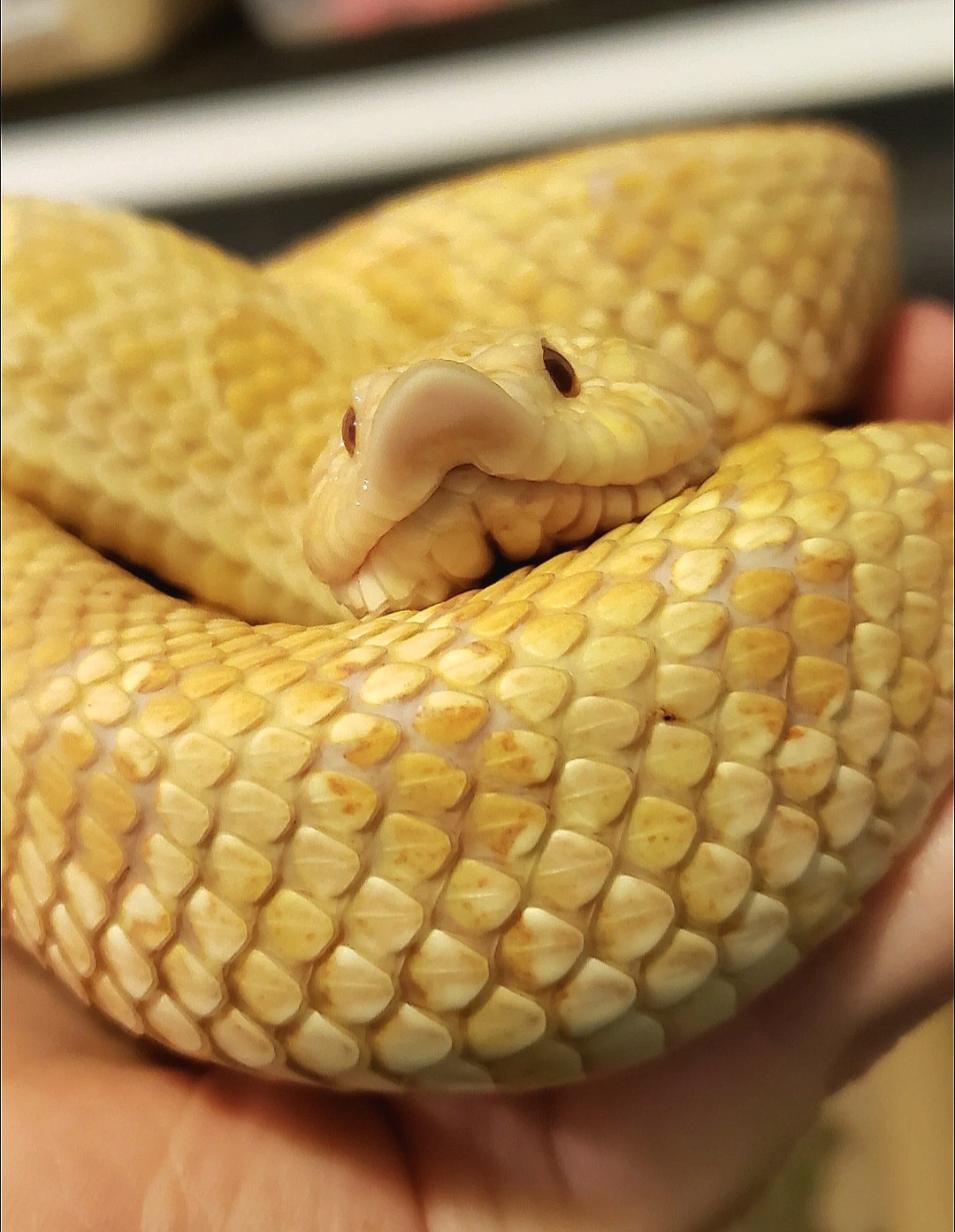
I have my Female (Peaches) who is an Albino het Axanthic (produced from a Het Snow to a Het Snow). She’s almost 6 years old and I’ve had her since she was a hatchling. She’s over 300g (I don’t have an exact weight so I’ll have to check again Monday- but I know she’s past a healthy breeding weight).
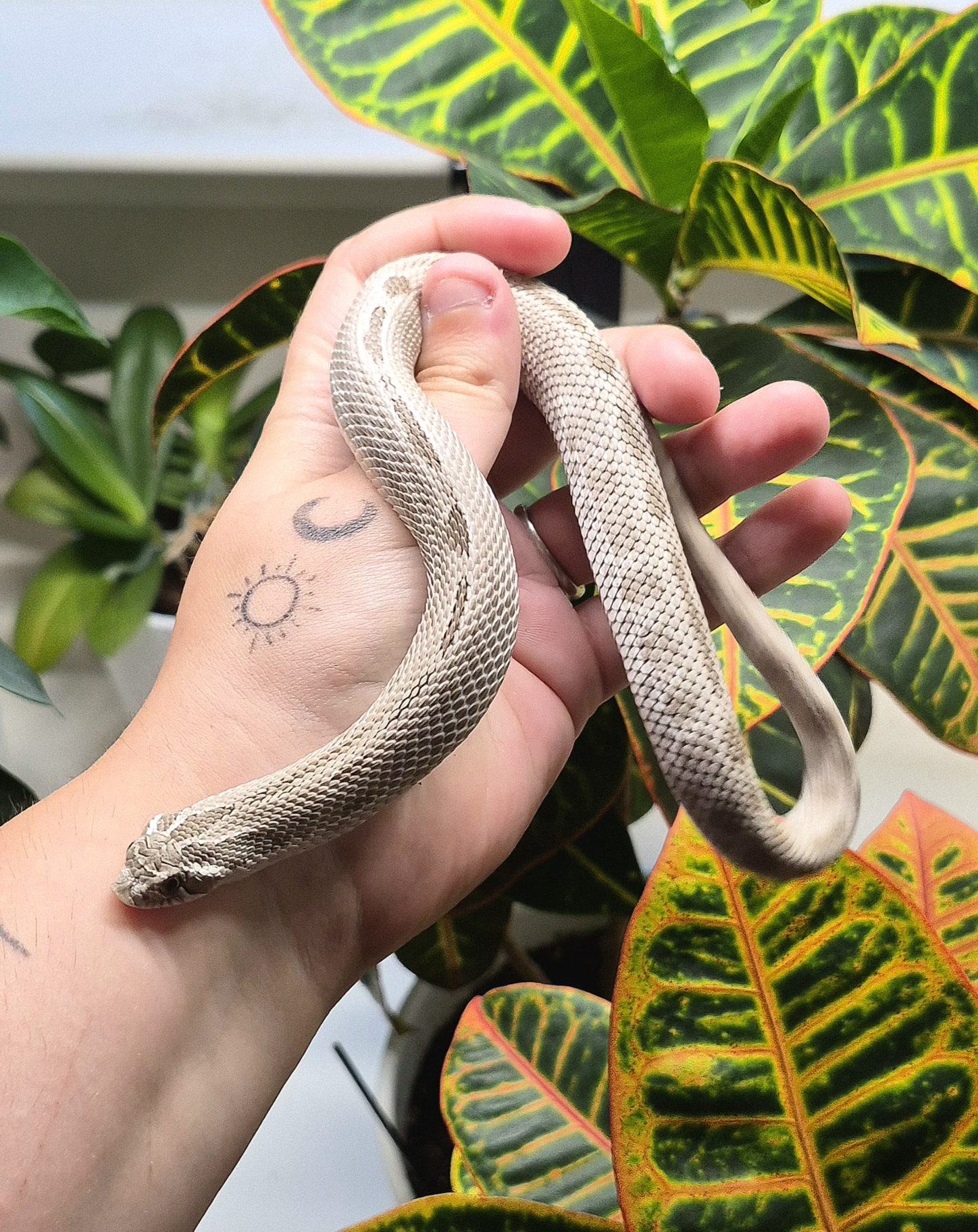
And I have my Male (Thélyss) who is an Axanthic Conda het Albino (produced from a Het Snow to a Conda Het Snow), who is a year and ~4 months at 51 grams. I’m hoping by October he will be around 80+ grams to ensure healthy breeding.

I’ll be feeding Thélyss as normal, 1 hopper per week, throughout the rest of this year once he passes 70g and until brumation is near (he is currently eating fuzzies) and I’ll be feeding Peaches smaller meals 2x a week for 3 months before brumation to ensure she bulks up plenty before brumation feeding cutoff. I’m wondering if I should begin feeding her more frequently sooner or if 3 months is too long to feed her like that, my worry is balancing between keeping her fed enough to produce healthy clutches and not overfeeding her. She is currently eating a medium mouse 1x a week.

2- Brumation.

If Thélyss does reach breeding weight by the time they are ready to brumate I will brumate them, if not I will give an additional season for him to grow more. I’ve learned that 45-48°F is the ideal brumation temp for Hoggies, but please correct me if this is false.

I’ll be beginning brumation mid-late October of this year, cutting off feeding either late Sept or early Oct (aiming for 2-3 weeks fast to clear digestion) and doing brumation with a wine cooler. My goal is to brumate at least 2½-3 months, I’d like to know what an ideal time range is if it doesn’t match my goal.

3- Post brumation prep.

Once Peaches and Thélyss finish brumation I’ll slowly warm them back up to temp. I want to give them at least until their next shed cycle after brumation to attempt any pairs. Until then I will continue with my planned feeding regimen listed previously to ensure that Peaches is both well fed to produce a clutch and not hungry enough to see Thélyss as food.

4- Pairing.

Once prep is complete and both Peaches and Thélyss have their post brumation shed and a few good meals, I will want to begin pairing. My idea is to pair 1x a week one day after feeding them, and monitoring the pairing closely. I want to know if pairing 1x a week is too frequent or not enough.

5- Egglaying.

If everything goes well and Peaches does not experience any issues related to breeding I’ll be giving her 2 layboxes with mildly damp sphagnum moss so she can lay. On average when Peaches lays her yearly slugs she lays at minimum 8 eggs to a maximum of 13 eggs, so I’m expecting her fertile clutches to be in a similar size range.

6- Incubation.

Here is the part I’m much less familiar with for Hoggies. My concern is keeping humidity at a good range- as I’ve seen that Hoggie eggs tend to do better on the dryer side, or they would otherwise overhydrate and thin their shells too much or cause other issues. My question for this is would it be unwise to treat Hoggie eggs like BP eggs and keep them seperate from the incubation substrate (I use perlite) using a light diffuser crate? Or is there something else I can do? And what temperature is ideal for incubation?

7- Raising the hatchlings

I already feel comfortable enough raising hatchling Hoggies at this point so I don’t have much concern here. I have a source of food scents if they’re absolutely necessary along with other tricks up my sleeve to get tiny picky eaters to eat (hopefully it won’t be that bad lol).

.

I believe I’ve covered all my bases and concerns, my goal is to be prepared for next season and ensure both my breeder Hoggies and their offspring will be in good health. Any and all advice or corrections to my plans above is always welcome :slight_smile:

7 Likes

Here’s a job for @ghsaltie ! Your hoggies are lovely! That first picture is precious! Looks like a Peachy pucker upper! :face_blowing_a_kiss:

6 Likes

I haven’t worked with hoggies but two of the things I know is:

Watch for the head bobbing. It’s a good sign when the female bobs back, less likely to cannibalize.

Don’t leave them alone for long periods because cannibalism. Shorter sessions are safer

They’re super cute and you have this planned out so well. I’m sure you’ll do fine.

5 Likes

I Don’t work with hognose snakes currently but from watching lots of hognose breeders one fact is that if the female twitches its a good sign that she understands the male is there to breed and I agree with above! ^

4 Likes

Thelyss beautiful guy! He looks so great! His brothers Fengari and Soleil will also have their first season in 2027 :crossed_fingers: good luck to the little guys!

My recommendation would be to keep your current feeding schedule of 1 med mouse weekly up to brumation. Despite their high metabolism western hogs are very prone to obesity. For a breeding female you want to focus more on “fit” rather than more weight. In your picture of her I can see a couple areas where there is light scale separation so I wouldn’t want her to gain anymore than where she is currently. Extra weight can create complications such as egg binding. It can also increase the risk of hepatic lipidosis during brumation. So I would recommend staying the course and then once she comes out of brumation switch to smaller meals every five days and continue that schedule all the way through egg laying. This is what I do for my girls and it works well for keeping them healthy and bulking them back up once finished with brumation. Sometimes I will switch back to their regular food size every five days if I am finding that the energy from building eggs is taking too many nutrients.

This is a good range to aim for. I personally go for 48 as it gives me a bit of buffer from the lowest temp.

This is a good time range. When you start doesn’t matter quite as much as making sure they have enough fasting/adjusting time and length in brumation. For my own collection I have found my males tend to go off food anyway in Oct/Nov so I typically start the fast then, with about 10-14 days getting down to temp (by this I mean I start with cutting the heat and then gradually lower the temp in the cooler over several days until it’s at 48) and then 10 weeks in the cooler at temp.

As soon as the female is feeding again, I like to aim for two feeds, you will want to start pairing. For hogs typically their first shed after brumation is ovulatory. So if you wait until they shed you will have missed her window for successful pairing. I offer food to the male of course but sometimes I do not even wait for him to start eating again, unless he’s underweight, because a lot of them go straight into breeding mode and they don’t even care about food, only the ladies.

I will preface this with cannibalism is not super uncommon with hognose, so go into it with the knowledge that is always a risk, but if you want your best chances at a successful pairing you will need to leave them in at least a few days at a time. Depending on the individual female there can be a fair bit of a chasing stage where she avoids the male until he proves he is a worthy mate, and that can take hours or even days before she allows him to breed. My schedule, to best reduce chances of cannibalism, is I feed in the AM and I put them together late evening the next day. That gives the female a good 36 hours to digest and hopefully she is still full enough that she doesn’t see the male as food. I then leave them together for 3-4 nights and separating the last day to feed. If the male eats that’s great but otherwise I don’t worry about it too much and sometimes it can be a good thing because a fat and full male can be complacent about trying to breed. In a perfect world I stop pairing after 2-3 locks but you may not even see the locks. So in that case I have continued pairing for 3-4 months until the female is obviously gravid, the season is over or she has gotten fed up with the male.

This part is largely variable and ultimately comes down to keeper preference. I know breeders who bury their eggs, set them on top and others who use a crate to separate them. All methods work as long as the base parameters are met. I do not know anything about BP eggs so I cannot say whether they are similar or not. I can only tell you based on what I personally use and have experienced. I keep my eggs on top and slightly buried in the vermiculite. (I use my knuckle to push an egg shaped divot in the substrate and place the egg in that). In my experience the eggs like higher humidity AS LONG AS that humidity is not ON the eggs. I prepare my boxes a week or two ahead of time so I can get everything in line before eggs hit the ground. For the humidity the best I can describe it is I add enough water that when I squeeze the vermiculite in my hand it will clump into a ball without excess water running out. I’ve had times where it has been too dry, or wet, after the eggs go in. I use a syringe to gently add water without getting it on the eggs, or leave the lid off for a couple hours-day if it’s too damp. You cannot add moss on top of the eggs as that will be too much contact with moisture. If you want to go the route of separating the eggs from the substrate I would recommend getting the egg trays vs light diffuser. I used light diffuser my first year and I had a lot of issues with the eggs getting dented and cut into.

ETA: Oh I also forgot to add, double clutches are very common so keep another egg box prepared just in case. I always feed and supplement heavy after laying in the event she has another clutch she will need those nutrients.

I hope this was not too much of an info dump :sweat_smile: I absolutely adore these cheeky buggers and though I am no expert I want to help where I can!

4 Likes

Ohhh ok! I learned something, I was thinking about how my Kingsnakes used to be after getting out of brumation either already being in blue or going into blue about a week after warming back up. I was too quick to assume Hoggies were similar, but I’ll definitely take note of that.

That photo is actually over a year old, I used that one because I didn’t have any recent good clear photos of her (and its also my favorite of her lol). She has slimmed down a bit since then and the scale spread is nowhere near as bad, she has a similar slightly thicker build than Thélyss, just scaled up :slight_smile:

I fully acknowledge that risk. When I did my Kings I was terrified of that happening but the males and female were pretty much equal in size- it makes me super worried about Thélyss because he’s 3 quarters her size :smiling_face_with_tear:

I’ll be closely monitoring their pairings though, I might need to move my female into a smaller bin while pairing them because I keep her in a 40gal atm and I’m not sure if Thélyss would find her that well in that large of an enclosure. I’ll definitely be keeping an eye out for their twitching, if that is a sure sign that they’ll be ok at least for a little bit.

2 Likes

I have bred a few hognose snakes already and can assure you that the boy will find that girl in a 40 gallon enclosure. I would not move her for breeding. I like to put them together right after the male sheds. If the female sheds I leave the shed in there for the scent. Making him hunt for her will just get him more excited and give her more warning that there is another snake nearby. I have never had an incident of them biting each other, but I monitor them until they BOTH show interest. It may take a minute or an hour. Patience is key.

1 Like