For info my snake Olive, who’s a 2026 baby has shown no interest in food since she got here about two weeks ago.
I’ve tried feeding twice and she hasn’t shown any interest in any pinky I offered, washed or not, no interest when fed in a deli, or drop fed in the dark in her main enclosure. The odd part is that she ate twice back at the breeder.
I DO NOT want to try feeding live, unless she’s not going to take a brained pinky. I currently have a blanket over her enclosure to keep it dark and quiet in there.
I’ll probably be taking her to the local reptile vet to get her checked out and test for nido, crypto, or bacterial infections.
She’s produced two healthy bowel movements, yet she still has no interest in the mice. At least the chickens have gotten some tasty treats in the rejected pinks.
She came at 9 grams, so I’ll be weighing her to see if she’s lost any weight.
(EDIT) Checked her weight and she dropped to 7 grams.
I have stuck with ball pythons for a while now so I may be a bit off the mark, but…
Only twice with the breeder? The problem sounds like she was never an established eater to start with. Personally, I refuse to sell any snake without having them take 5 consecutive meals with me. I plan to follow through with this on colubrids as well.
This is a bit of a tough one honestly. Because non-feeding corns would be better if they were already established and have some calorie reserves… But a new baby with 2 meals is not much to work with.
I honestly don’t think there’s a reason to treat it as a viral issue. Bacterial or fungal could be possible… But again with the age of the snake less likely. Unless you have reason to believe this snake could have been exposed?
How long did you wait before the first offering? Usually the suggestion is a full week before anything.
Had she only had two meals with the breeder since hatching? If so, there’s no way, at least in my opinion, that snake should have been sold to you. I don’t consider anything established at two meals. I’d also do your best to replicate the conditions the breeder was feeding under and not try too many “tricks” in an attempt to get her eating just yet.
There is zero reason to even be considering feeding live at this stage. Most of us don’t ever resort to live, there are plenty of things to try before that point.
I am normally one of the first people to suggest a vet visit, but at this stage all you’re going to do is stress her out worse and make things that much harder. Additionally, if the vet were to prescribe antibiotics, they can impact the gut biome.
First, take a step back and relax. Even hatchlings can go quite some time without food. Monitor body condition, not just weight. Reduce the amount of variables in your feeding. Choose one method and stick with it for a bit.
I went and looked at your other thread and honestly, that enclosure is likely part of the problem. There’s no real hides for her to feel secure, just a very open half log and a tube. All sides are clear and there’s no substrate or ground cover for her to hide in. Babies need to feel secure to want to eat.
I agree with @armiyana / Christina about not treating it as a viral issue or any other medical issue. The corn wasn’t so well established as a feeder, which sucks for you. Not to scare you, but I have one ‘26 hatchling that I’m still force feeding and another that only recently started eating voluntarily
Feeding attempts should be done just after sunset. Some babies don’t like wet-thawed mice. Some don’t like the smell of mice and want the smell washed off with Dawn dish detergent. Some like the taste of Dawn dish detergent. Some really don’t want mice at all, but instead want the tiny lizards they’d usually start on in the wild; so lizard scenting may get them to take a pink. There are so many combinations and variables.
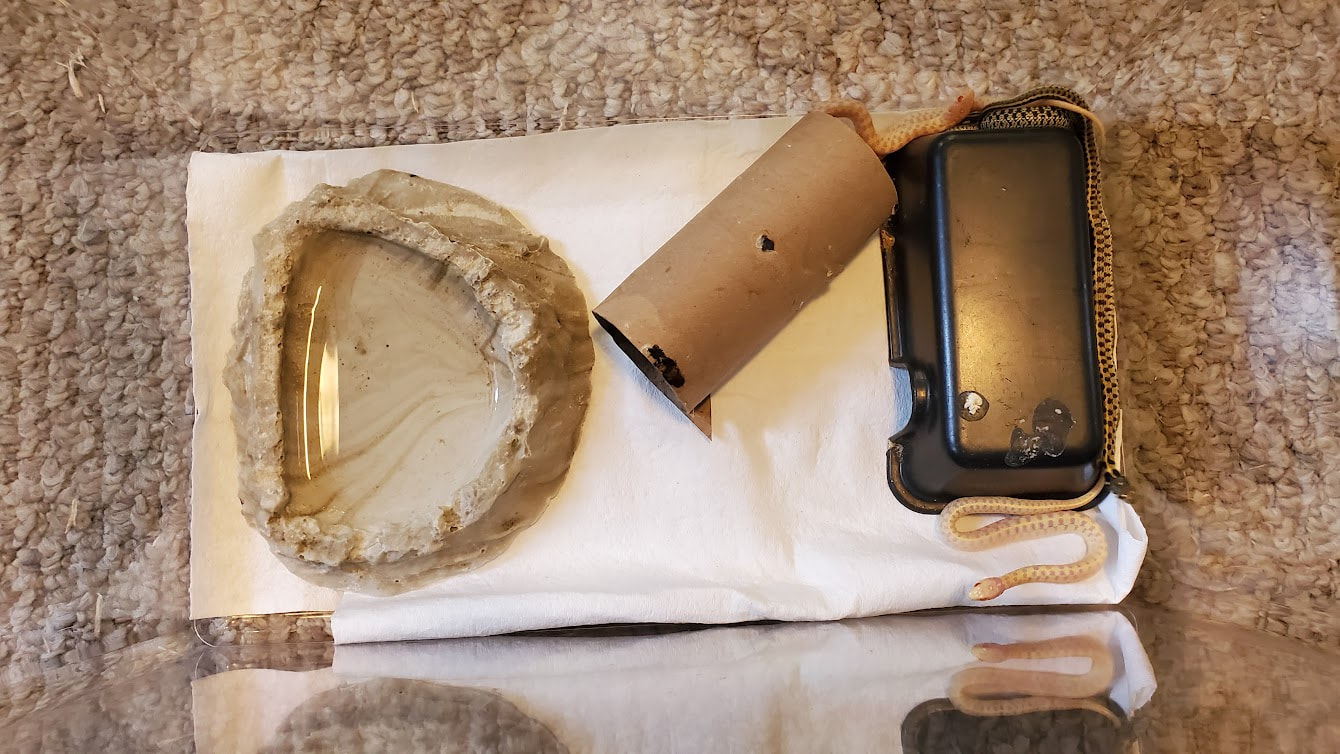
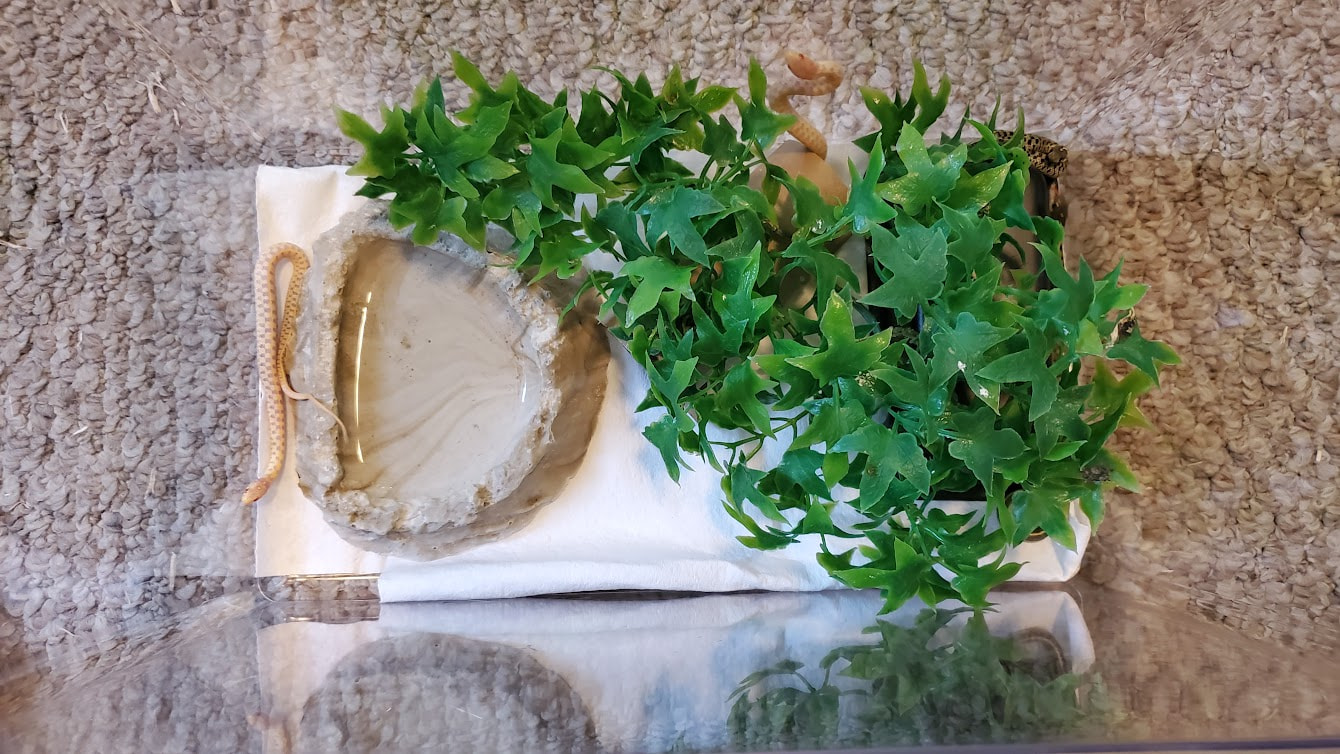
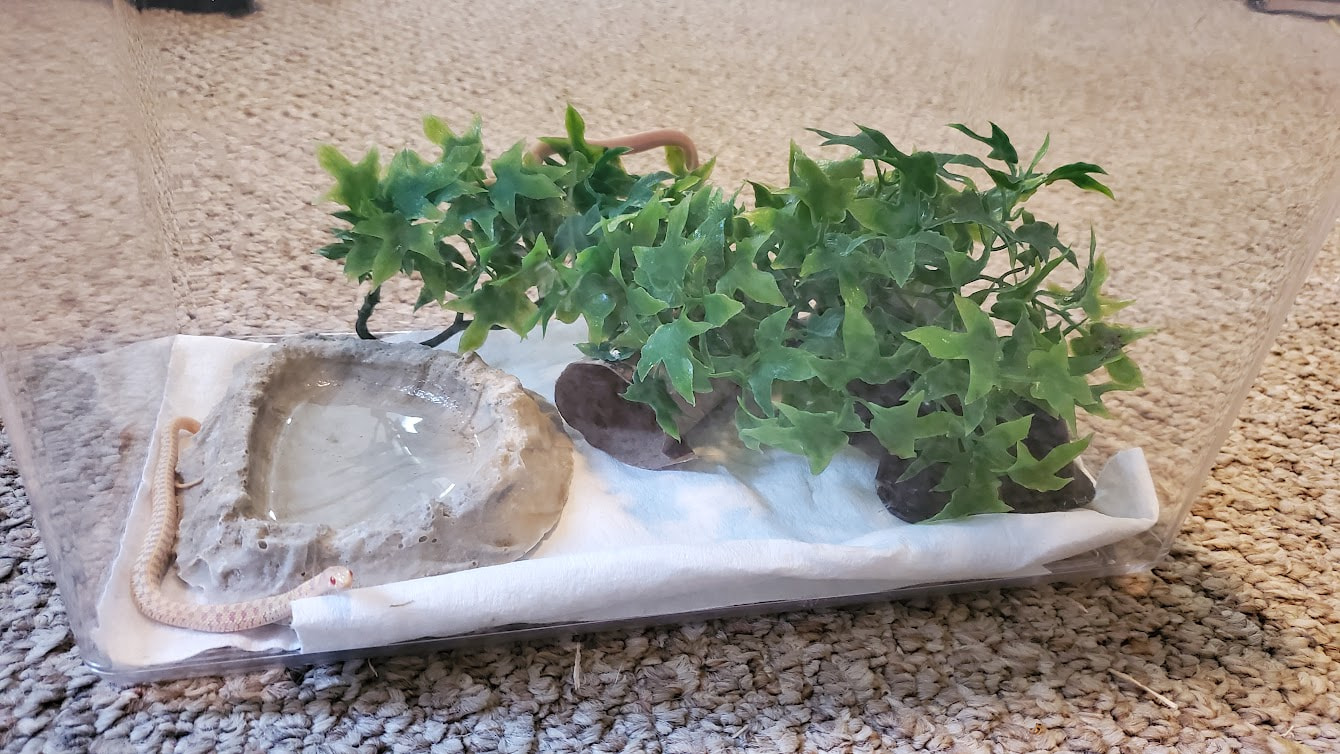
Looking at your other thread, I see a few things that have me a little worried. What are the temperatures in your enclosure, and where is the probe for that heat mat placed? The mat itself is too large and covering too much of the bottom to allow for any sort of heat gradient at all. You can make a kritter keeper work, but if you’re using heat I’d really suggest moving her into the 6 quart bin now versus waiting until she’s eating, and maybe getting a more appropriately sized heat source. The type of plastic used for the kritter keeper is not made to be heated like that. For an example of an appropriate hide/clutter situation for security, this is what I’m using for my baby garters at the moment. It contains one small, enclosed hide, one toilet paper tube, a water dish, and a plastic plant to provide cover.
We won’t name and shame as the TOS says. But MorphMarket guidelines state if left undefined, an established feeder is a minimum of 3 successful feedings in a ‘Not Ready’ situation. Which is typically used by breeders to sell out of the egg or list the hatchlings in a clutch on the market collection.
That said, feeding isn’t guaranteed otherwise in the TOS. So
Hopefully your baby will eat soon. If not, there are SO many things to do before you even consider feeding live. I’ve never fed live, and I’ve had more than a few who were challenging to start and turn into reliable feeders.
Not gonna rehash everything others have said. They’re right about all of it.
Question, though.
Was 9 g an arrival weight you determined or was that what her ad stated? There can be differences in what scales show unless you’re using expensive lab/scientific equipment. Sometimes even then.
Also, what part does rounding play in these numbers? When weighing baby colubrids, one should consider at least one decimal place. They’re very small and tenths of grams matter.
Was 9 g actually 8.5 g rounded up, and 7 g actually 7.4 g rounded down? That is a loss of only 13% compared to the 22% loss from 9 to 7 g.