I got this baby Sumatran blood python shipped to me from a well known reptile store online in November/December. He has never shed with me nor has eaten anything with me. Any ideas as far as what to do? I am experienced with snakes and I breed corn snakes and geckos but he is the first blood python. I have assist fed a snake before but I don’t know if this is something I should do with him. I have him in a rack system right now with belly heat. Humidity at around 70%. He is only
63g. Please help with what to do.
3 Likes
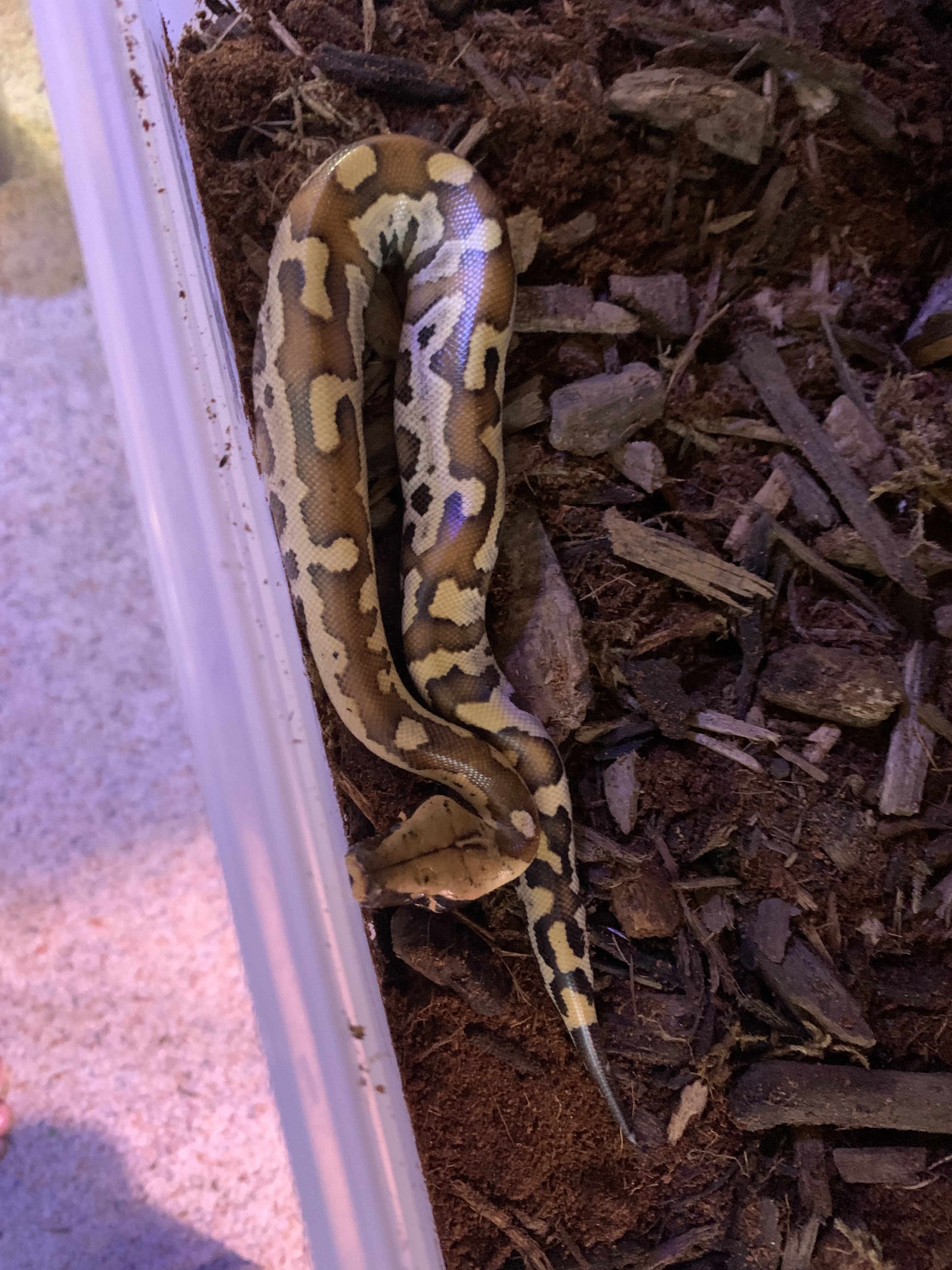
Hey there! Pretty little guy, I’m sorry you’re having trouble getting him to eat. Could you post pics of the whole setup?
I was in a similar position back in August when I also got my first blood python from a well known breeder with a large online inventory. My little guy came in rather thin, so it was alarming for me when I couldn’t get him to eat. I had to move him onto sphagnum moss and then set him up in my closet before he would eat for me, and even then he would only take live up until these last two months.
4 Likes
Humidity sounds good. What are the temp readings?
Also, how have you been trying to feed this little one? When I got my blood python, I actually found that I had to just leave her alone with a thawed, warmed rat on a dish to get her to eat, at least for the first few feedings. That surprised me, as bloods are known for having a high prey drive, but they can be very nervous and timid as babies. It took a while before she’d strike off the tongs.
Also, just a note, Sumatran short tailed pythons (P. curtis) and blood pythons (P. brongersmai) are actually two separate (but closely related) species. What you have appears to be a blood python. Sumatrans are primarily black and grey in colour.
3 Likes
Short tails, when young, need to be in a small space. Like, tucked under a pile of damp moss or something similar and left alone. Sometimes for weeks. A snug hide and high humidity are a must for them. Water is absolutely critical at this age.
How old is this animal? Does the breeder have any records of eating or shedding?
Short tails often don’t have a first shed til they are 3-4 months old but should still eat. Babies are notoriously shy but once they start eating you really have to mess up their environment to stop them.
Are you handling at all? If so, stop.
Light is another issue. They like it dark and dank. And relatively cool. Temps that would cause most pythons to seek heat seem comfortable to them. Somewhere @23-25°C should do with a warm area up to 27-29°C.
If your observing,one thing you need to know is if they are still and the tongue is out, they are scared. Only the eyes will move.
If it seems like your environment is good then leaving an appropriate size rat on a plate outside the hide over night should do the trick. Only after a few days/week of solitude.
No handling unless necessary until three or four meals are eaten.
Once feeding regularly your little red/brown bag of wind can be handled. Just know they DO NOT hang on to you.
And, in case no one else mentions it, they only poop 3-4 times a year. You will need to keep an eye out for hard lumps near the cloaca but don’t fret it if it happens.
We’re here if you have questions or need advice.
4 Likes
Agree with @jawramik Jennifer — definitely a blood. Pretty little boy! Definitely lower heat - 80 for a high is good……