Hello, I’m new to reptiles and looking for help and advice to help make sure I have a good long lasting relationship with my new ball python. I mainly struggle with the amount of information out there (good and bad). This makes it difficult and frustrating to learn properly.
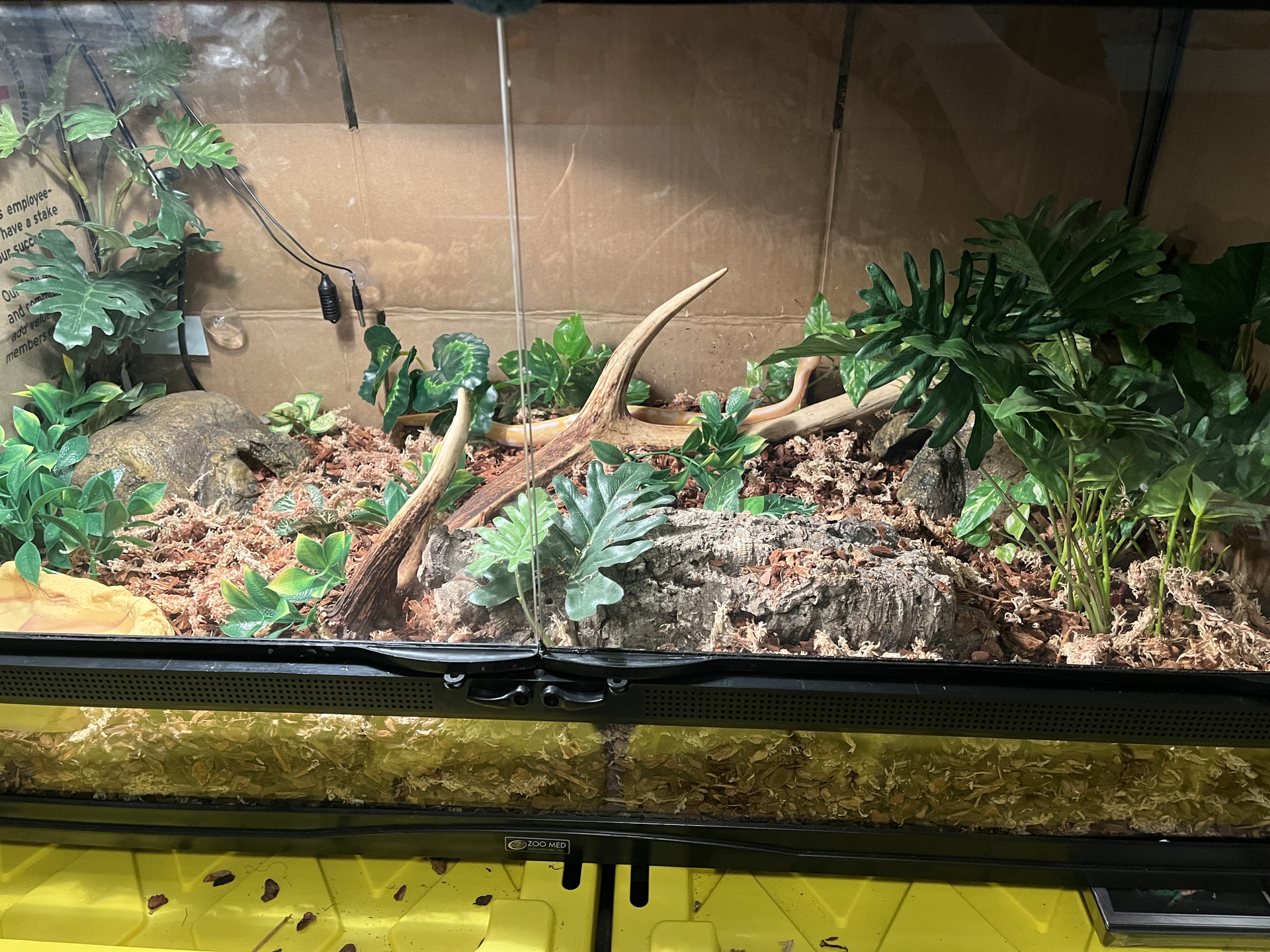
I got my girl Oct 22, she weighed 93ish grams. Her last meal was live on Oct 15 pinky I believe. She lives in a 4x2x2 glass enclosure with mesh top covered in insulation board wrapped in foil, multiple openings for airflow on warm side. Light/heat is a daytime heat bulb on 12hr timer and a 100w CHE controlled by a pulse or dimming thermostat. CHE Temp prob is 2-3 inches off the basking area substrate, with x2 more temp/humidity probes on each side one in each hide plus one 2-3 inches above substrate. Temps are set to 91 degrees F all the time on the CHE with daytime temps reaching 92 on warm side 85 on cool side. Nighttime temps warm side 84 lowest cool side 72 lowest. House temp stays 71
Things I’ve noticed. The 100w CHE struggles to stay 90 at night. Keeping proper humidity is easier than temperature. Sometimes the laser temp gun I have seems outrageous off reading upwards of 105 but not being that physically warm to the touch but probe inside the hide reading 91 F. She also moves around against the glass more than I’d expect but no idea if it’s a issue. Do keep 3/4 covered. She climbs anything and everything I offer her.
Feeding I offered her frozen thawed of the recommended size from pet store(Not Petco) for her size/weight on Nov 7th. I thawed a room temp for 1 1/2 hrs then bag and warm water dryed it and no luck. Tips?
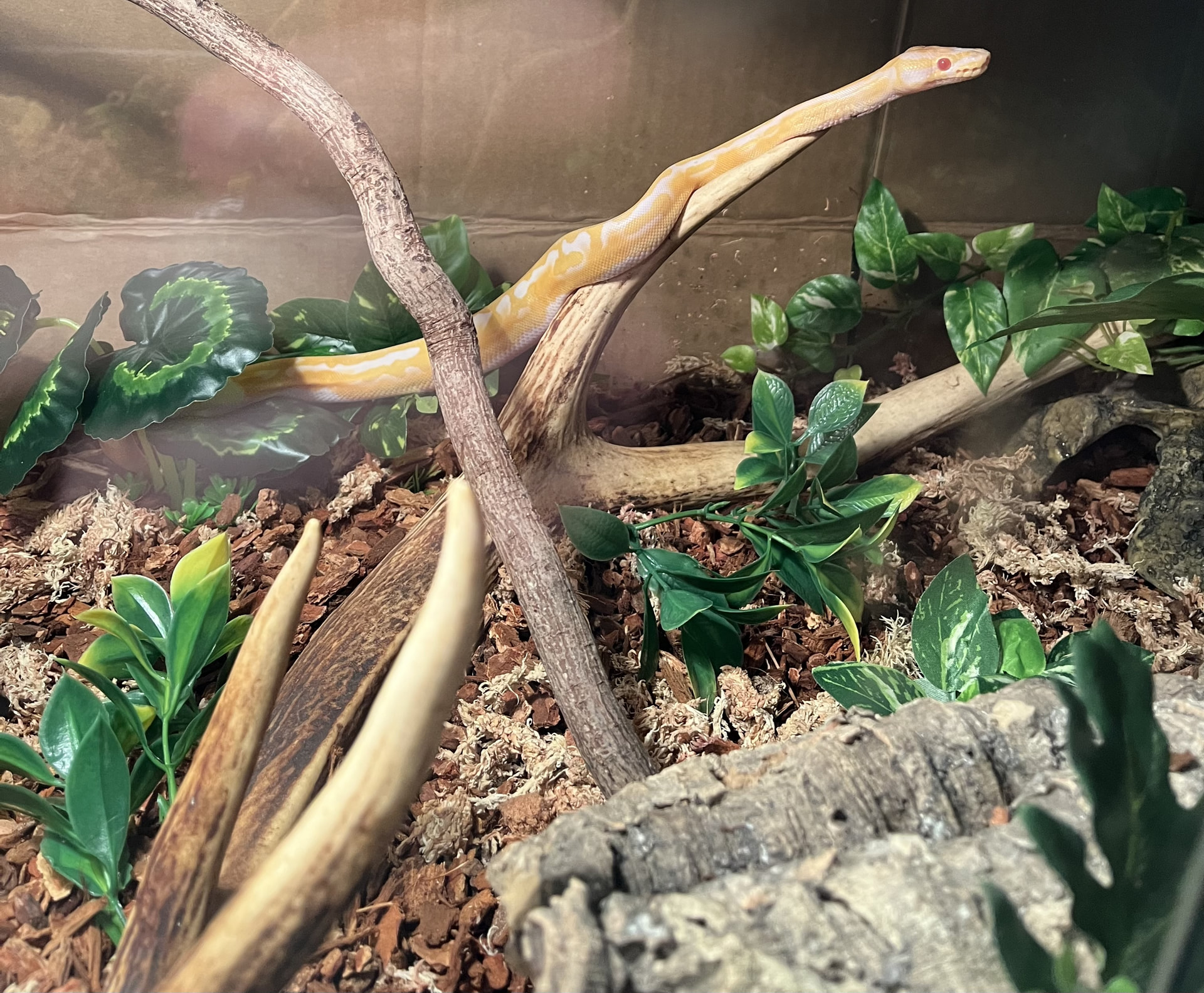
Eventually I would like to work up to a bio active enclosure once she is comfortable and regularly feeding. As for now any recommendations for better insulation or background options would be greatly appreciated. I’m sure she hates looking at cardboard as much as I do. According to the breeder she is an Albino Pied. Her pattern is what Borat would call “Very Nice”.
What many new keepers in the hobby have difficulty with is air temps vs basking spot. That seems to be the case here. As you said, there is a lot of information and it can be conflicting.
The temps do need adjustment.
The ‘hot spot’ or ‘basking spot’ should be the hottest point reading at no higher than 92. Anything higher can potentially lead to a burn in ball pythons. I like to keep it at 89-90 for mine.
The air temps are okay being at 85. I tend not to worry so much as long as the basking spot is warm enough and the cool side is 75-78. Air temps that are too warm for too long (90+) can cause dehydration and potentially cause neurological issues similar to ‘spider wobble’. So if your little one is staying on the cool side the most that could be why.
As far as cage sizing… That is definitely a mansion for a baby BP. If the little one seems stressed you may need to size down to a temporary enclosure like a tub for a little bit of stress relief and growing some confidence. They’re little guys who like hiding in small and dark places, so a smaller enclosure with a snug hide will help them settle.
Signs of stress can be refusing to eat, constantly ‘pacing’ or rubbing along all the walls or sitting somewhere high up and striking when something moves. The last one especially is a very stressed snake.
I’m not sure if you meant pink mouse or rat. You can try offering a live fuzzy rat or a hopper mouse since she was last eating live. A pinky mouse will be too small. Ideally offer the prey to them when they’re peeking out of their hide. They’re ambush hunters so it is less scary for them to ‘hunt’ the food you door dashed to them.
I deal with a fair number of buyers who have a lot of trouble with the “psychological” comfort of and proper temp ranges for their new herp (I don’t breed ball pythons, but these sorts of issues are common in many species) when using glass enclosures. The same sorts of troubles are exacerbated by enclosures that are too large for the animal. Tubs in a rack work great but aren’t exactly what most pet keepers want. Solid top PVC enclosures are ideal, although as you implied about information there’s a lot of junk to be had out there.
I always recommend keeping a herp in a similar setup as the breeder was keeping them in until the animal gets established. Then you can move them into a (slightly) larger enclosure as they grow, or at least after they get used to the food and routine that you’re offering them. If you didn’t get the snake from a breeder, this of course is much harder to do since you don’t know what the snake was used to (in terms of enclosure and the detailed details of food offerings).
I’d recommend against a “bioactive” enclosure, but that’s a ways down the road and a different topic than the current one.
Thank you for the feedback. At first I was on the side of of enclosure is to big but I see how that might be a major misconception. As for racks and smaller tubs, is there anything I could buy that is climate controlled? I love owning reptiles but as of rn I’m still in an apartment but with intentions of buying a home soon. Once I do that I would have a reptile room. As for rn though they live in my room. I’m all for using tubs but like I said before lots of projects and lots of ■■■■. Any recommendations are appreciated. Was looking at reptichip racks
It may take a bit of effort to switch her from live to ft.
Also I’m so glad you found this forum. Stay here for advice. There are a ton of non-judgmental experienced breeders and keepers who are dedicated to preserving the health of reptiles by educating their owners. However be prepared for constructive criticism if necessary.
Stay away from AI, Facebook, Reddit, etc unless you want incorrect information and/or grief for asking a question. Any questions you ask here will be answered with solid feedback. You came to the right place!