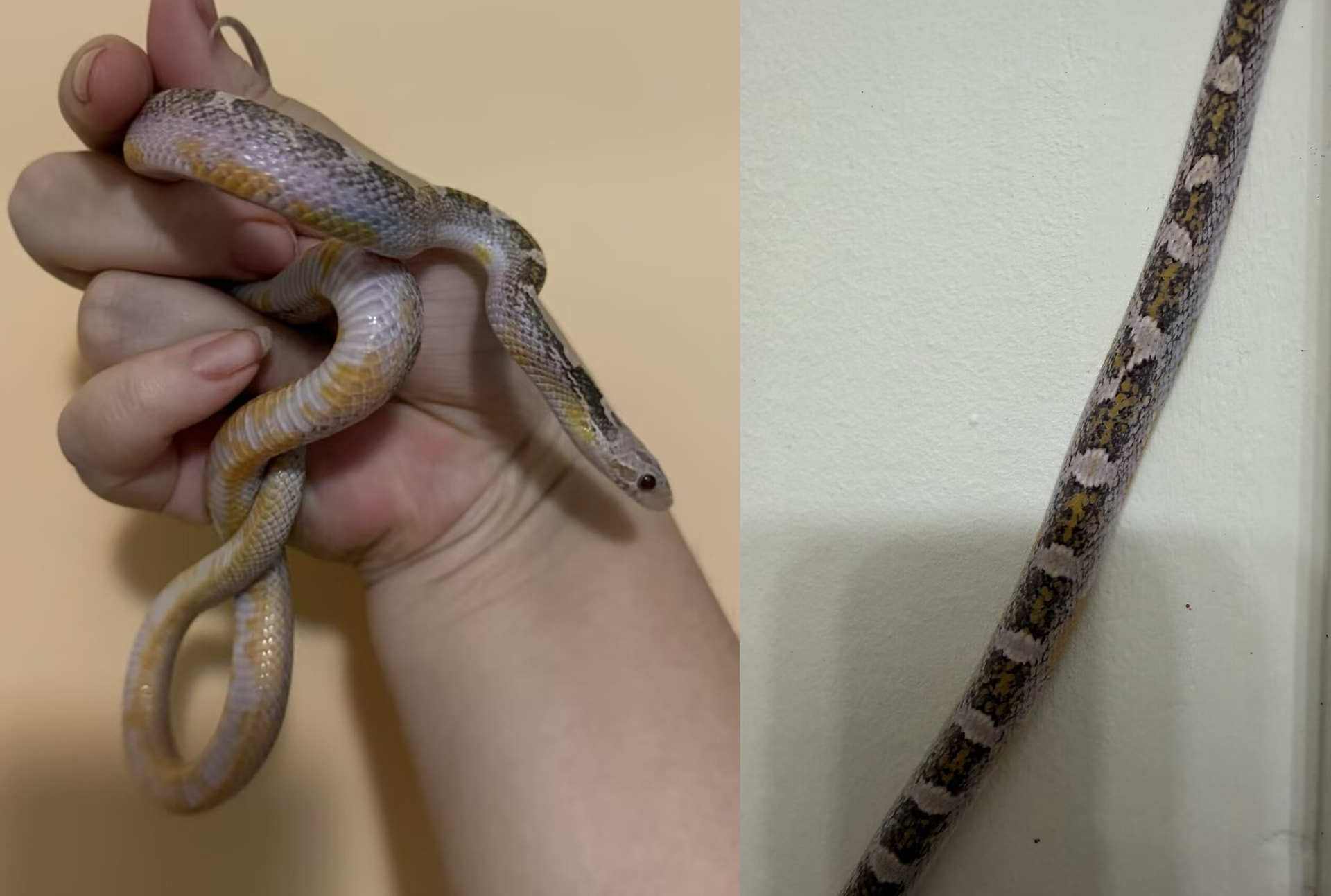
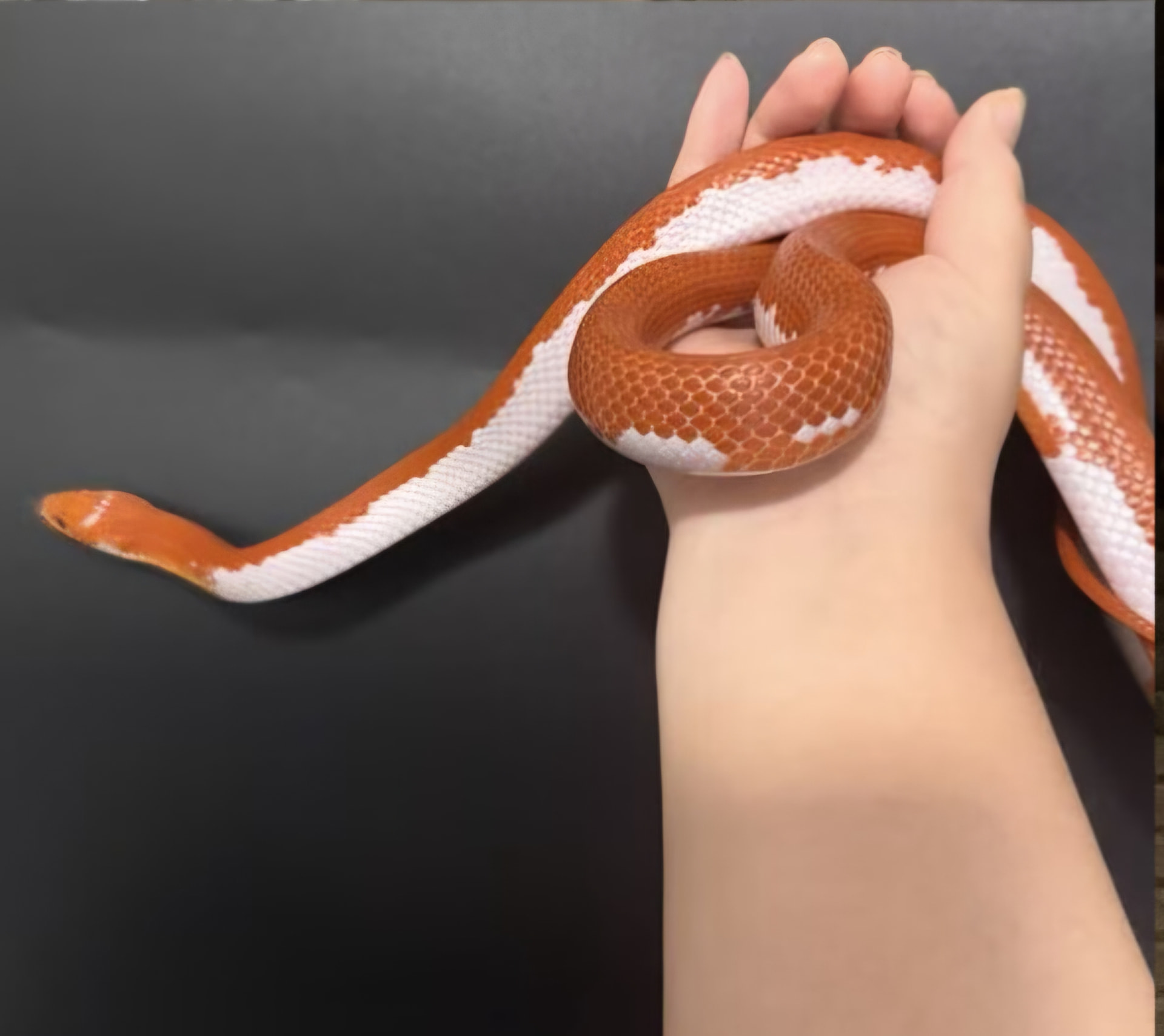
Can anyone help me identify the morph on this clutch?

Hi everyone!

I have a clutch from last year that is showing some interesting yellow coloration that I haven’t seen before. I’m hoping some corn snake experts can help me figure out what’s going on genetically:)

Parents

Dam- was sold to me as a Cinder Bloodred het Ultra, but a friend of my think she’s an Anery Bloodred.

Sire- Hypo Bloodred Pied-sided, het Anery and Amel.

The clutch produced what I believe are:

  • Bloodred Pied-sided

  • Hypo Bloodred Pied-sided

  • Anery Bloodred Pied-sided

  • Hypo Anery Bloodred Pied-sided?

As they’ve grown, the Anery Bloodred Pied-sided and Hypo Anery Bloodred Pied-sided babies have developed some interesting yellow patteren. The Hypo Anery Bloodred Pied-sided animals have also developed a really nice peach tone.

due to new user limitations, I will see if I can post the rest of the picture in next reply

Do you all have a idea what might causing those interning yellow and peach color?
I’d really appreciate any thoughts or opinions. Thanks in advance!

5 Likes

here is s picture of Hypo Anery Bloodred baby that has a peach tone

4 Likes


and the parents + the pictures when they first hatched

6 Likes

I don’t work with Pied, but I’ve never seen anything like that even in pics. It’s very cool. I hope you get more informed answers. :slight_smile:

4 Likes

I haven’t seen anything like that either. If you could get some images in natural light it would be interesting and maybe helpful. Outside or near a window on a cloudy day is best.

I do work with Peach though not with Pied. It’s hard to really see color tone, but what I’m seeing doesn’t look like Peach, nor does Peach typically show on Anery. Aneries often have some yellow on their lower portion of their sides. However, this doesn’t generally cause yellow on the belly. Pied itself ordinarily interferes with color and pattern where it is present. I don’t understand what would result in this look.

@deanaii, what do you think about this? The bright yellow nose is not what I’d expect on Cinder or a Granite.

@fanfan, do the red morphs have anything similar?

2 Likes

The red ones don’t appear to have any yellow blotches. Neither the sire (hypo bloodred) nor the offspring(visual hypo bloodred) produced by the dam with a unknown male in 2023 showed any visible yellow either, they are just regular beautiful big red snakes.
I can take more photos in natural light this weekend, thank you for the info!

3 Likes

I’m really not sure. If forced to make a guess right now, I’d be suspicious of some sort of hybrid influence.

2 Likes

I was thinking that, too. I didn’t think Cinder would ever have a bright yellow nose, even as a Buttermint. I have had Anery Caramel stuff with yellow noses but they looked different. Those had distinct yellow along their lower sides. It was different. The one with the peachy coloring looks quite unusual, too.

That will be helpful. :+1:

1 Like

I don’t know anything think about corn snake genetics but I do love the look of your adult Pied Red one. Thanks for posting pics of them.

3 Likes

Yeah, Amel + Cinder can have yellow tones. But it’s not bright like that. In non-Amel combos it’s practically axanthic.

2 Likes

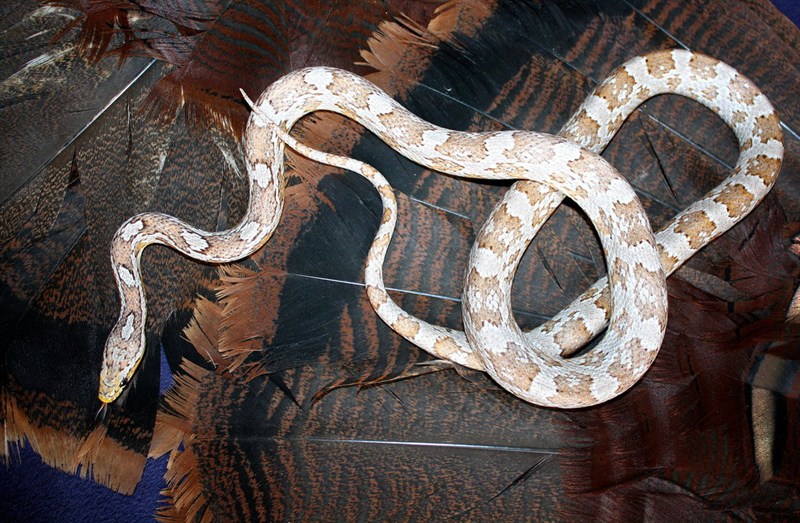
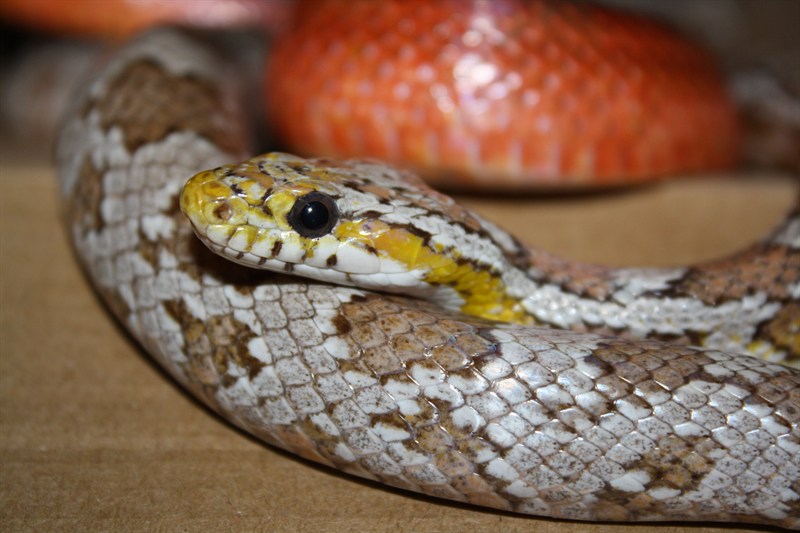
There are just high yellow lines in general that are not associated with inherited genes. It’s just a natural varience of yellow in natural colored animals. For example the two ghosts out of my stuff which show both high yellow and low yellow. Same genes in both. Now hybrid lines from the old creamsicle and lavender lines respectively (that came from gray rat x corns) also can change the amount of yellow.

The above is a son of the ghost below. The ghost below gave a lot of her yellow to her kids.

Her yellow is just over the nose and down the sides of her neck. Yours is beautiful with patches down the sides. <3

You can see the bloodred in the background lol

The pinkish peach color comes naturally on anery, cinder, and ghosts when they get high red content from either red coat or red factor genes. Those genes come a lot of the times off the bloodreds so when you get ghosts or cinders with bloodred hets you often see this peachy color that doesn’t like to show on photos well. That male I posted a pic of up top is my best visual representation of both the high yellow and the peach color. He’s a ghost with a 50% possible het of diffused bloodred from a pied blood grandparent.

Usually the peach color isn’t so prominent in aneries, but add diffusion on the sides and you tend to see it more.

I have aneries that have the peach but they’re not good examples like yours is.

3 Likes


Here are some additional photos that I took under natural, overcast daylight.

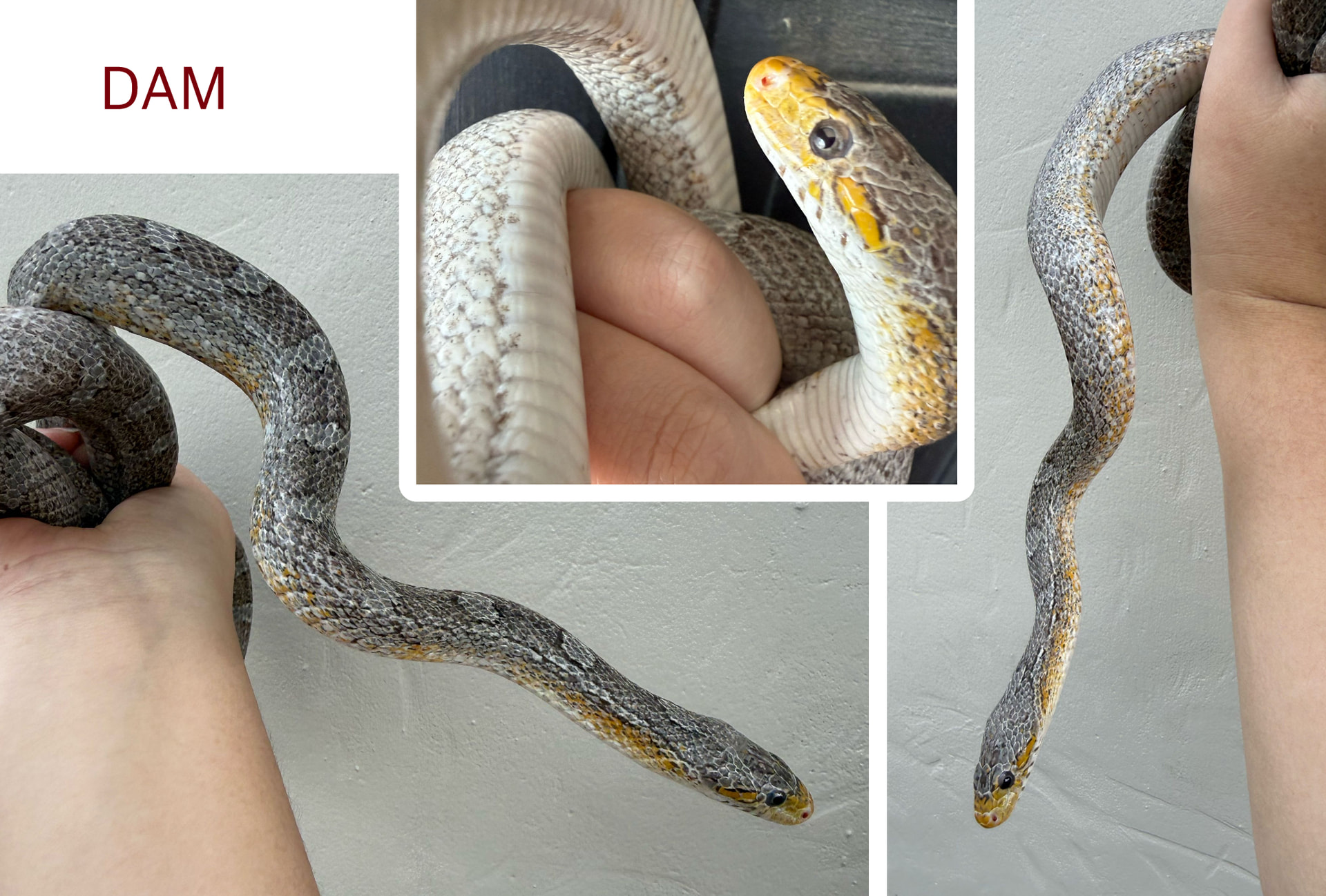
Dam

One thing I hadn’t really paid attention to before is just how much yellow she has. Her face is very yellow, and she also has scattered yellow speckles along both sides of her body.

I have another Ghost Bloodred that doesn’t show much yellow at all, so I don’t really have a good comparison. Is this amount and distribution of yellow normal for Anery Bloodreds (assuming that’s what she is)?

@tribalcorns, your lovely Ghost girl’s sides aren’t visible in the photos you’ve shared. Would you mind letting me know if her yellow looks similar? :slight_smile:

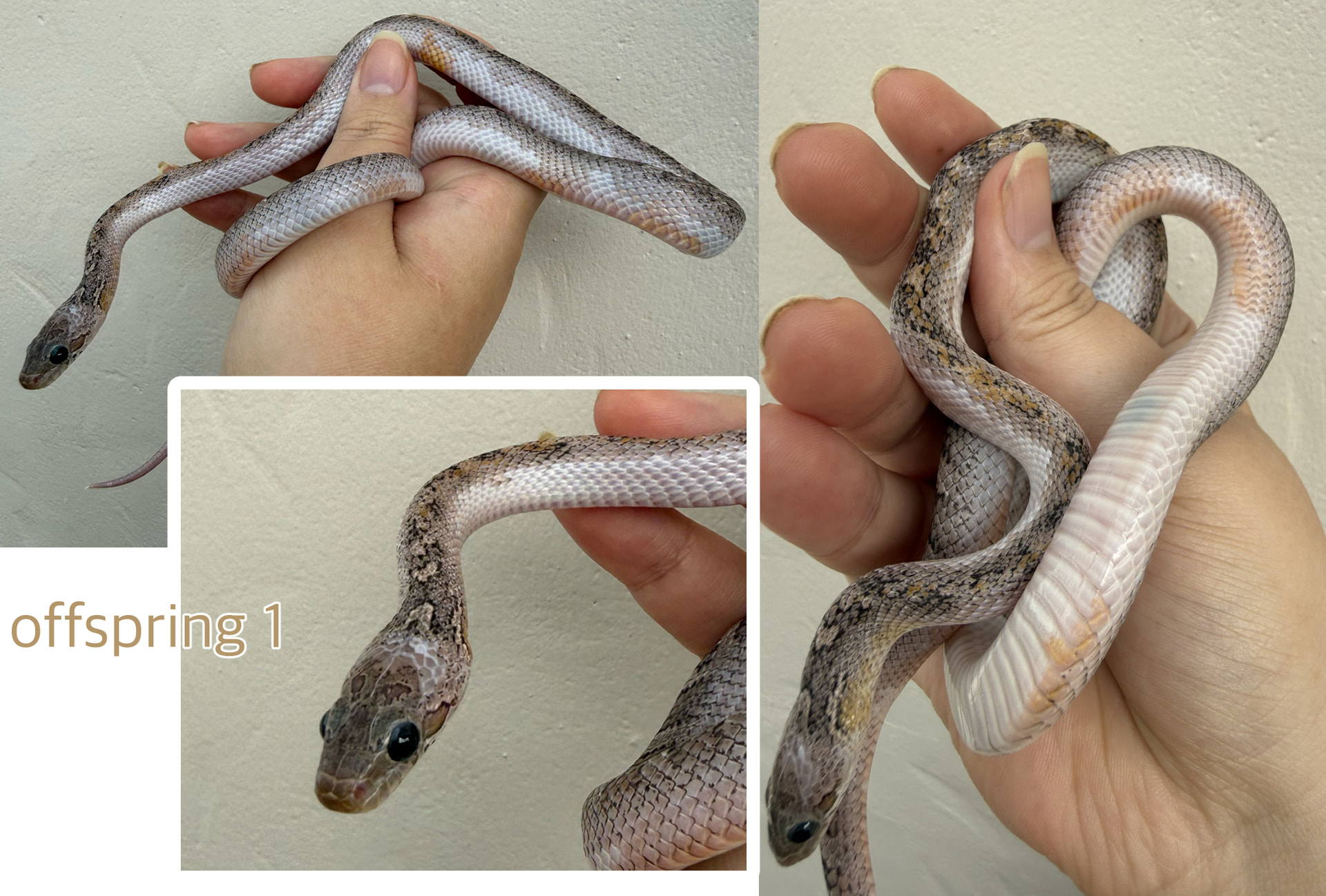
Offspring #1

Assuming my identification of the dam is correct, I believe this animal is also an Anery Bloodred.

It appears to have a medium- to high-expression Pied-sided pattern. In addition to the normal Pied-sided markings, it also has yellow and orange patches along the sides. These patches are separate from the Pied-sided pattern—they extend irregularly upward from the edges of the ventral scales onto the sides.

Offspring #2

This individual has a noticeably warmer overall appearance than the others, and I think she is the only one in this clutch with that color tone. It also has some yellow within the dorsal pattern. She has that yellow patch on her side, the yellow on the dorsal pattern is much less obvious than on Offspring #1, but present.

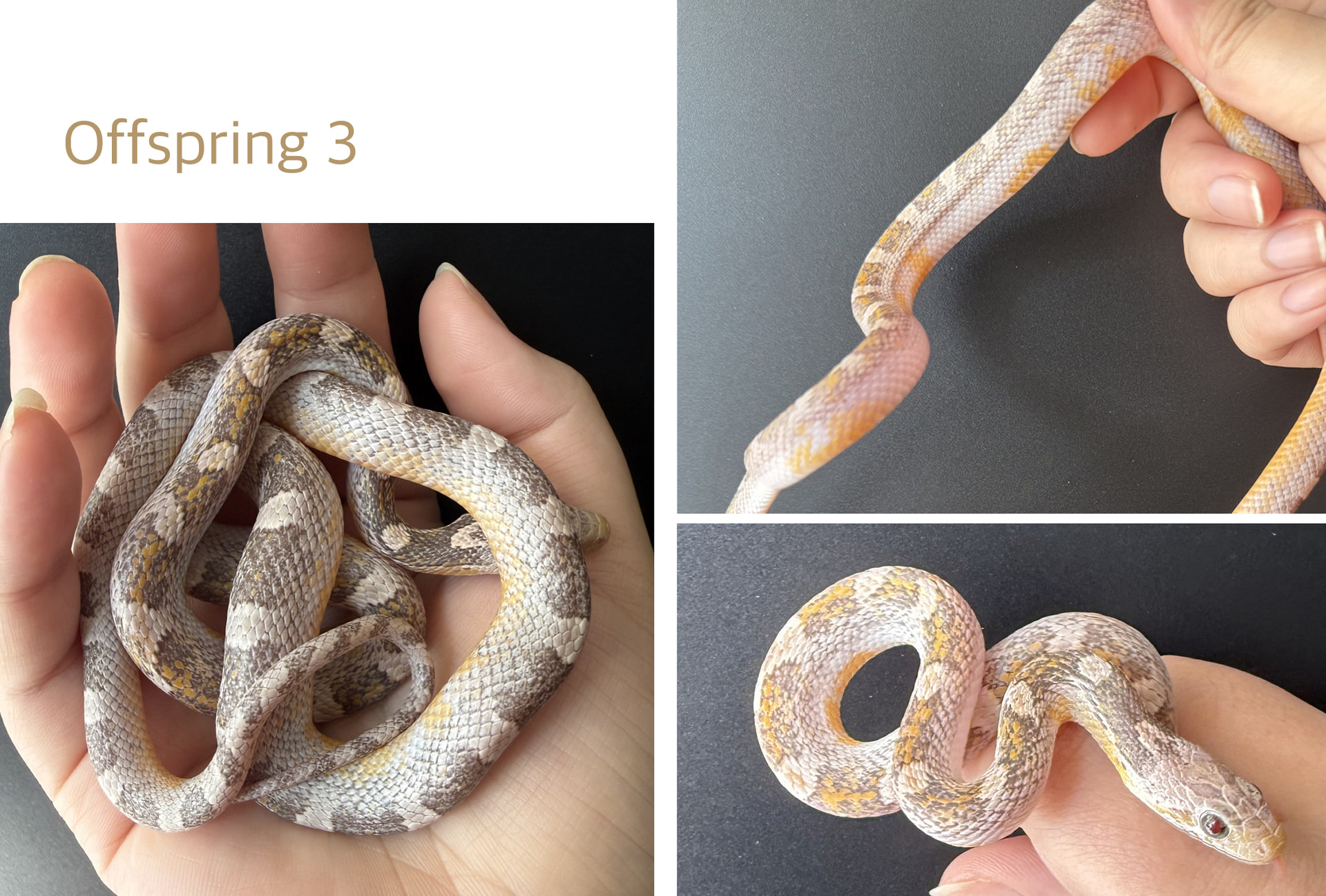
Offspring #3

I believe this animal is the same morph as Offspring #2 (possibly Hypo Anery Bloodred Pied-sided), but it has a cooler overall tone, and the yellow on the dorsal pattern is much more pronounced.

Unlike Offspring #1, I don’t see an obvious Pied-sided pattern. Instead, it has very strong yellow patches along the sides that almost resemble discontinuous yellow Pied-sided markings. At one point I even wondered if the Pied-sided pattern itself had somehow turned yellow, but since Offspring #1 clearly shows both normal Pied-sided markings and separate yellow patches, that probably isn’t the case.

It also has a nearly continuous band of yellow running along the dorsal pattern near the spine. The yellow is concentrated around the center of the dorsal pattern and almost forms a broken stripe. This yellow has become more obvious as the snake has grown. The color reminds me of gold dust or butter.

My observations so far:

  • It can coexist with visible Pied-sided markings.
  • It can also appear on snakes without obvious visible Pied-sided markings.
  • So far, I haven’t seen it on the Bloodred or Hypo Bloodred offspring. They may carry it, but perhaps it’s hidden by the red coloration.

Please let me know if any of this sounds familiar or reminds you of anything! I’m really curious about why this yellow is present and whether it might be something I can test through future breedings!