I am new to MorphMarket forums and was hoping to get a little assistance on a brand new clutch of ball python eggs. Here’s some background information -
First time mom; started pairing at approximately 1,800 grams
Eggs were laid on the evening of 6/28
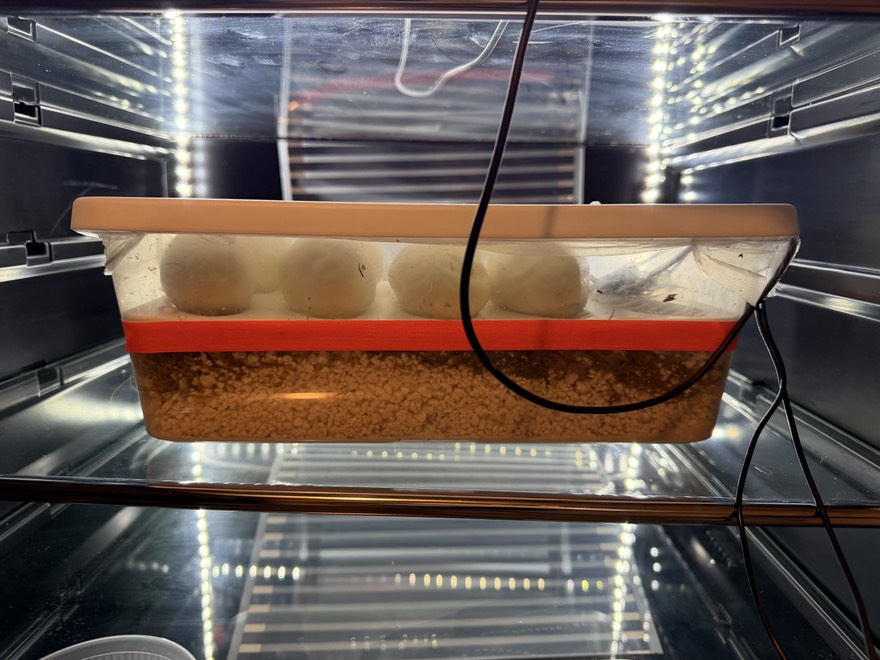
The eggs are housed in an old wine cooler that I transformed into an incubator
The incubator is heated by heat tape and is equipped with a computer fan to circulate temperatures
The incubator’s temperature is monitored and controlled by a Herp Stat 1
The temperature probe is inside of the egg box and is hovering around 89 degrees
The humidity is monitored by a cheap hydrometer (I believe it’s a ZooMed)
The humidity has been up and down the last two days, it dipped to 40% and has been as high as 90%. When I was trialing the egg box and incubator, I was able to get the humidity up to 99% but haven’t been able to do so since the eggs moved into the egg box
I am using perlite as the substrate; it is wet enough to where it sticks together if I squeeze it in my hands
I have two containers of water sitting at the bottom of the wine cooler to encourage humidity
The eggs are seated on an egg tray and do not touch the substrate directly
I am located in Colorado, where it is extremely dry
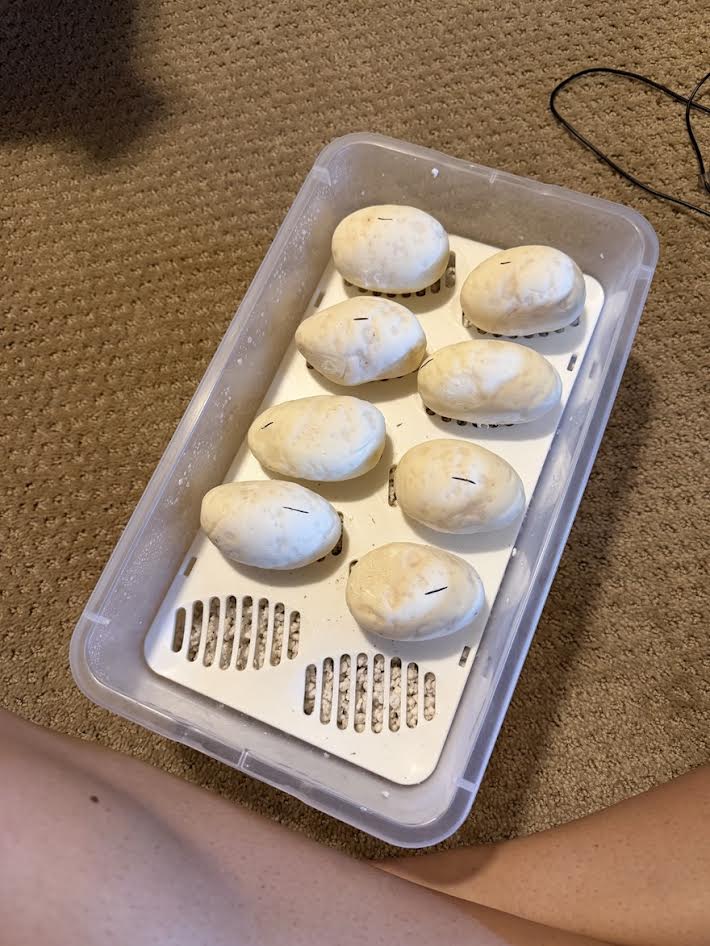
When the eggs were laid, I noticed some deformities in the shells. After doing some research, I found out that the shells had calcifications due to potential nutrition deficiencies in the mother. Despite the imperfections in the shells, I candled all of the eggs and all of them had strong veins.
(Picture taken on 6/28, shortly after the eggs were laid. This is not what the eggs looked like this morning, when they seemed deflated.)
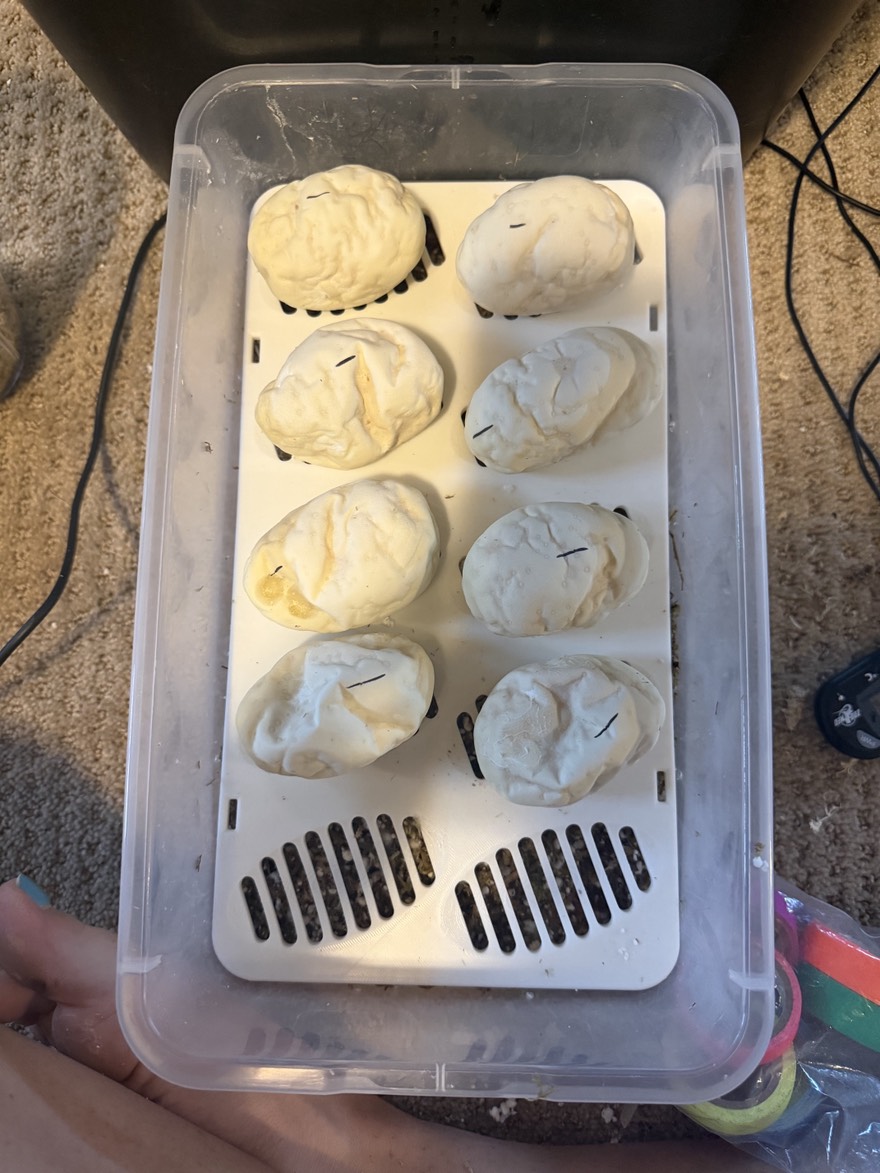
Fast forward to today, and I checked on the eggs for the second time, but they were looking quite a bit more deflated than they had yesterday. The eggs were not collapsed; however, the indentations seemed to be more noticeable than the day they were laid. I checked the hydrometer and the reading said 40%. In a panic, I removed the eggs and sprayed the perlite with water, hoping that the eggs would fill out again.
I suppose it is a waiting game to see if the eggs fill out, but I was wondering if there is anything I can do differently to ensure that the eggs have the best chances of hatching and not deflating and dying. Any help would be appreciated.
Just to make sure: there is a lid on the eggbox when it’s in the incubator?
You can take some sphagnum moss, soak it for a bit then squeeze out the excess water before fluffing it back up and putting it over the eggs. It’s light enough to not cause issue with the eggs and help hydrate them more. You can remove it after the eggs recover.
If you don’t already have it, I recommend using press and seal on the box. Just cover the box and press it around the edges. Then pop the lid over it. This will keep the humidity in the tub as high as possible.
Try not to open the egg box too much because that will also release humidity.
That temp is a little high, I’d aim for more around 86°F with room for mild fluctuation.
The ZooMed hygrometers/thermometers are notorious for being inaccurate. I’d highly reccomend ordering something like a Govee Hygrometer/Thermometer and place it basically in the container with the eggs so you can get more precise readings on humidity. Plus you can monitor the temp/humidity with your phone so you don’t have to worry about opening the incubator and disturbing the humidity and temps.
If the eggs have calcification issues, they most likely will stay ”ugly” looking all throughout incubation, since there is an inconsistency of the shell’s structure. It will likely get more severe when incubation is nearing the estimated hatching date, but that is normal. I second the sphagnum moss method to combat your area’s dryness.
Thanks so much for your response! Yes, the eggs have a lid on them. I have some sphagnum moss that I’ll cover them with and I will also run to the store and grab some cling wrap. How often do you suggest I check on them? I successfully incubated and hatched corn snake eggs many years ago in a chicken egg incubator but this seems to be more intricate. Thanks for your help!
The longer you leave them alone the better. But I am absolutely guilty about wanting to check in every 2 weeks. Lol
If you can peek in through the side that’s fine. Just try not to open it too much
That’s going to be tough, especially since I want to make sure they “fill” out! I will do a final look and add the moss and cling wrap and leave them be!
Glad Press 'N Seal is NOT the same thing as Saran Wrap or cling wrap. My guess is the lid does not form a tight seal with the container and you’re losing humidity from the egg box from it. The Press ‘N Seal should provide the tight seal. You can put the lid back on after the Press ‘N Seal is in place. Make sure there is enough water in the substrate to get the humidity up close to 100%. You do NOT need air holes in the egg box.
Many breeders, close to the hatch date, exchange the air in the egg box a couple of times to get fresh oxygen in there. Some people peel back a part of the Press ‘N Seal and put the lid back on. This undoes the tight seal and allows some air exchange, but be careful that your humidity doesn’t drop because of this. Others will simply open the egg box up and fan some fresh air in there a couple times close to the end of incubation. The eggs do actually breathe, more so toward the end of incubation. Different breeders have different techniques, doesn’t make one wrong and one right. There’s more than one way to skin a cat.
I don’t go over 89. If my incubator temperature gets above 89, it alerts me. I incubate at 87. Babies will hatch faster if you incubate higher but there’s less margin for error and babies will also be smaller. Most of my babies hatch out around 65-70g. Folks I know who incubate at 89-90 get babies in the 50g range.
Just an update: I mixed sphagnum moss in with my perlite in hopes that it will help with humidity. I’m a little wary of putting anything directly on top of the eggs, so I decided to settle on something in the middle. I also bought Press’n Seal and covered the tiny holes that I had drilled in the box earlier. The holes were very, very small, but I wanted to make sure I’m trapping as much humidity as possible.
Per recommendations, I decreased my thermostat so it pulses at 88 rather than 89. Here is an updated picture of the eggs, which may help give a better idea of how they look right now. I’ve noticed that some eggs look less deflated than others, but I’m really hoping it’s not too late. I’ll check on them again in the morning by looking through the sides.
If anyone has any more advice, or if you think it may be too late for the eggs, please let me know. Crossing my fingers… thanks guys!
I personally wouldn’t worry unless the eggs begin to discolor (green, brown, dark yellow), begin growing mold, begin to smell foul or develop a slimy coating over the shell. If you candled them and they all have an embryo/veins you won’t have any of this unless the neonate inside passes away.
Even then I’ve seen eggs in the past that look like they are a lost cause hatch out just fine. So basically if they aren’t stinky, continue incubating.