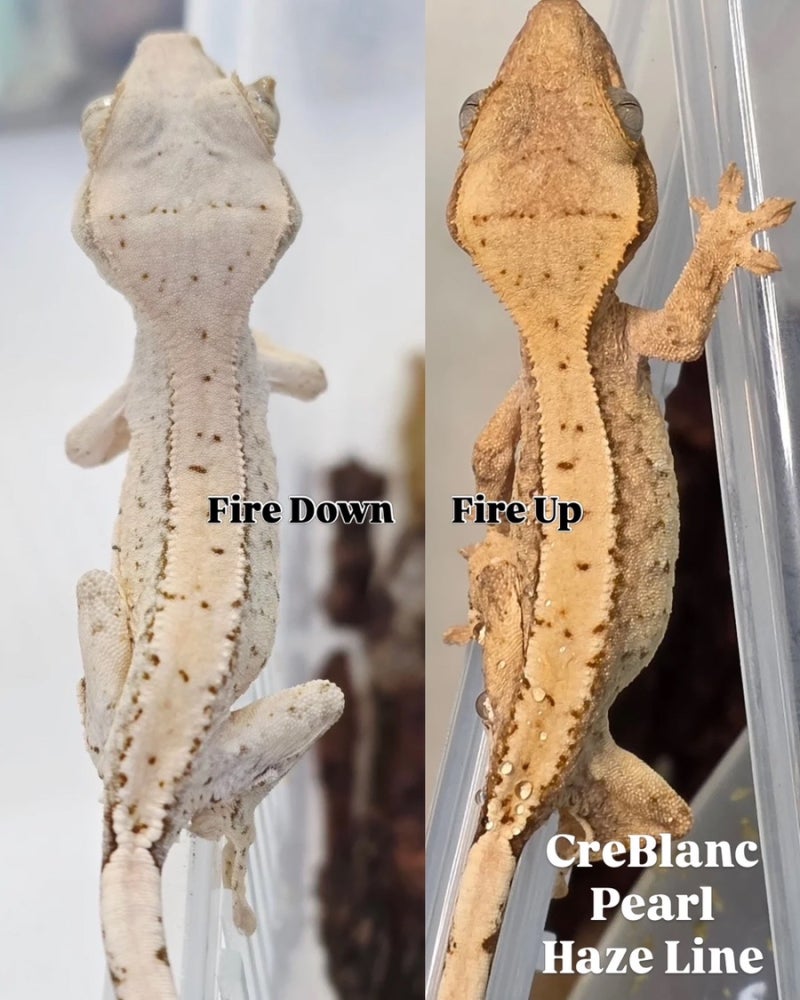
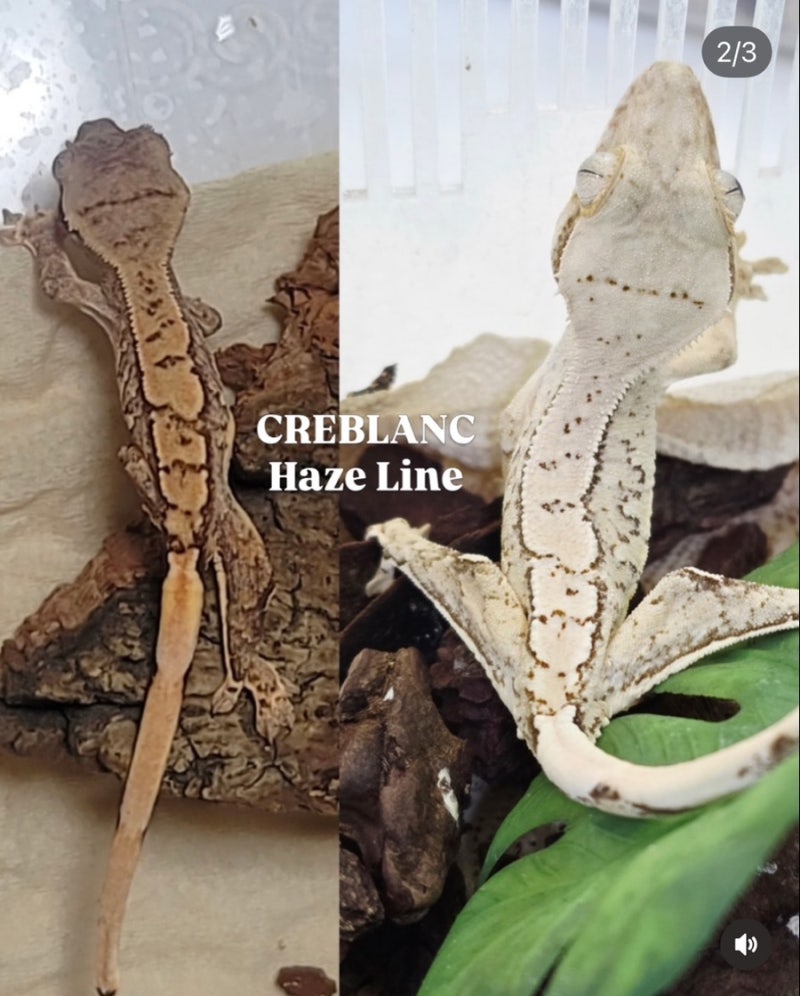
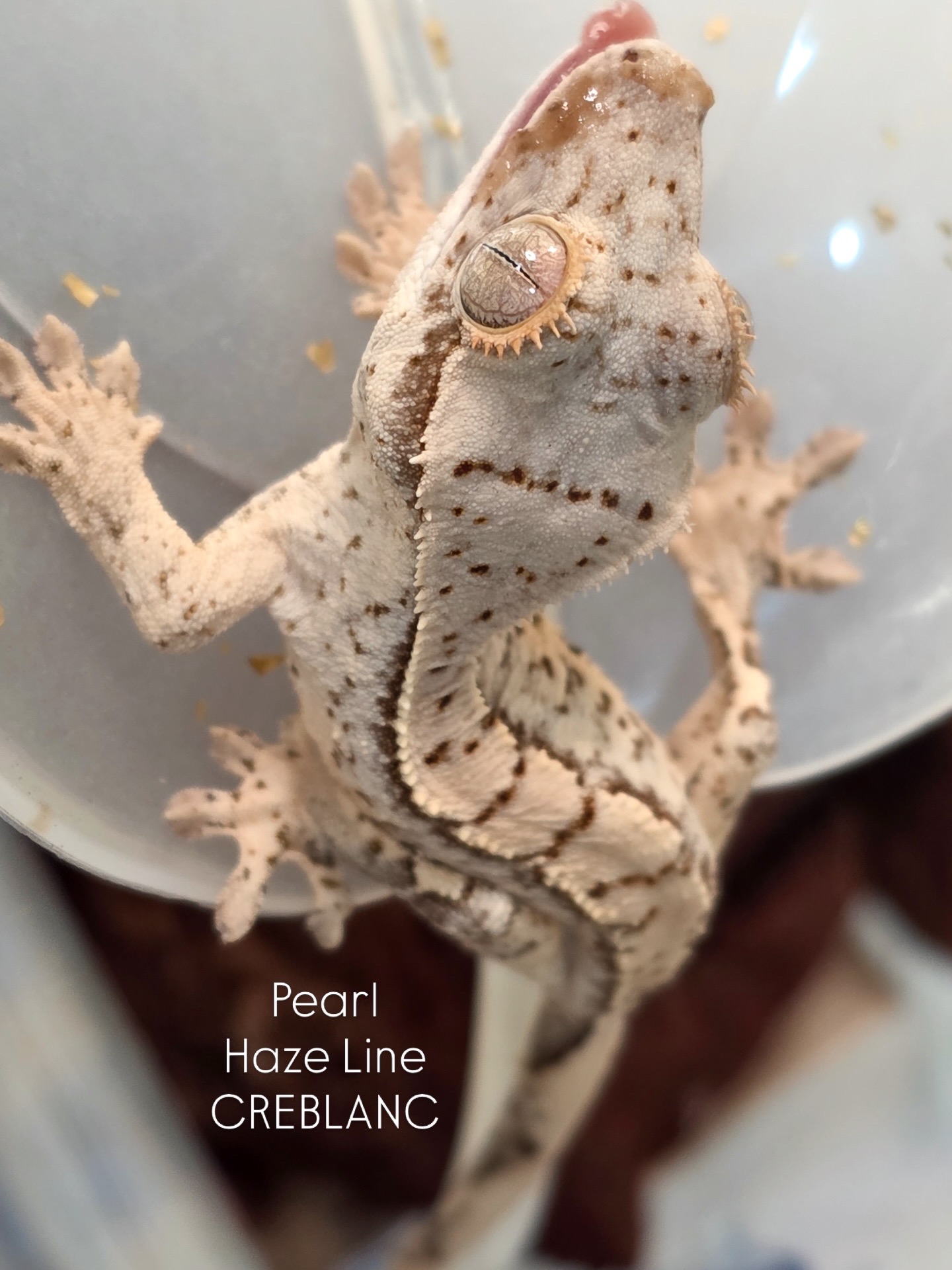
We have been observing a distinctive expression within our Haze line, which we currently refer to as the Pearl expression. This expression is not related to Lilly White genetics and should not be confused with Lilly White or other coverage-based white morphs.
The expression has been observed in offspring produced from normal pairings sharing the same sire, where several individuals display a consistent pearly white overlay.
Pearl Expression refers to a soft, pearly white layer that forms above the base coloration while preserving the original pattern structure. Unlike coverage-based white morphs such as Lilly White, the underlying pattern is not replaced but remains visible beneath the layer, giving the appearance of a subtle sugar-coated veil across the body.
A related visual feature we refer to as the Tracing effect occurs when the underlying base coloration and pattern become semi-translucently visible through the pearl layer, particularly when the animal is fired up. This produces a watercolor-like visual transition between the overlay and the base pattern.
In the fired-down state, the animals display a milky white tone with a soft pearlescent quality, while in the fired-up state the base pattern becomes partially visible through the overlay.
At present, this expression is being documented as a recurring line characteristic within the Haze line. It tends to become more noticeable during the subadult stage, and observations are ongoing to determine whether the Pearl expression remains stable into adulthood.
What kind of inheritance do you think it to be? Haze line kinda implies polygenic. But the haze dad to normal producing the same sounds more like an inc. Dom or dom inheritance.
Have you tried breeding pearl to pearl?
So far the expression has appeared at roughly 50% when the same sire is paired with different females, which could suggest either an incomplete dominant trait or possibly a polygenic effect.
Since the animals are still young, Pearl × Pearl pairings will likely be possible next year.
At that point we should also be able to determine whether the offspring that do not visually express Pearl may still carry the genetics.
Very nice! I love how white their eyes are fired down! I can’t help but wonder if they’re “just” very nice high expression hypo yellows though? Have you managed to throw any red-bases or dark-bases? Either way a cool project, excited to see what comes out of it
So far all of the Pearl-looking offspring have only come from normal (tri-extreme harlequin) pairings.
I recently paired the Pearl male with a Lilly White female, so we should know the results in about 3–4 months.
From what I’ve observed so far:
1. Xanthophores / erythrophores still appear when the animals fire up.
2. Melanophore pattern remains present.
3. In the fired-down state the skin shows a pearly / milky appearance.
Considering these points, it doesn’t seem like the pigment cells themselves are missing or reduced.
After discussing and looking into the biology with some research (and a bit of AI help), one hypothesis is that the guanine crystals in the iridophores might be scattering light differently compared to typical crested geckos.
If that assumption is correct, it may not actually dilute darker pigments, but instead create a structural light-scattering effect.
For now, my plan is to continue breeding individuals that show stronger white expression and see how it develops.