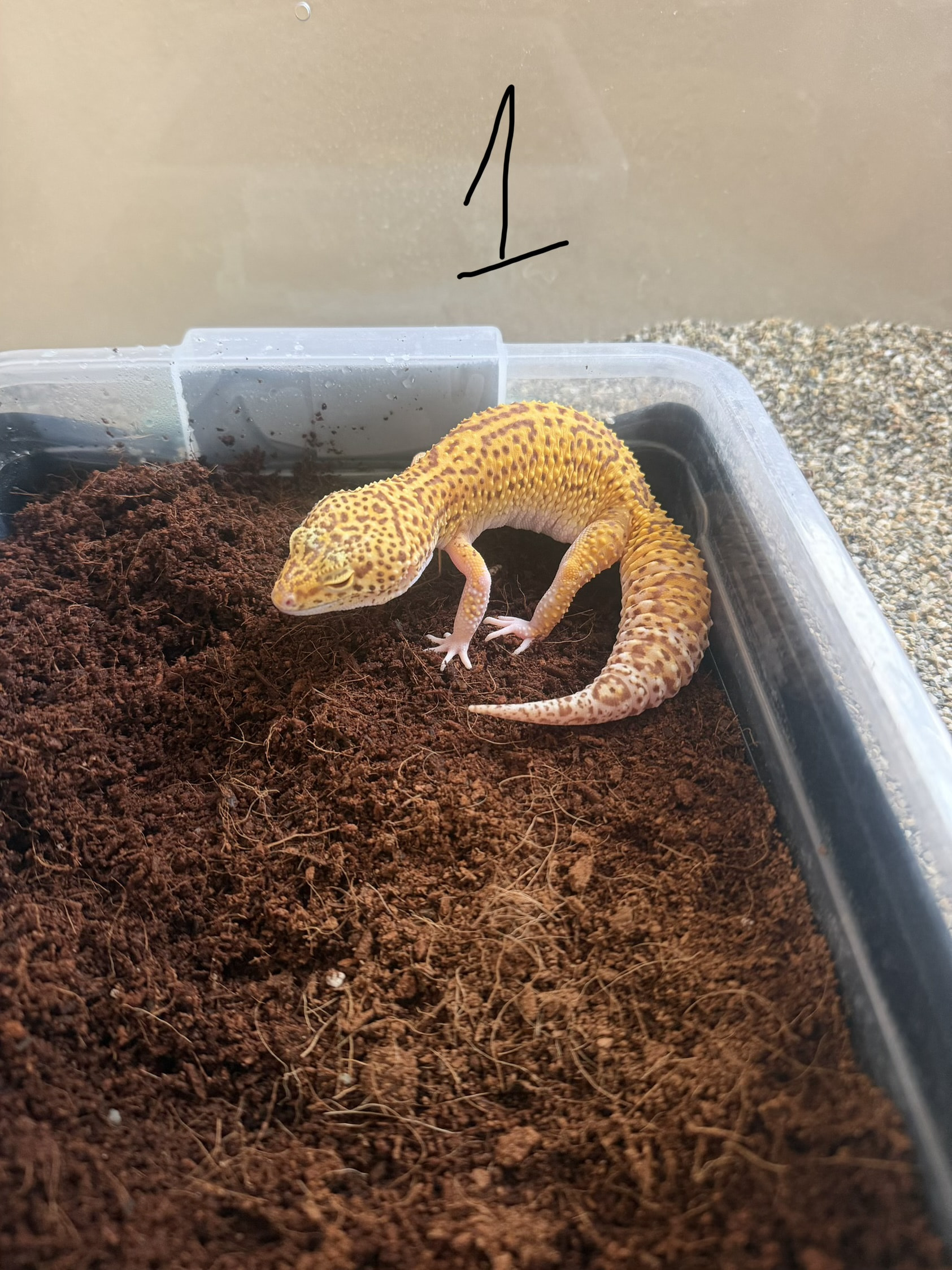
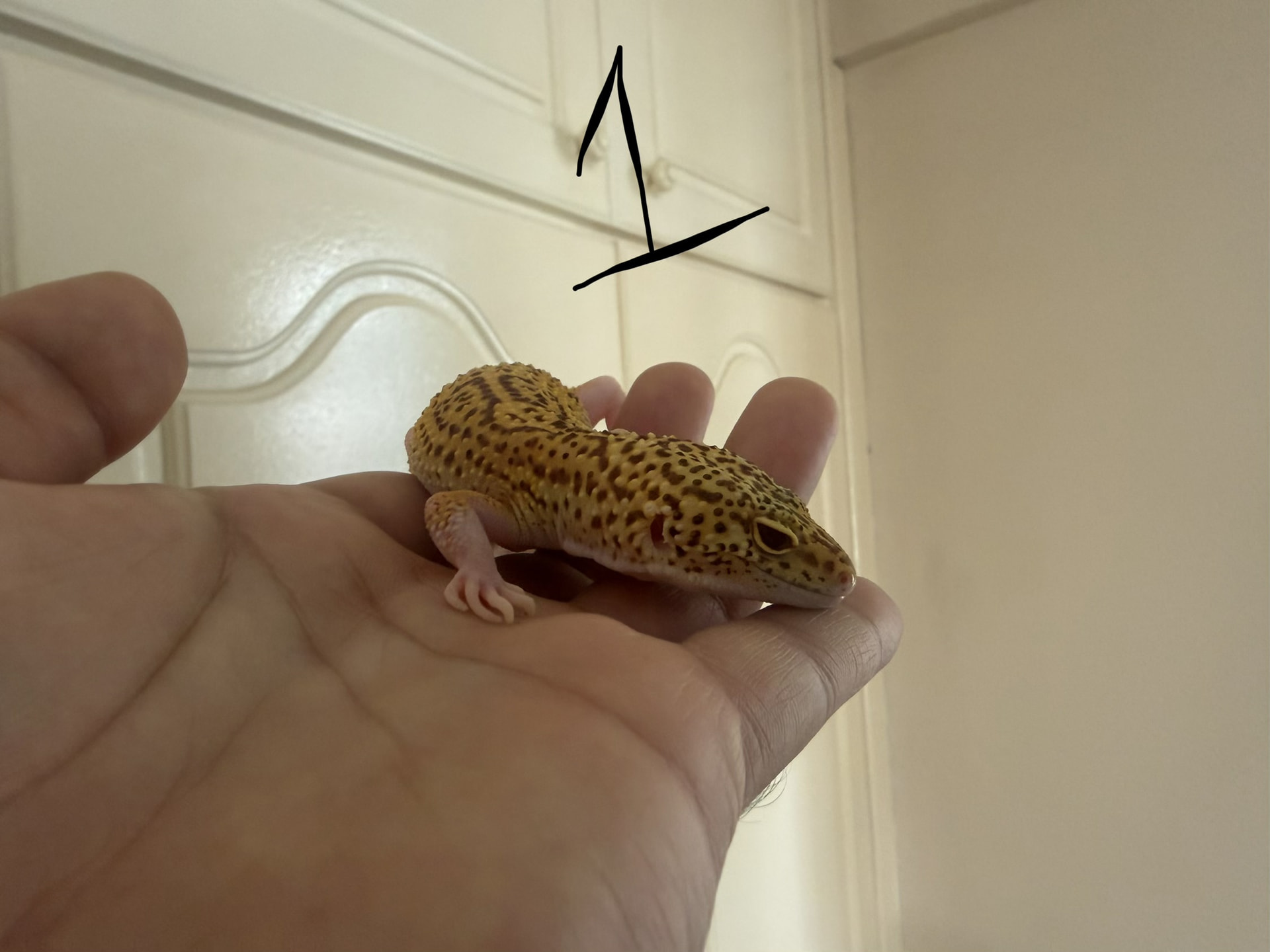
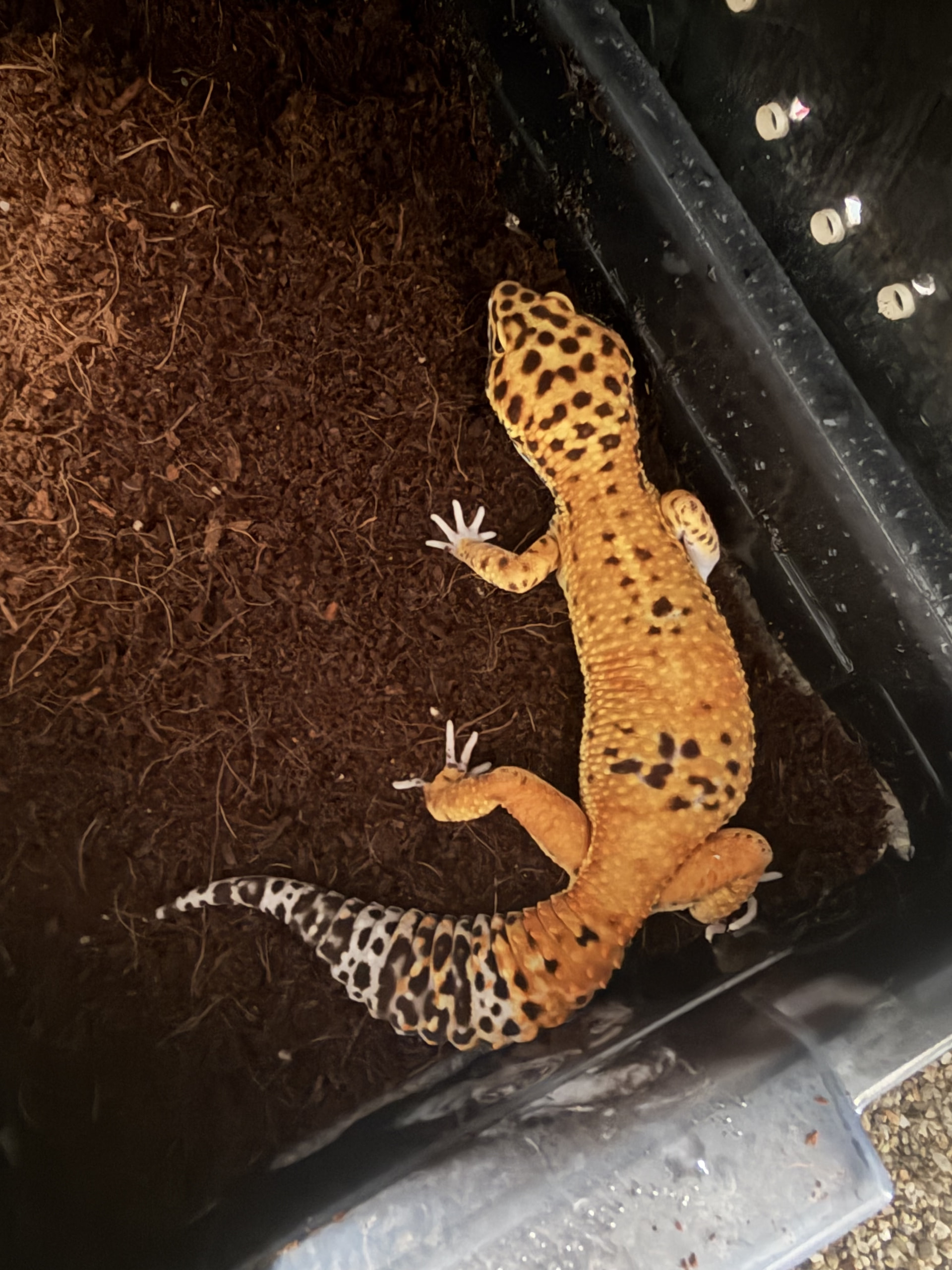
Hi! I have two leopard geckos, and I’d like to make sure about their morphs. The person I bought gecko #1 from mentioned something like “Bell,” but I can’t remember exactly what they said.
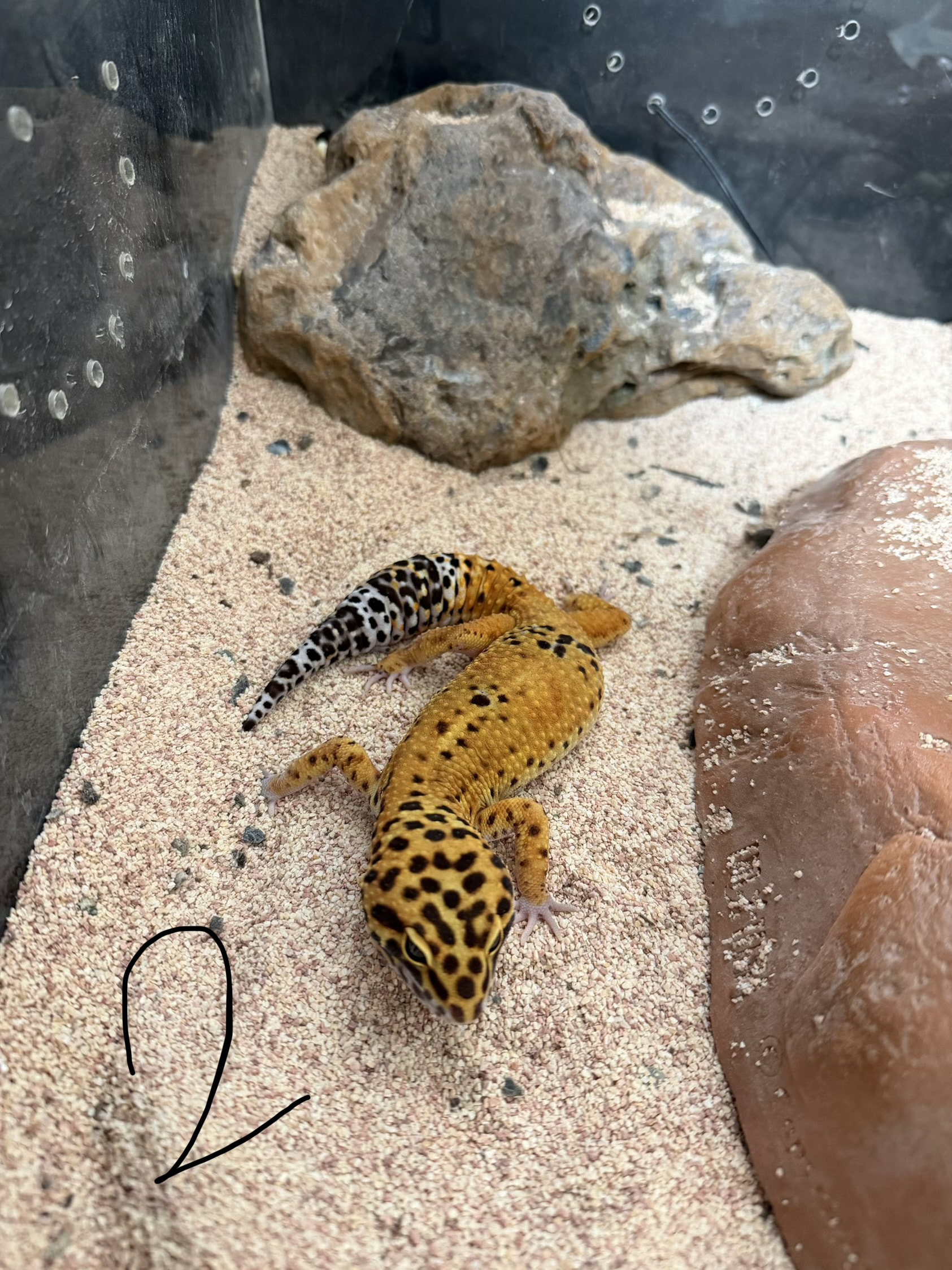
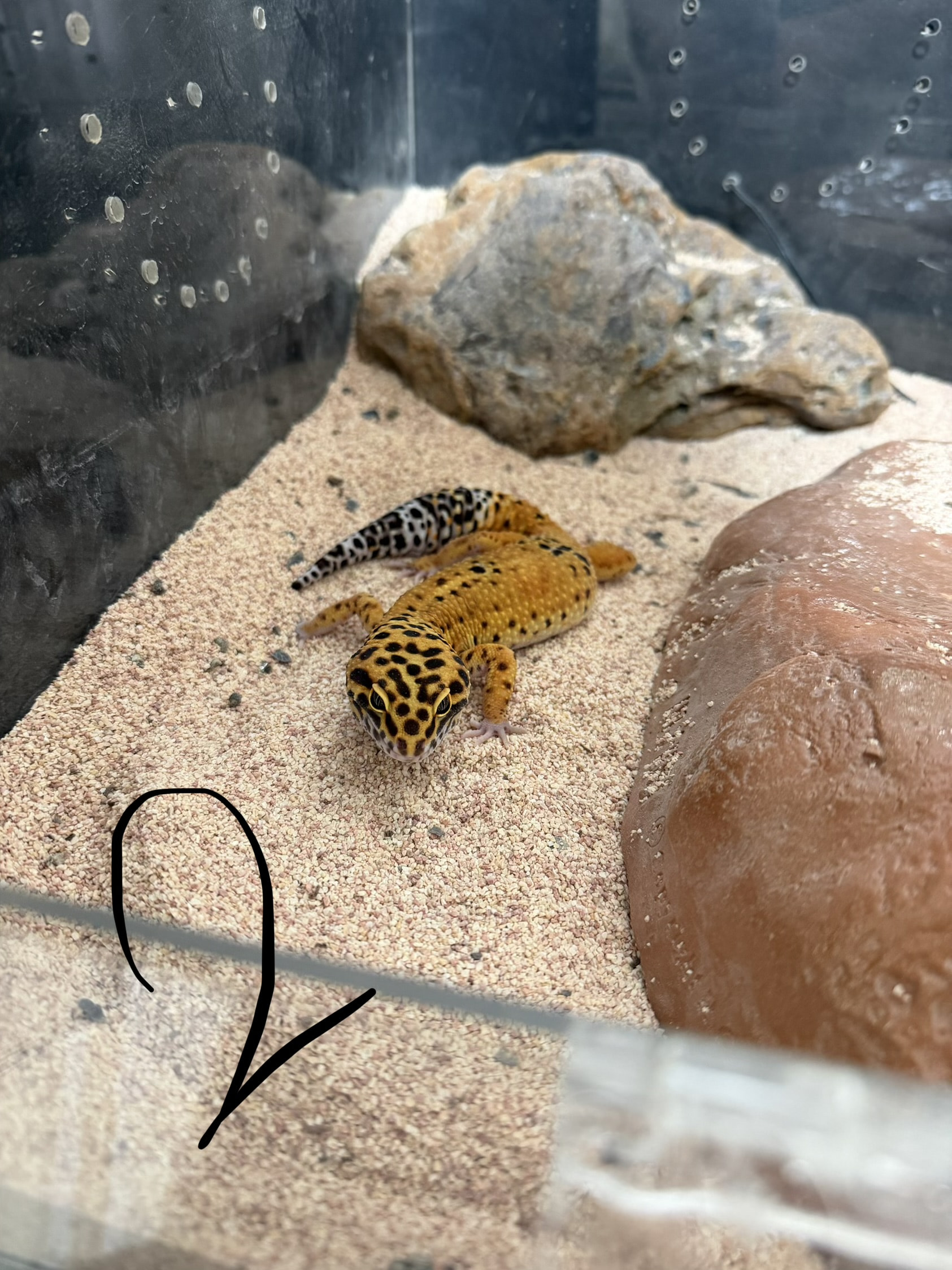
As for gecko #2, I have an idea of what the morph might be based on my research on forums, but I’m not completely sure since there are so many different morphs.
Number one seems albino unfortunatly you cant tell what type of albino without genetics. (types of albino are bell tremper ect) the 2nd one I can’t exactly tell the color is it orange or yellow? If yellow i’d assume hight yellow leopard if its orange then i’d assume a tangerine leopard gecko (and the orange tail at the base is what I’d consider a carrot tail for number 2) ^^
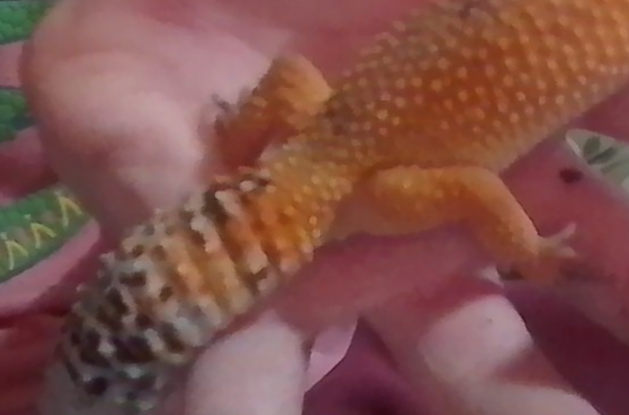
my leopard gecko who’s also tangerine has this orange at the base of the tail that’s what I consider carrot tail see here’s my Leo’s carrot tail looking at the image I’d assume number 2 is also a low percentage carrot tail like my girl:
Cute little ones! Some good weight on them too. Quick aside just to get it out of the way, do be careful with #2 on that sand. Leopard geckos do have a tendency to eat it when they aren’t getting enough vitamins and they can become impacted with it. I try to leave a constant supply or vitamins and offer food on tongs or in a dish to avoid grabbing it with the prey. Cocofiber… they hate the taste off so you shouldn’t have that issue. =}
So thankfully by saying Bell, you know which type of albino your first gecko is. Bell is one of the three strains of albino (Rainwater/Las Vegas, Tremper and Bell)
Without knowing what the parents were, there’s not much more info that I can give. They do have a nice high yellow look to them though
The second for me is a hypo tangerine. They have good color and a reduced amount of markings. Ideally 20 or less spots on the back, but this one still can qualify because of the browned out speckles. 5 spots or less would be a super hypo.
The tail is a low quality at best for Carrot tail. A good CT should have 15% or more of the tail be a solid orange and not broken by any white or black markings. Some breeders actually will say up to 30% (as mentioned in the morphipedia here as well). Leopard geckos in the hobby typically have some orange at the base of their tails because of how selectively bred they have become. Most of the 'normal" leos I see in pet stores lately tend to be high yellow because of how common they are now.
So I guess a few black spots kept him from being a Super Hypo As punishment, he’s getting a multivitamin-dusted Dubia today, because the little rascal really doesn’t like multivitamins
Thank you so much for all your help! I’m really happy with your comments and explanations. I love them very much, and honestly, I didn’t really care what their exact morphs were. But since I’m planning to breed them, I wanted to be as sure as possible. Even though we still can’t be 100% certain, at least I have a much clearer idea now.
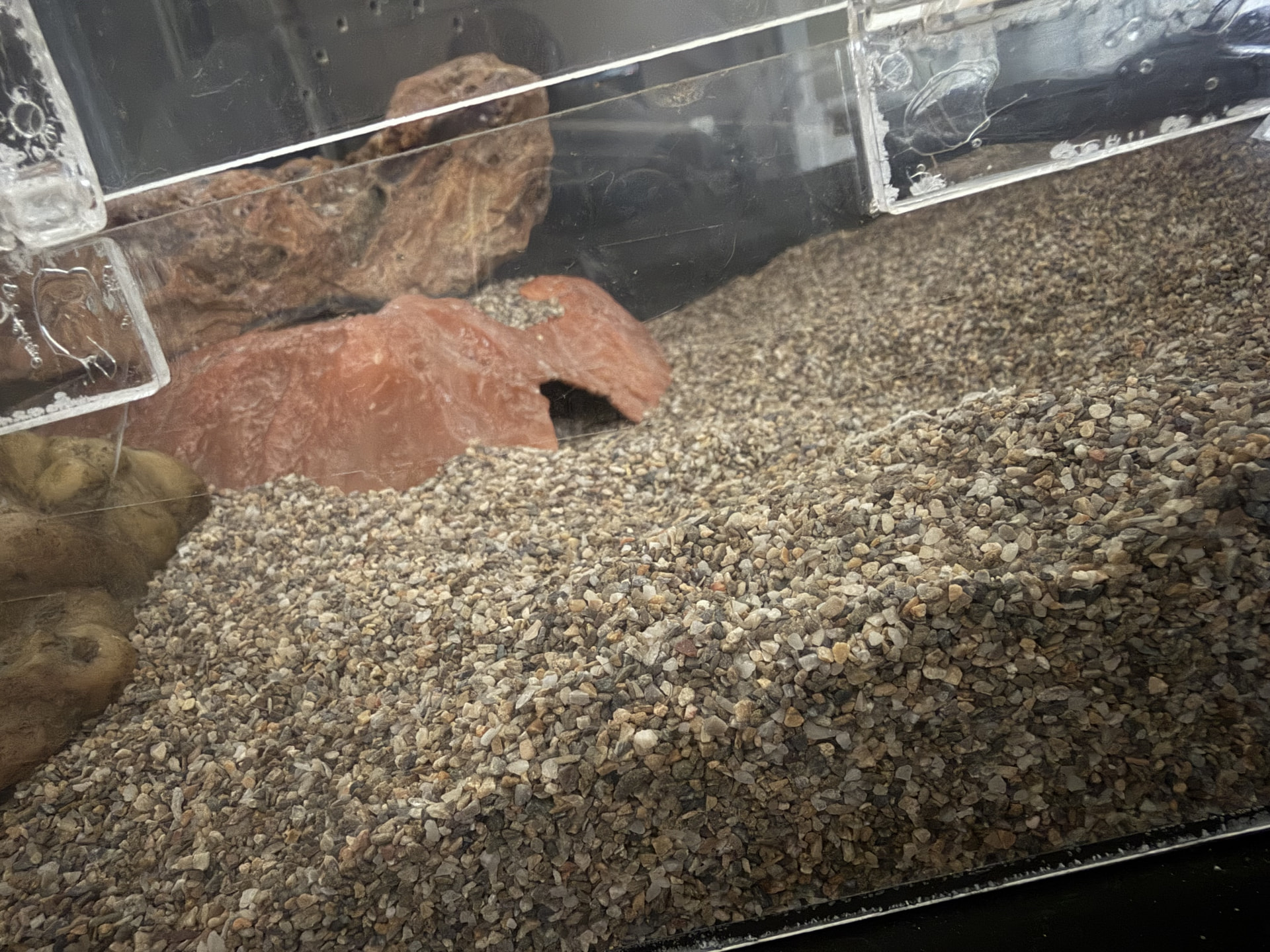
By the way, I replaced the desert sand you mentioned. I switched to slightly coarser-grained river sand. Just like you suggested, I feed them with tongs, holding the food up off the substrate. They seem healthy right now, and I hope they stay that way



 As punishment, he’s getting a multivitamin-dusted Dubia today, because the little rascal really doesn’t like multivitamins