Hi,
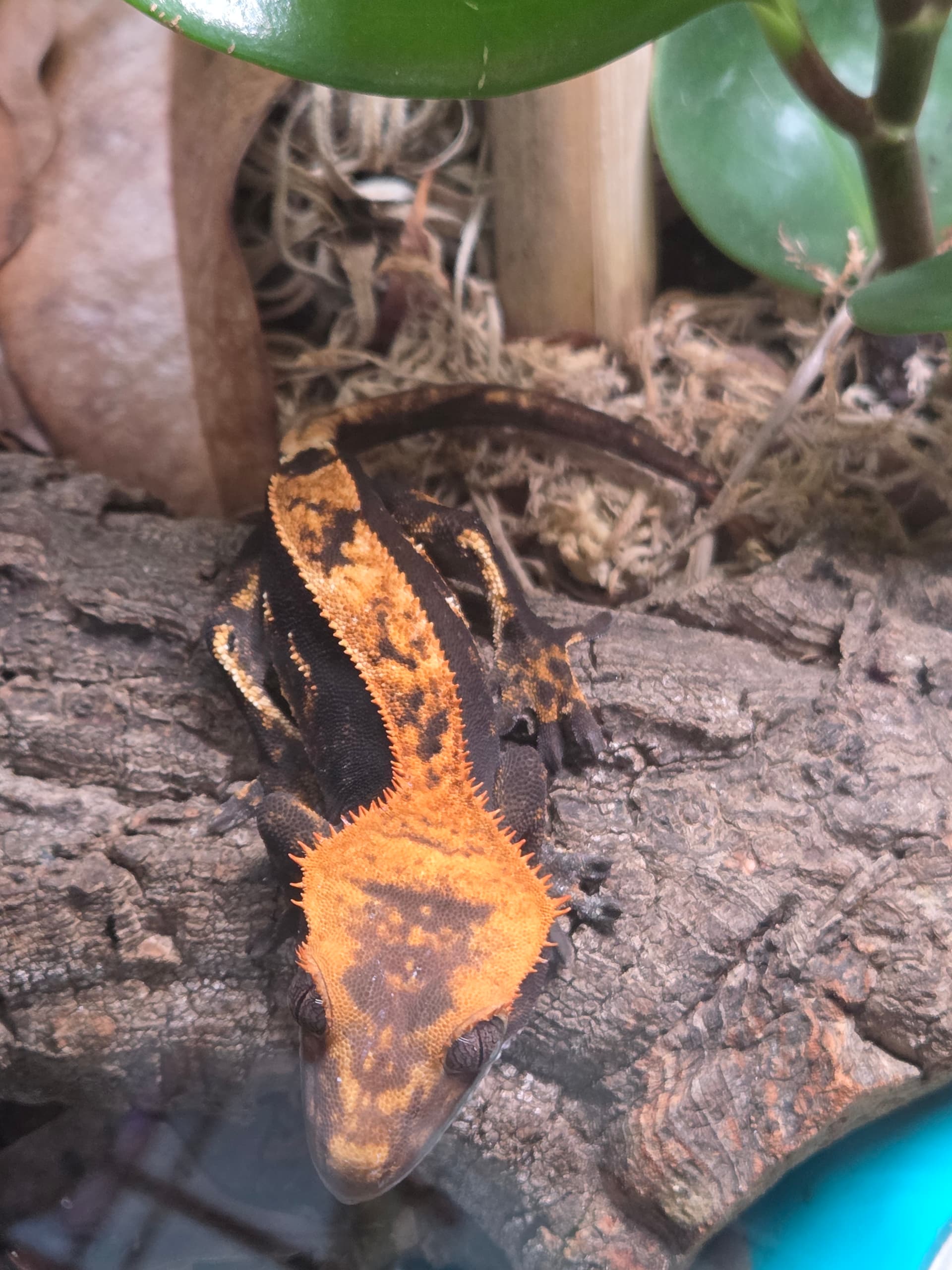
I’m thinking my dude is a Halloween, but I am new to
all of this, so ID help is appreciated!
3 Likes
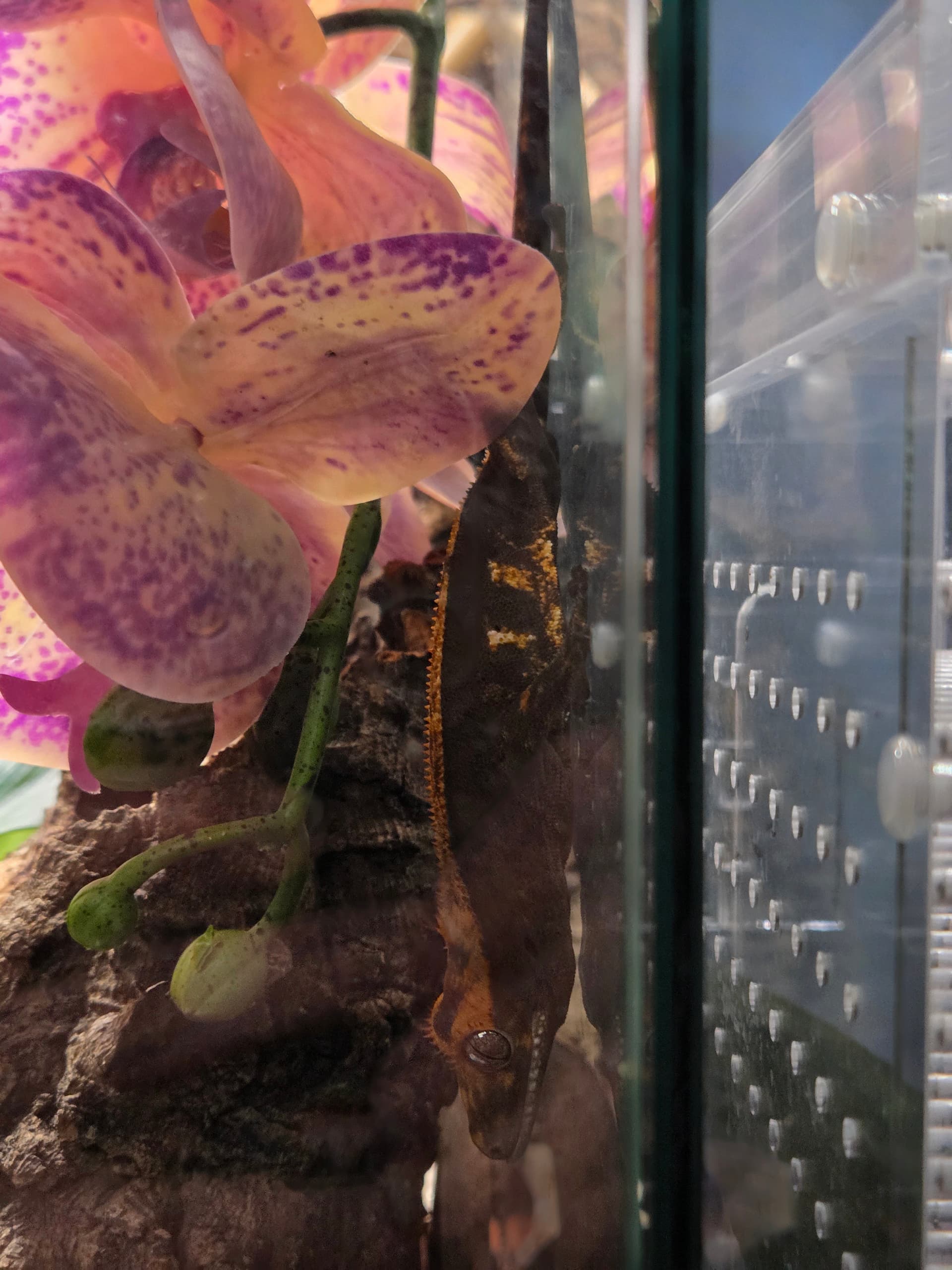

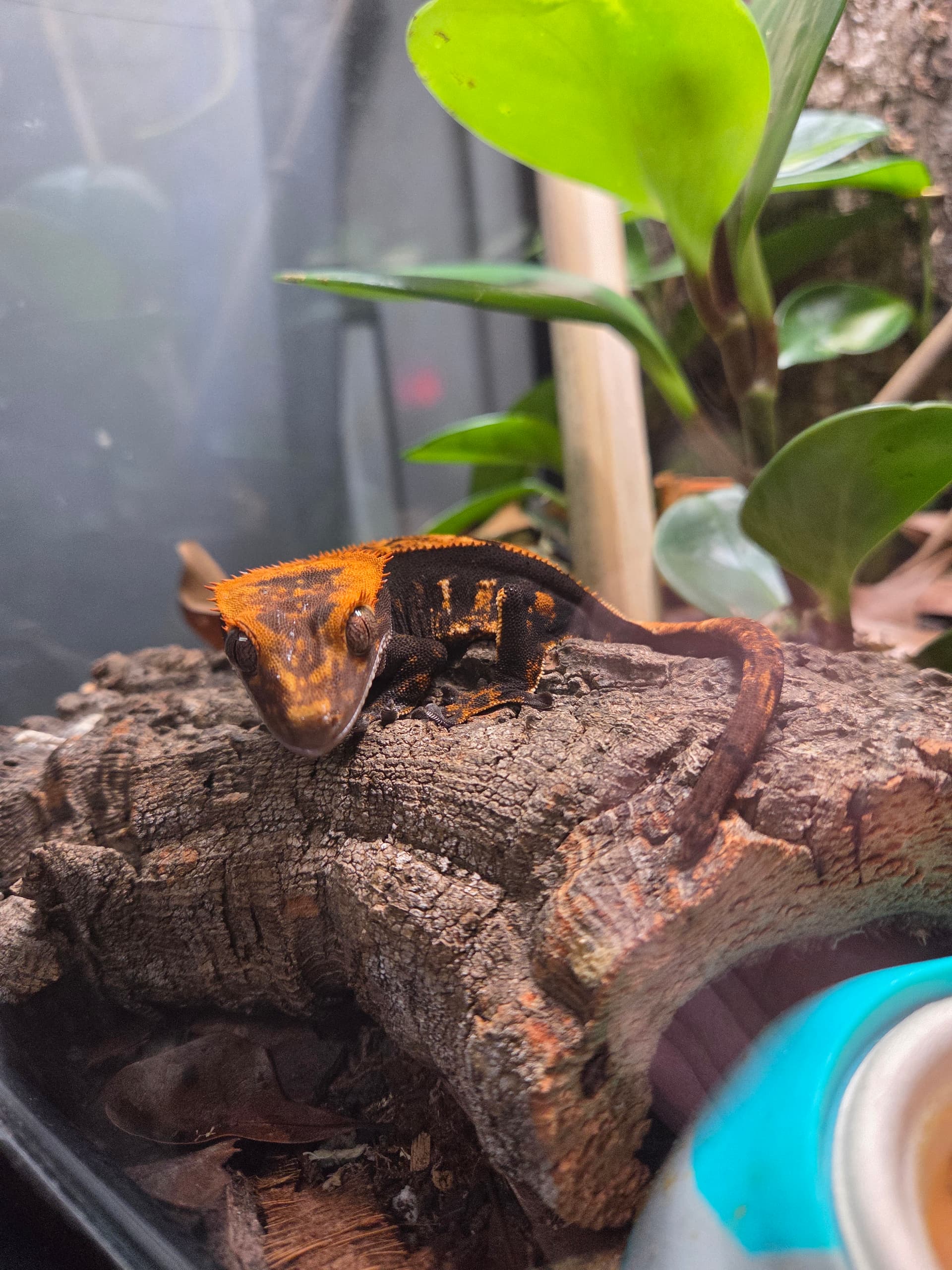
Partial pinstripe, I’ll mention @autumngeckos though I do agree with Halloween.
3 Likes
Agreed partial pinstripe harlequin, right now it looks to be a halloween as well, though it seems like the white on the dorsal could very well become more prominent, and the orange could still fade 
3 Likes
Thanks. He doesn’t really have much of any cream on him. He’s kept the same dark fired up colors since I got him. Maybe gotten a little darker. We picked him because of his dark orange!
What makes a pinstripe? I’d rather learn from you guys than the google.
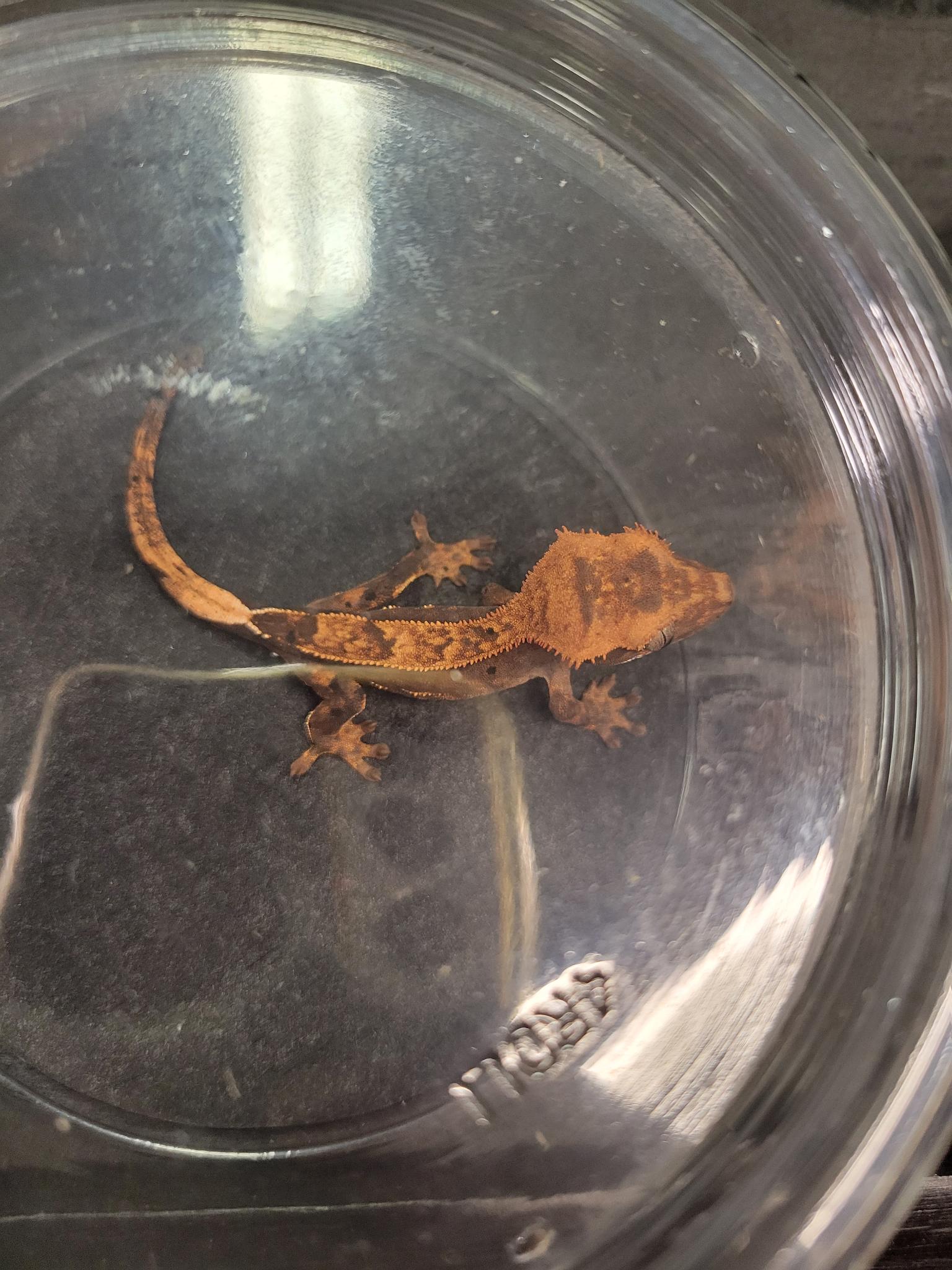
Here’s the day we got him!
2 Likes
Pinstripe refers to the raised scales along the edge of this dorsal, since he’s got two breaks in the scalation near his tail, he would be considered a partial pinstripe.
Halloween isn’t a genetic morph, but rather a visual descriptor, and people can be a bit pedantic on which geckos qualify. A lot of people will say that even the slightest white/cream will disqualify a gecko from being considered a halloween. This one does have potential though, but does seem to have some possible white pattern areas on the dorsal that may or may not become more prominent as time goes on.
Most geckos hatch with little to no white pattern, and mostly orange colours. The white then comes in over time, and the orange will often start out getting more vibrant, but then fade again, depending on lineage.
Crested geckos have two main pattern types, white and orange, and, besides the colour itself, they tend to have a slightly different quality to them, with the white pattern having a more solid look to it. Even on a gecko whose orange pattern has faded completely, you can often still tell which parts are which pattern type. For the same reason, you can often also tell which parts of the pattern on a hatchling are likely to end up more white.
There are areas in the dorsal of your guy that, although orangey right now, are clearly a different shade than the other orange. Those areas could very well turn more cream as times goes on. They also might not, especially if there’s some empty back genetics involved, which there might be, based on the breaks in his dorsal. In my experience, EBs often hold onto the orange better than those without it.
Lineage will usually give you a good idea of whether the orange will stick or not
3 Likes