I understand feeding juvies larger meals less often. I do hatchlings once a week, juveniles every 9-10 days, subadults every 11-13 days, and my adult breeding females eat once every two weeks. On this schedule I tend to have two-year-old females sitting between 1,000-1,200g - which gives them a full year to finish growing and add the additional weight and nutrients before breeding.
2 Likes
That 5 to 7 (once a week 80 percent to every 5 days 20 percent)was from hatchling to breeding so I didn’t step down the feeding.I do not advocate this at all just stating what I did to get that particular female to breeding at 13 months again I strongly recommend against it.
1 Like
Fair, which while i agree compared to what some people advocate, its not the worst, but definitely would support the issue could have been under developed organs and the weight coming more from muscle and fat, which could definitely cause issues when breeding in my opinion.
Not trying to demonize you, purely speaking of the situation, it definitely sounds like you learned from it since you are speaking about it happening historically, and not that it is your current method 
1 Like
I just keep it real I used to do a lot of things because it was the accepted method or someone who has done it a long time said so. But I noticed my results didn’t match the ones they were getting lol. So I decided I would try different things and listen to different voices. I believe in learning from my failures not hiding them. I also like to give a completely honest opinion as someone who has produced a decent enough amount and done it long enough to notice things. I also believe if we don’t know always error on the side of the animals health.
1 Like
Could not agree more! I have definitely changed alot from the generic guides i first read/watched, and my way is different than yours is different than @inspirationexotics is different than etc.
As long as people keep an open mind, and keep a close eye on their animals health as they develop their care style, i wouldnt say anyone is wrong for being different unless the animals are unhealthy.
2 Likes
I’ll be totally honest here, I’ve been struggling to produce enough rats to feed all of my snakes, and because of temporary financial struggle (fiancé changing jobs) I haven’t been able to buy feeders. However any snakes that eat mice have been fine since I’m producing those fairly consistently.
When I have fed my snakes eating rats, mainly the ball pythons, I’ve noticed they’re SO MUCH more willing to eat.
We’re finally stabilizing financially, so I’ll be able to start buying feeders while I also start working on getting new racks either purchased or built for more rat production.
But I’m only gonna be feeding my adult males and females every 2-3 weeks, subadults every 10-14 days, and juvenile/hatchlings every week. I like seeing the heightened food response and want to keep it that way.
Also, I’ve very limited experience breeding, but I like to make sure my females are big enough and old enough to breed. One of my females is 4 years old and was sitting around 1200-1300 grams when I bred her, but she produced 4 healthy eggs. She’s just a really small female.
I usually try to aim for 3 years and 1500 grams, but I also look at their body condition and feeding habits too before I fully decide.
8 Likes
I have one female that will be 2 years old tomorrow. She is shy of 1100 grams. I could potentially get her weight up and pair her by February. I am not willing to risk her just to get a clutch of eggs. My animals are my babies regardless of what species they are. Their health and wellness are my only concern.
Breeding most animals at a young or early age has it’s risks. Breeding a dog when she has her first heat is risky. Sure it happens but waiting for her third is much better for her health and the health of the pups. I see it the same with my snakes. I know next year her body condition will be ideal for breeding.
2 Likes
I’m not a BP breeder by any means, so take my opinion with a grain of salt for sure, but:
I think it might be more constructive to frame this thread as educational, rather than moral? I know that there have been many experiences relayed with success/failures both breeding early/later, but are there really no studies done on any reptile follicule development/reproductive health relative to age? Even some research on birds would be somewhat applicable I would think. Granted I don’t have the time to skim research journal articles on reptile eggs at the moment to see if the research exists but…
I do know that people will do with their animals as they wish. Even IF we had clear cut evidence toward one side of the argument v. the other, I don’t think that would change much other than in terms of education. People will breed early, other people will not.
I’m just saying try to be aware that we aren’t going to be changing anyone’s morals here. I’m NOT comparing early breeding with say declawing a cat, but we have lots of evidence against declawing and people still do it. People will do with their animals what they will do.
So maybe there would be less tension if the focus was on available evidence, or finding that evidence, rather than feeling put out bc of moral tensions?
Sorry if this is a spicy take, not trying to ruffle any feathers…err scales
6 Likes
Not sure if such a study exists. There is some good information here, but i havent given it a full read through yet (assuming this link works)
2 Likes
The link works @verinium.
2 Likes
@verinium after reading it, this was not relevant to size or age. There was a few entries that listed age and or size, but nothing related to do’s or dont’s. There was one “company” that only breads when they reach 1500g f and 500g m, but no age applied. This same “company” also only breads females every other year, but did not state why. There was another study of a 980g f v 2010g f, but no problems recorded and no long term effects monitored. Interesting read, but nothing to help one side or the other as to age or size to start breading or long/short tern effects.
This topic will never have a definitive outcome. As all species, age, size, housing, feeding, and caretakers will all very and all have different outcomes. Just my take on it and again, not taking any side.
3 Likes
Fair, i shared it as from what i had read at the time, it seemed like an interesting read with some good info, the title and summary had me believe that somewhere it may touch on reproductive maturity and give comparison with them in the wild since people commonly use the wild as the gold standard. While it didnt give a conclusive answer one way or another for this topic, hopefully it was still at least interesting and informative
2 Likes
@verinium i totally agree, it was a good read and a lot of interesting history. Thanks for sharing as i would never found it.
2 Likes
Question for all who have bred their females at about 1000 grams. What have been your clutch sizes? I will be a first time breeder this season and wanted to see if it might be worth getting 2 extra clutches from my 2 females currently at about 900. I estimate they will be 1000-1200 grams by the time october rolls around. Thanks in Advance!
I wouldn’t even consider pairing until the females hit at least 1200-1300+ grams, preferably closer to 1500+ grams, but my smaller females in the 1200-1300 range usually have laid 3-5 eggs. 1000 grams is too small though, imo.
The one that laid 3 eggs laid super long eggs though, she likely would have laid 4-5 eggs if they were normal sized 
5 Likes
I paired a 9yo female who was a mouser most of her life and as a result was about 1400g when I paired her but was well old enough. She laid a healthy clutch of 5 eggs. For young females, I won’t pair them until their 3rd winter regardless of weight. I’ve got a 1600g girl who’s about 2.5, and she will not be paired for another 4-5 months. I would not recommend pairing at any weight below about 1300, but especially if they’re young.
2 Likes
I agree 100% with this. I’m a huge fan Justin , and I have been keeping and breeding reptiles for 20 years , although
New to the selling part. I have advanced studies in geneology and love watching your videos.
These are 1000s of years in the making. They know when it’s time to ovulate , they know if their body can handle it.
Also experience gives
You an eye for whether the female
Can handle a clutch or not.
My
Leopard
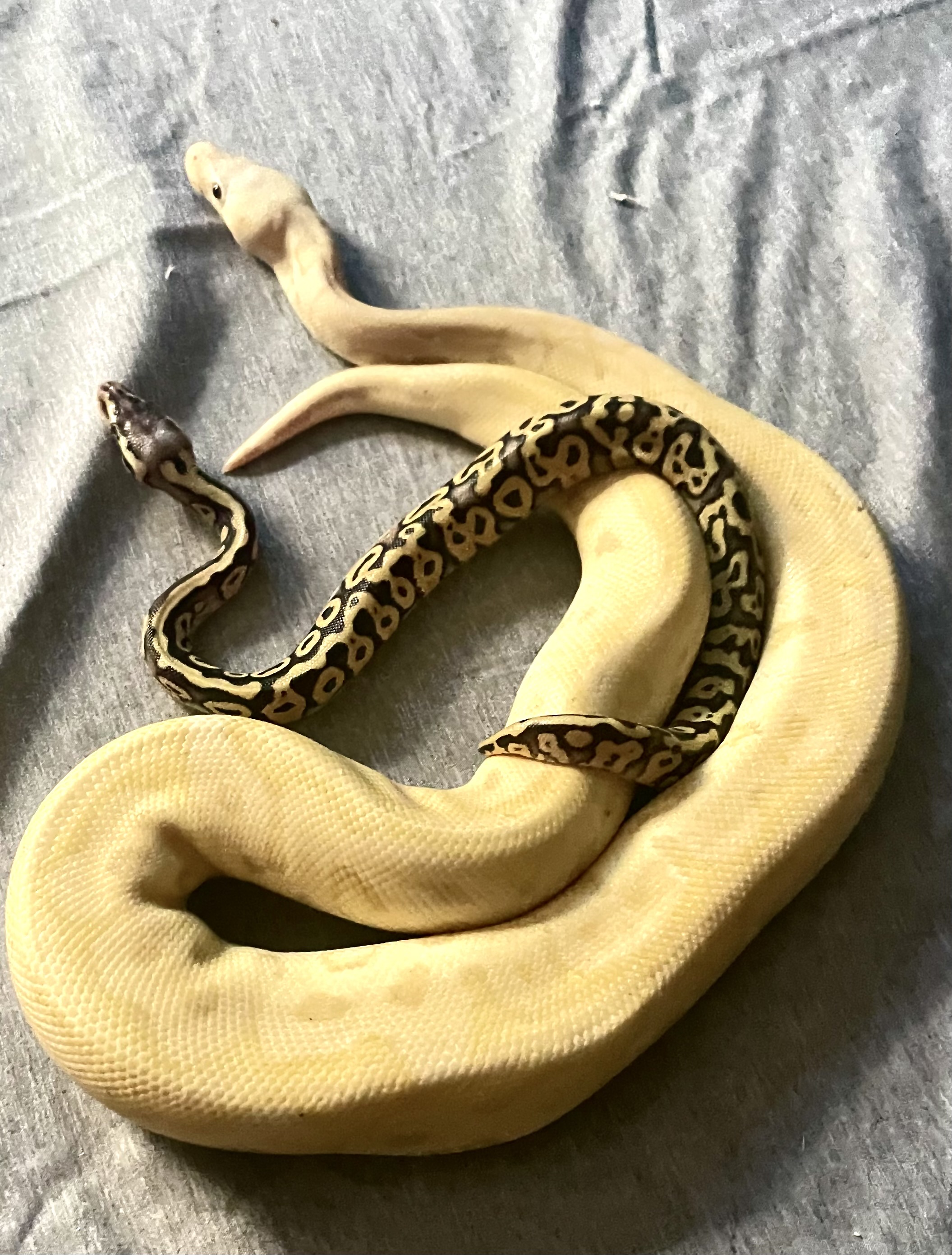
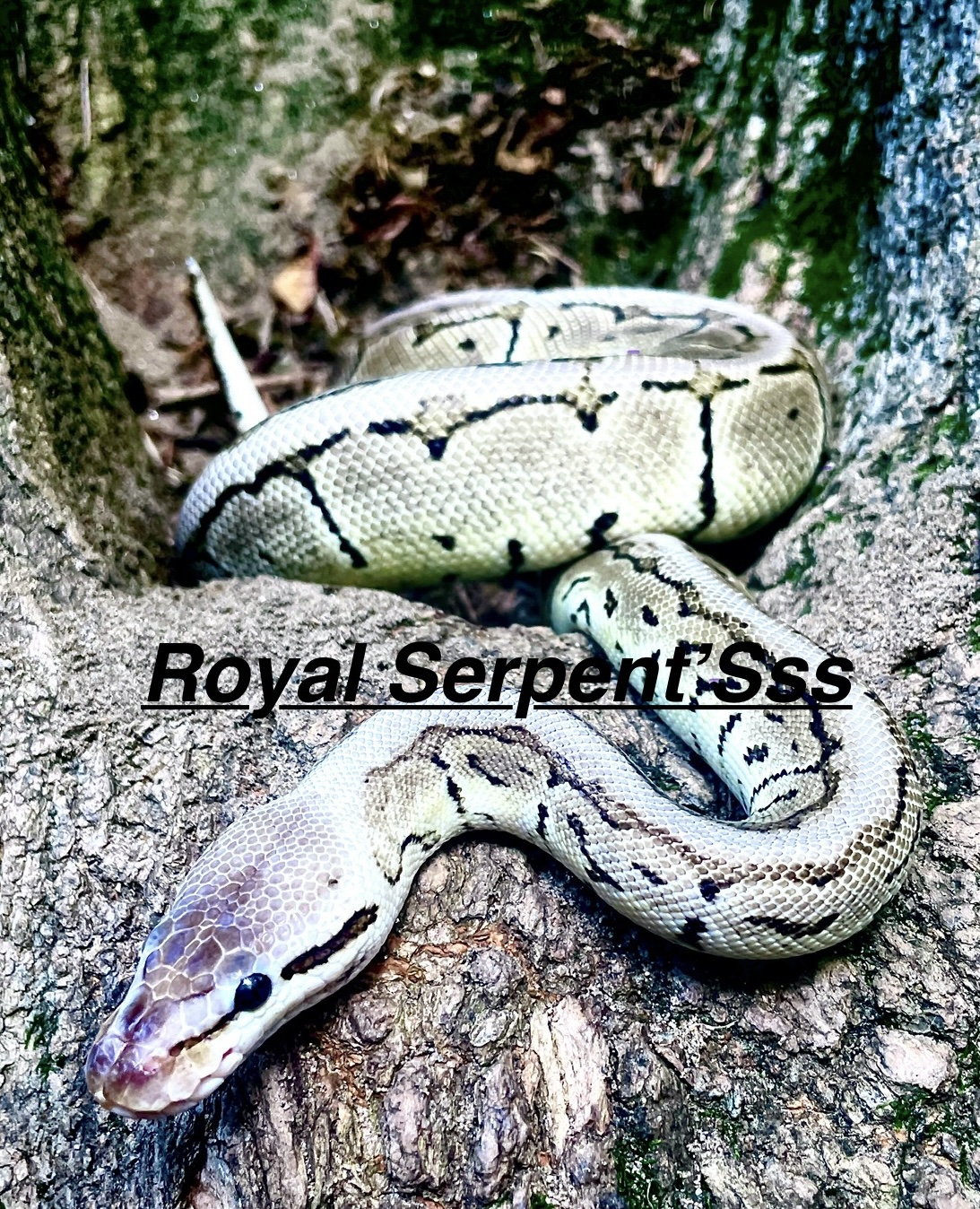
Pastel Yellowbelly (1100g) for example to my pastel banana clown (500g) last November. Paired once a month until march then stopped pairing and feeding. Ovulated in April at 1600g. Laid in June , and even let her do maternal incubation and she went from 1600 down to 950g!
Now 2
Months later and she is 1250g! And healthy as a horse.
If she wasn’t ready she would have absorbed. Now of course if I breed that small I always give the following year off. I do feel it’s important for them to each full adult size before they get their second clutch in.
But that’s just a personal preference.
Can I ask , what’s your take on this……
So my
Male
Banana pastel clown , he has remained around 500g for a year. He eats when he feels
Like it lol. Never had a health issue.
Never had such a picky ball.
He locked one time with my axanthic Lemonblast last week. Well he passed away thanks to a power outage and well, me not preparing for such an event.
Anyway I’m heartbroken and really hope he can live
On through his bahies , what do you think the odds are of a 1100g 2 year old axanthic Lemonblast ovulating this year from that one lock?

1 Like
If they will!3 1200g by November I say go for it. If they have a good build to them and are good eateens only !
My leopard pastel yb was 1100g when I paired in November last year.
Was 1600g in April when she stopped feeeding. Ovulated in June. Laid in August. Even let her do maternal incubation! She did great. Laid eggs all healthy babies 4 of them. She lost almost half her body weight. So
Was little scary well not she’s back up to 1200g not even 2 months later and doing amazing. I do recommend you give them the next year off until they hit their adult size. That’s what I do if I breed them early like that.
Here is mama with the super pastel yb Leo het clown holdback and dad with her.
Surprising banana passed to none of the offspring !
Just feed heavy after pairing until they stop.

If they lock , it’s because they are ready. Really never too soon to pair. Mom will not lock if she’s not sexually
Mature. Mom will not
Ovulate if she’s not
Prepared , mom will not breed if she’s not going to produce a healthy clutch.
That’s my
Thoughts on the matter. We do not control the breeding process. They do. All we do is decide who they match with. Rest is up
To them. Most
Problems that occur during this time is poor
Husbandry or
Lack of
Experience.
I say this respectfully of
Course. We
All can have our opinions on this.
I know Justin personally feels the same from watching his
Videos. I’ve been doing this 20 years , although never got into the market until past 5 years.
If I do breed a female
Early
I ALWAYS wait until they are 2000 g or more
Before their second clutch because I want them to
Reach their full adult size and not delay that too much.
Couldn’t have said this any better 
