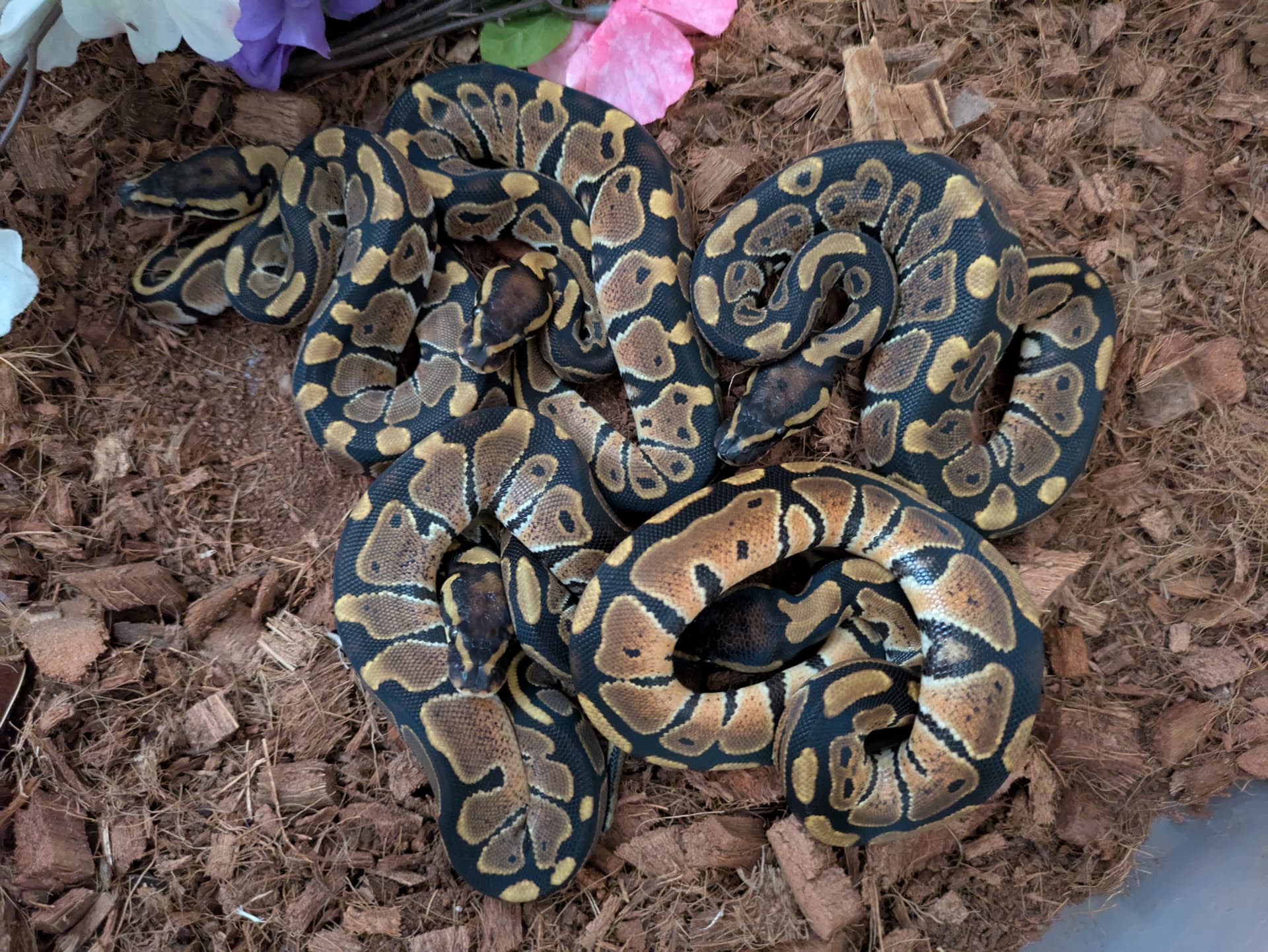
Hey y’all! In the past I have done a couple of “morph ID walkthrough” threads helping walk folks through genes and how I ID babies and they’ve seemed popular, so I figured I would do one for the clutch that just hatched a few weeks ago since these are pretty basic genes and folks might be able to learn something!
The pairing was Romeo (black pewter desert ghost het amur (cryptic)) X a female I bought as a super nanny (carnage) mojave. So the genes in the mix are nanny, mojave, black pastel, pastel, and all will be 100% het desert ghost since dad was a visual and 50% het amur since dad is 100% het. Also, based on the pairing, I was expecting all babies to be nanny since I bought the female as a super nanny. Pic of mom & dad:
And now, on to the babies that hatched!
Baby 1: Normal het DG 50% het amur (What?)
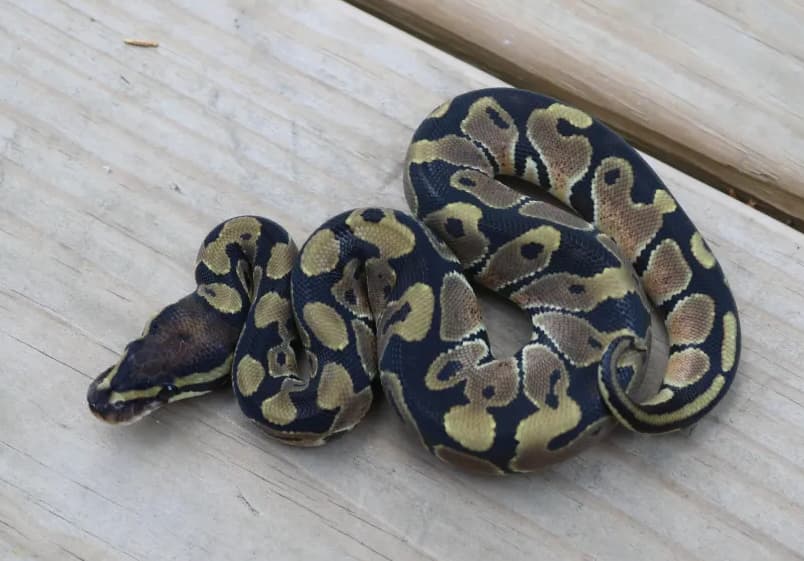
This baby is the only girl, and also… a normal.
 Het desert ghost and 50% het amur, but a bog standard normal visually. She’s not black pastel, pastel, or mojave, and she doesn’t have any granite-type pattern to be a nanny. Now, this is interesting, because based on me buying the mom as a super nanny mojave, all of the babies should have been nanny. BUT, people are fallible and IDs are sometimes (even often) wrong. So rather than looking at this baby and assuming it’s a low-expression nanny (because it HAS to be, because mom is a super!) what I’m actually doing is seeing the lack of a nanny phenotype and going into the rest of the clutch thinking that maybe mom is actually just a single gene nanny.
Baby 2: Black pastel het DG 50% het amur
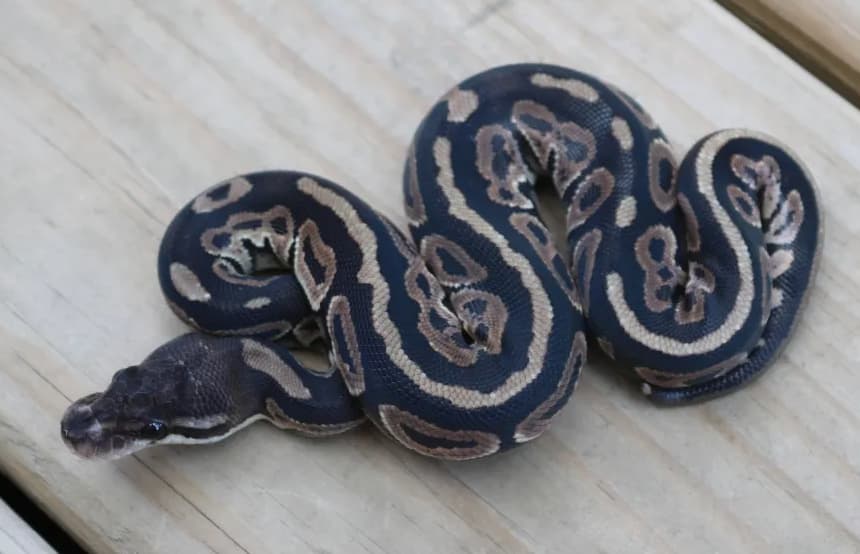
This baby is obviously black pastel, with the typical alien head black pastel pattern, the smaller eye stripes, and the narrowed snout which I’ve often noticed with black pastel and cinnamon animals. It’s not pastel (it would be a pewter) and it’s not mojave, the brown would be richer and with more white and more keyhole-like alien heads. I am also not seeing nanny in this one - I would expect to see more granite flecking and disrupted pattern. So this one is a black pastel het DG 50% het amur.
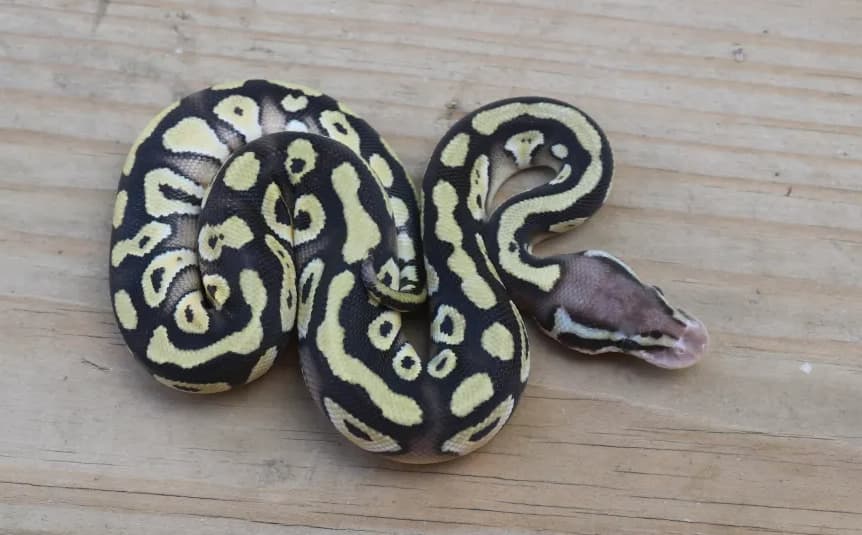
Baby 3: Pastel het DG 50% het amur
Another “boring” single gene! Pastel is obvious due to the yellow color and fading on the head, as well as a bit of a wonky pattern. It’s not mojave (it’d be a pastave) and it’s not black pastel (it’d be a black pewter) so the only other possible gene left here is nanny, and I don’t see it. This baby does have a little bit of dark flecking but given mom’s strong expression of the gene I would expect to see the same in babies, and the pattern isn’t disrupted a ton, it’s not super black fleck-y, and it’s not extra dark (all of which would be indicators that potentially nanny is there). So just a pastel plus hets! At this point I have three animals without nanny, so mom, despite me buying her as a super nanny, was definitely actually just heterozygous nanny. Which is a bummer because she cost me quite a lot, but hey, she’s a pretty snake and mistakes happen.
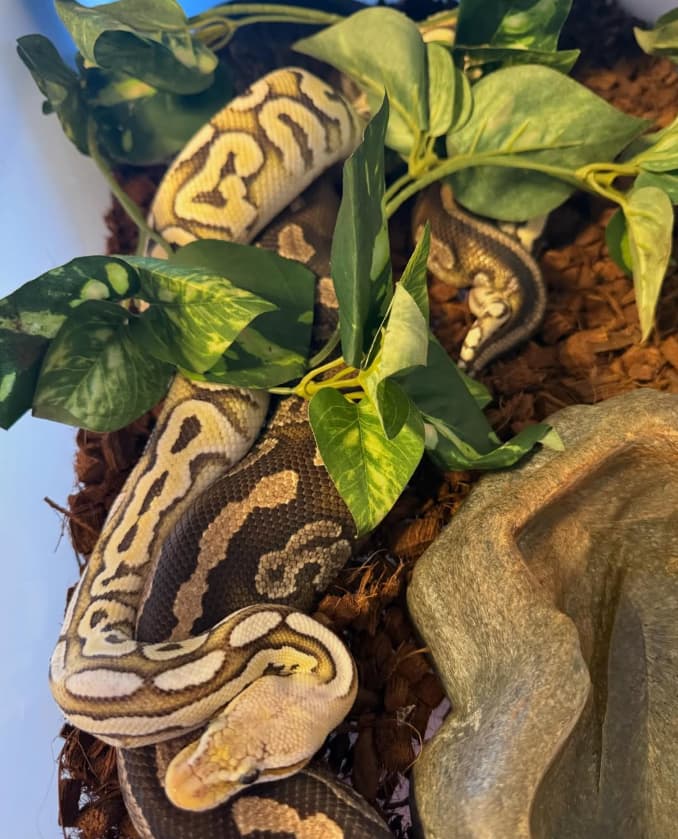
Baby 4: Black pewter poss nanny het DG 50% het amur
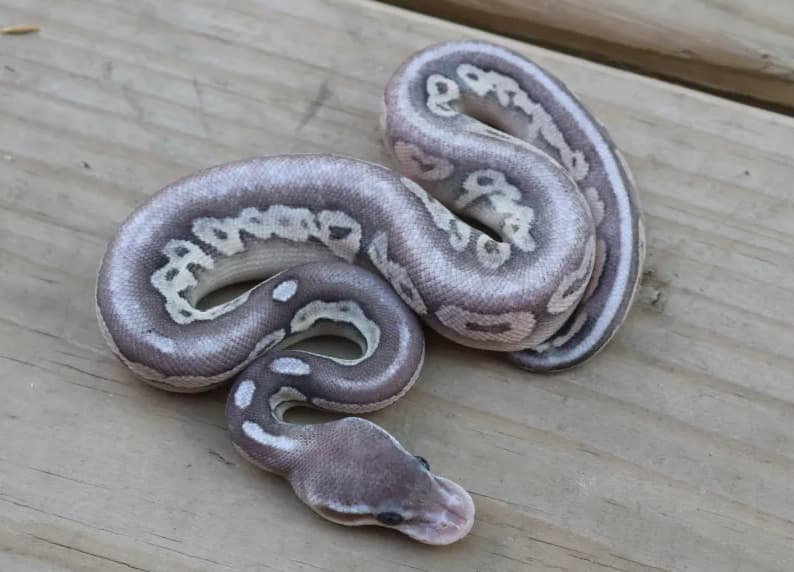
This baby is a black pewter! Pewters (and black pewters) have a very distinctive look with the way pastel and black pastel interact to create a gray, faded looking snake. Pastel and black pastel are definitely here. However, the silver color and the small, narrower pattern makes me wonder if something else is here. Looking at comparisons on MorphMarket, I think that mojave would bring more brown color back to the snake rather than this beautiful silver. So I believe that this snake is likely nanny as well, which would explain the more narrow pattern as well as the disruption of the pattern in some areas. I don’t know this for sure, so I’m labeling him as possible nanny. He could also very well be mojave, which I think is likely given the reduction in pattern, but I’m not sure so I’m not labelling it. I may very well shed test this one.
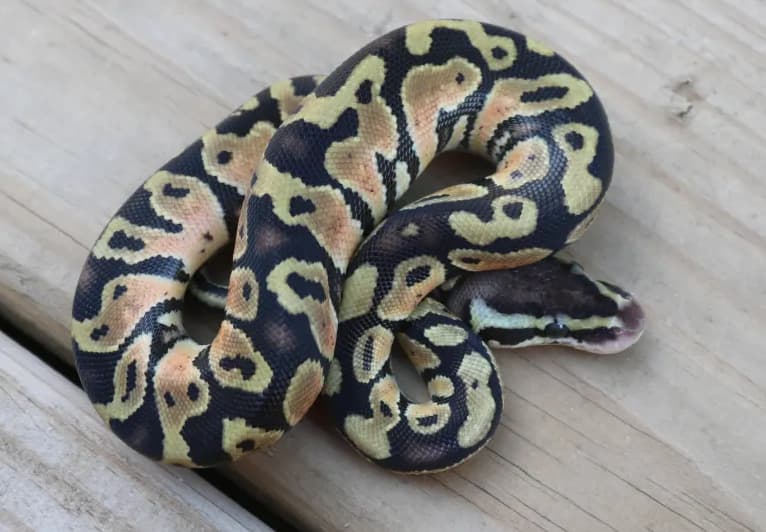
Baby 5: Pastel mojave het DG 50% het amur
This one is easy to recognize! The yellow color and head fading screams pastel, the keyhole pattern yells mojave. This is a beautiful pastave, and once again I do not see black pastel nor do I see nanny. At this point it is 100% clear that mom was a single gene/heterozygous nanny.
Baby 6: Hey, we got one! Nanny het DG 50% het amur.
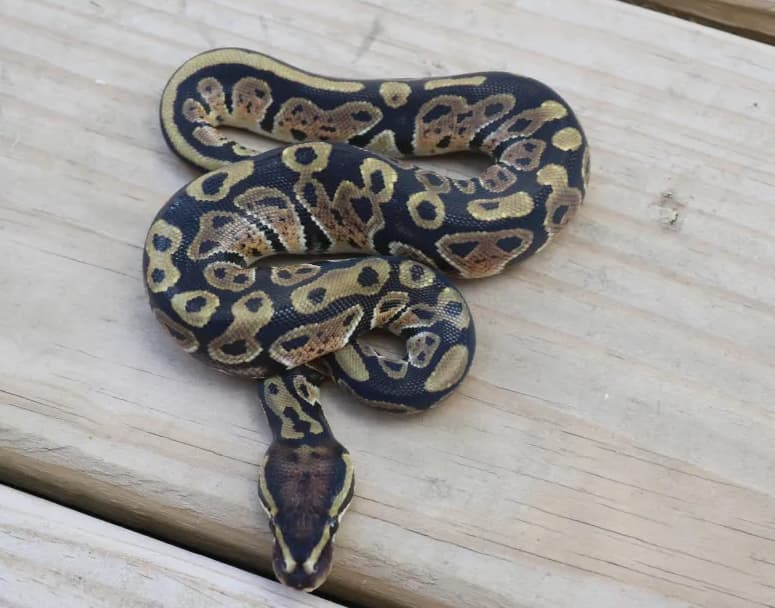
Now THIS is what I was expecting all of the babies to look like! Unfortunately mom proved to just be single gene, but this is a gorgeous expression of nanny. The weird curves and hooks in the dorsal and alien head pattern, the black flecking, the thinner eye stripes - all tell me this is a really nice nanny. That is all it has - no black pastel, no pastel, no mojave. Just a beautiful nanny!
So, at the end of the day - mom proved herself to be NOT super nanny, we got bad luck on the nanny only seeing it in two animals, but they’re all healthy babies and that’s what matters!
If anyone has questions or you find this kind of post useful (or not useful!) let me know!