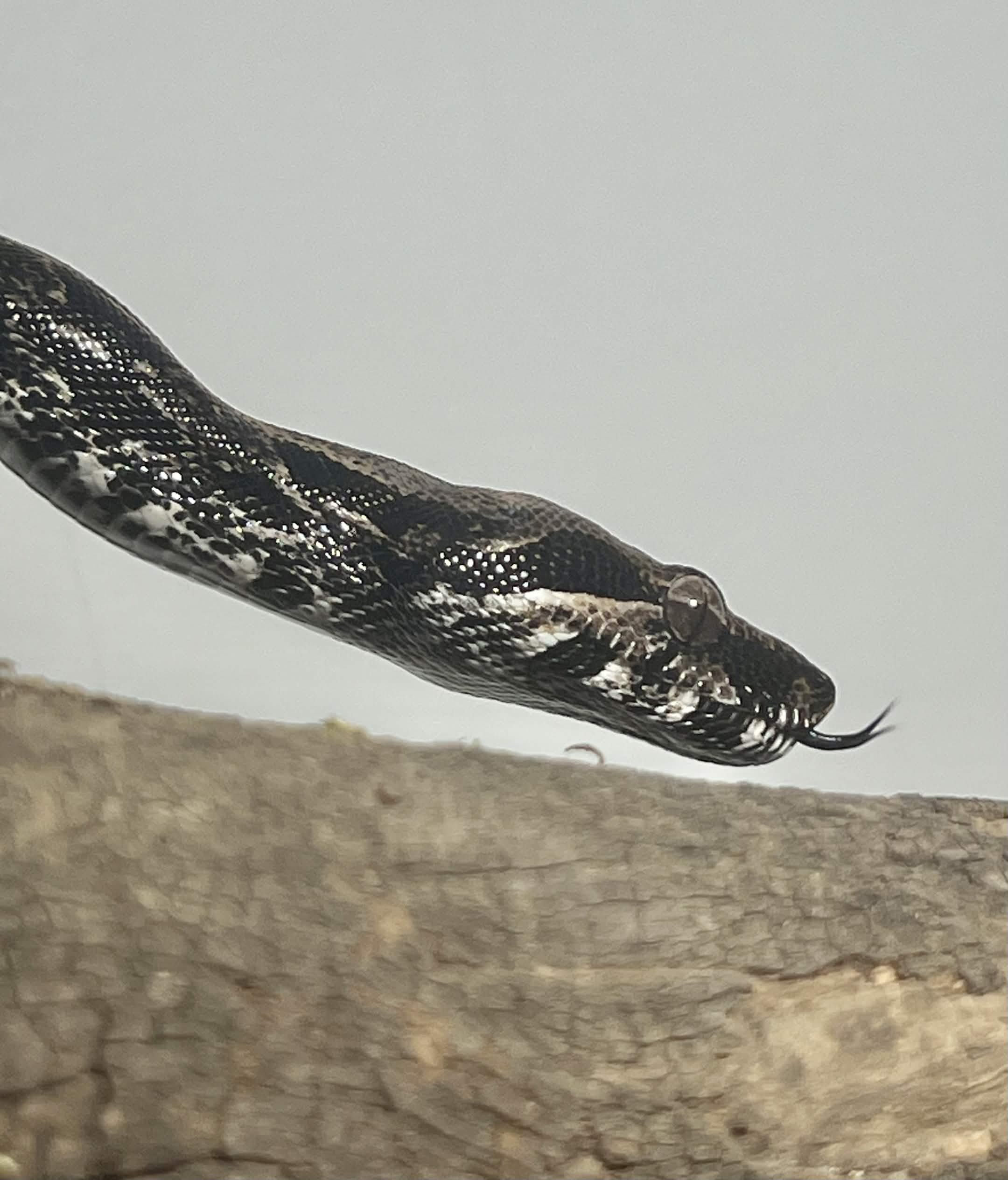
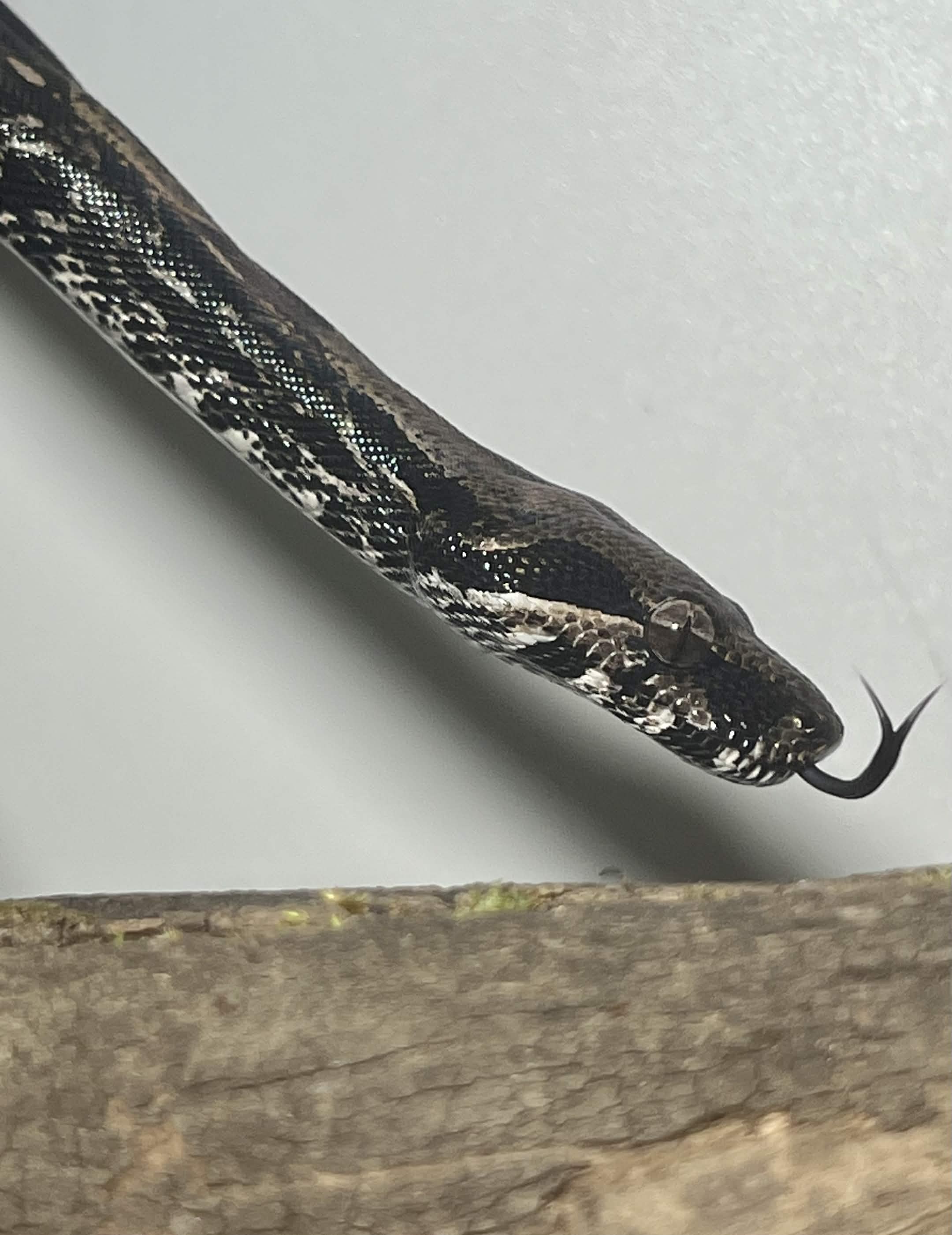
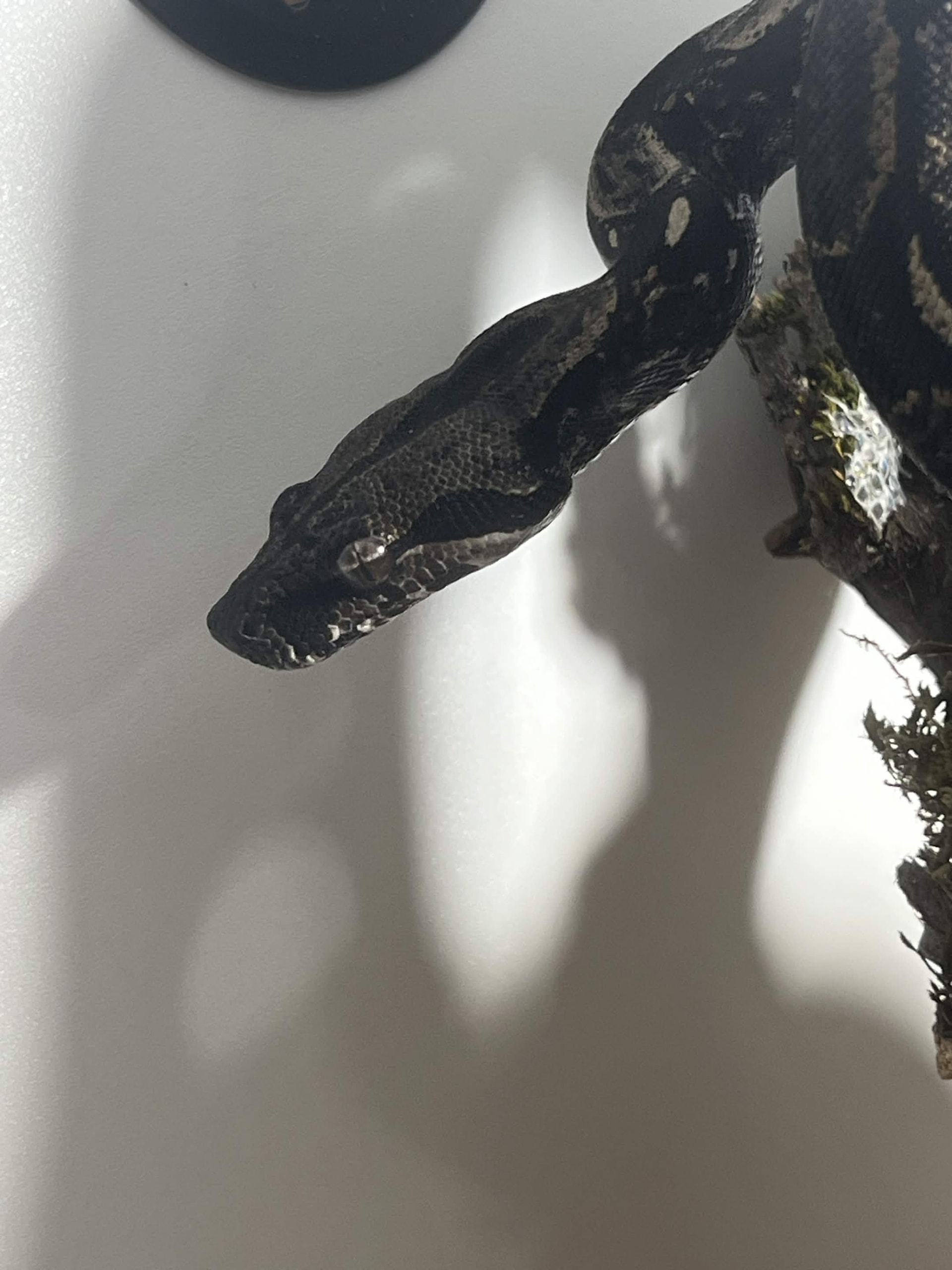
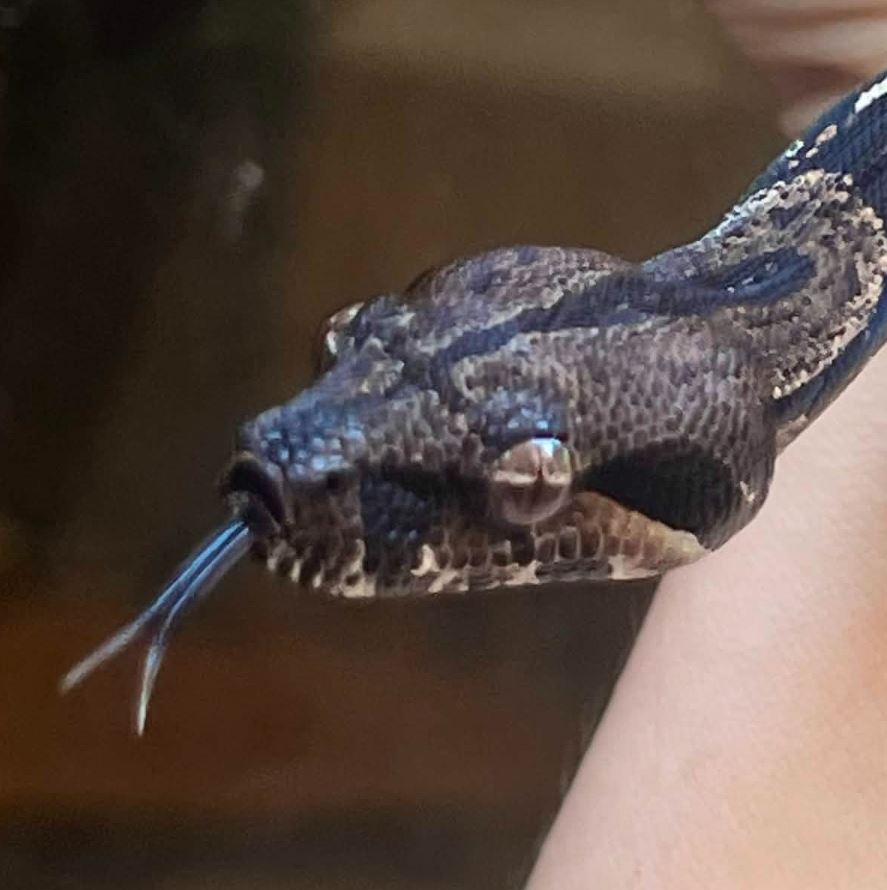
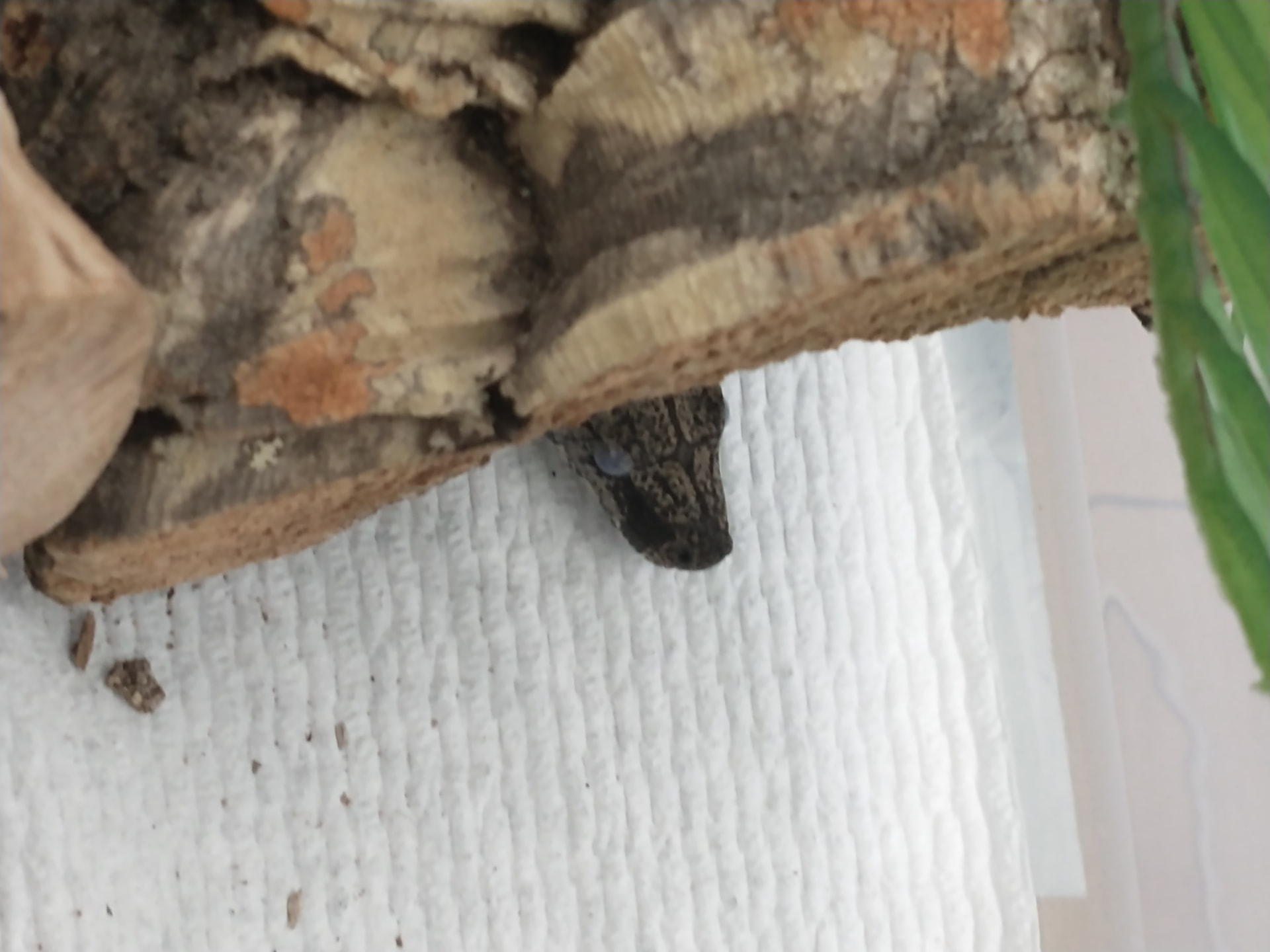
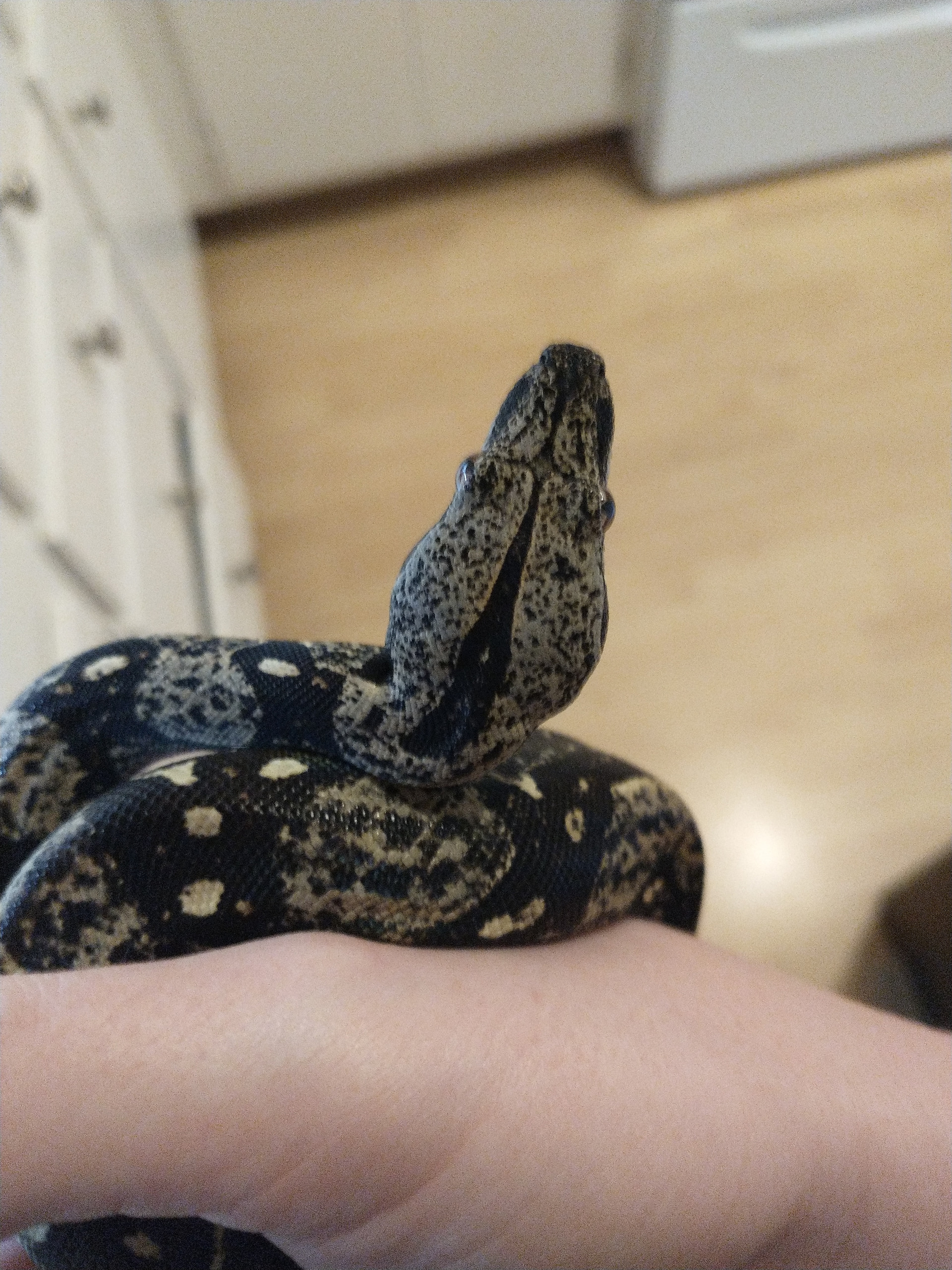
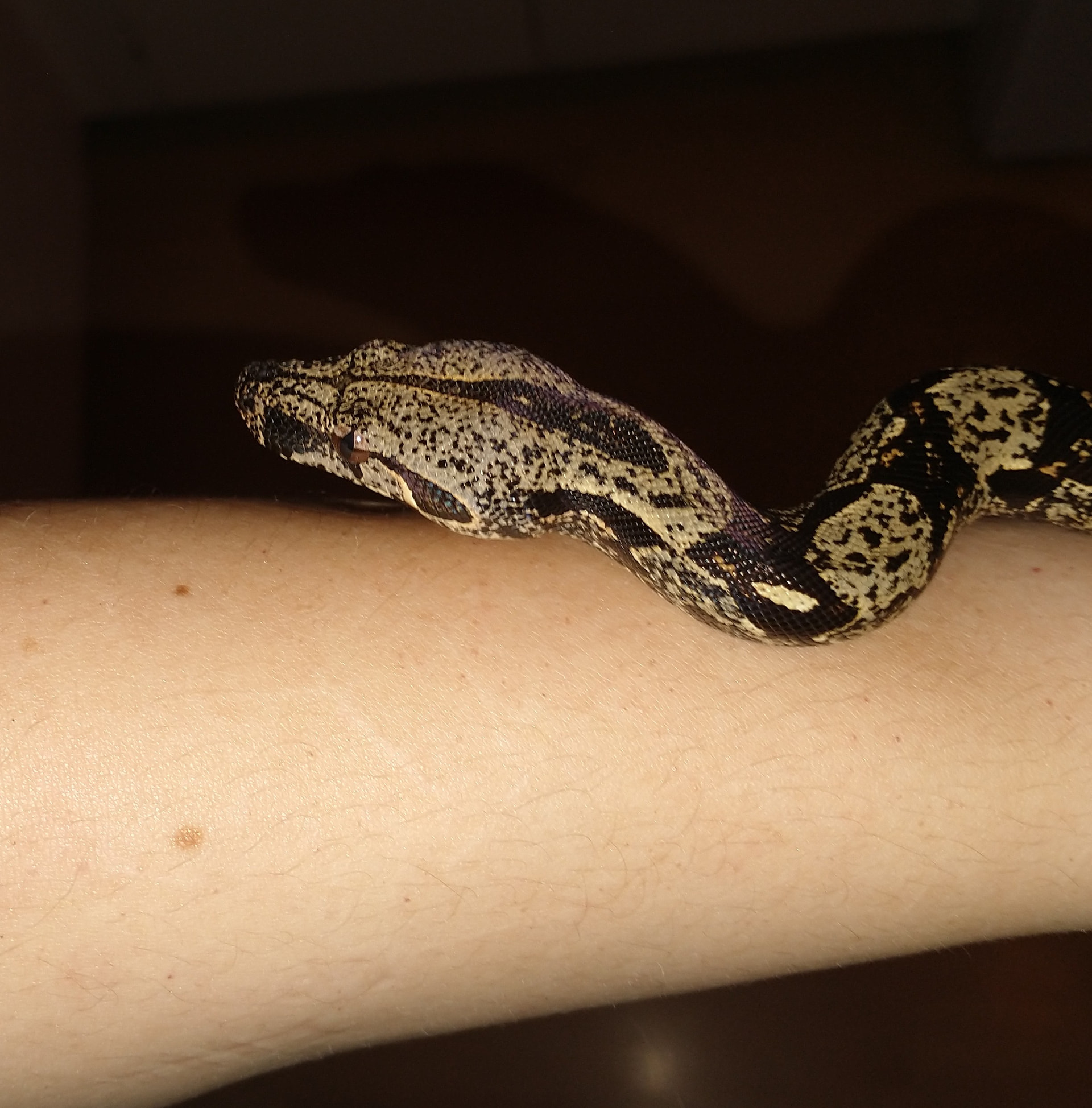
He’s a 14 month old imperator male. His eyes seem particularly large and protruding compared to his head. Is this just normal individual variation or does he have some sort of growth issue? Both eyes are symmetrical at least.
The globes definitely stick out past his face when viewed from above. His eyes are much larger/protruding than other similarly sized/aged boas, and my similarly sized younger imperator baby who is only 2.5 months old at 131g, granted the other one is a female.
This could be something referred to as “bug”/bulging eyes… I know of other snake species that get it as a result of certain morphs, ex: Palmetto in Corn Snakes and in some super forms of morphs in Ball Pythons.
I’m unaware of any morphs/traits/localities in Boas that would cause this, it could also be a result of poor breeding or it may be a result of a health issue.
Though I’d honestly be more concerned of health issues if the eyes were asymmetrical, looked to be excessively swollen/filled with fluid, or cloudy.
The eyes look otherwise healthy aside from their unusual size.
I was thinking this too, though I guess it’s just a specific individual mutation/fluke in him, since he’s just an IMG. No other genes besides IMG either. I have a photo of his sire, who looks totally normal. I also think they look like healthy eyes besides the size… So weird, I wonder if anyone else has seen this before in an otherwise regular imperator, and if it affects them as adults or looks strange as adults.
So it’s been a minute since my boa was this age, but this looks like a pretty normal baby boa face to me? Maybe his eyes are a little larger and more protruding than average, but most baby boas seem to have huge peepers, they usually “grow into” their eyeballs with time.
There can be some differences in head structure and eye size between different boa species and localities, so there is definitely some variation there that’s within the range of still being “normal.”
I’ll tag @tommccarthy, since he’s seen way more baby boas than I have. He’d have a better sense of what is and is not normal.
So I went and looked at some baby pictures of my IMG girl. I think she was around a year old in these pictures, so similar age to your boy now. If you want to compare:
I agree with what Jennifer said. The eye are normal and the boa will grow into them. With all the cross breeding of different localities head shap and body shape changes with all the different genetics in boas now. There are a lot of Colombian BCI and Central American Dwarf BCI crosses around now.
If you look around at different boas you will see some boas have a shorter snout length and some will have a more elongated snout length.
The boas with the shorter one’s are normally from the dwarf localities. And boas with elongated one’s are from bigger localities. Also boas head and body shape will change as they grow from being a baby to adult.
This document provides a comprehensive list of boa constrictor localities recognized within herpetoculture. Localities are grouped by species or subspecies commonly referenced in the hobby.
Boa imperator (formerly BCI) – Central American Localities
Belize
Ambergris Cay
Caye Caulker
Coco Plum Cay
Crawl Cay
Wee Wee Cay
Colombia (West of Andes)
Barranquilla
Rio Magdalena
San Andres
Costa Rica
Eastern and Western forms
Ecuador (West)
Western Ecuador
El Salvador
El Salvador locality
Guatemala
Guatemala locality
Honduras
Mainland Honduras
Guanaja
Hog Island (Cayos Cochinos)
Roatán
Utila
Mexico
Cancún
Sigma Boa
Sonoran Desert
Tarahumara
Tres Marías Islands
Yucatán Peninsula
Nicaragua
Mainland Nicaragua
Corn Island
Panama
Panama locality
Venezuela (Northwest)
Paraguanera locality
Boa constrictor amarali (BCA) – Short-Tailed Boas
Bolivia (Southeast)
Brazil (South)
São Paulo, Brazil
Boa constrictor longicauda – Long-Tailed Boas
Tumbes Region, Peru
Boa constrictor nebulosus – Clouded Boa
Dominica
Boa constrictor occidentalis – Argentine Boa
Northern Argentina
Southeast Bolivia
Northwest Paraguay
Boa constrictor orophias – St. Lucia Boa
St. Lucia
Boa constrictor ortonii – Orton’s Boa
Northwest Peru (West of Andes)
Boa constrictor sabogae – Panamanian Island Boas
Coiba Island
Pearl Islands
Taboga Island
Taboguilla
Summary
Across all species and subspecies, herpetoculture maintains approximately 60–70 distinct boa localities. This list reflects active, recognized localities within the hobby.
Hi Caron, I just thought I would post all the different localities of boas. This way everyone could see with all the cross breeding going on you can see the difference when you breed them together. All that cross breeding changes body shape, colors, patterns, size. That is also how new morphs are made sometimes.
I don’t think it wong to do it as long as you tell people you do it. This way they know what they have.
I like both pure locality and morph boas. Both are unique and beautiful.
Yeah, it’s quite a list! Really helps illustrate why boa taxonomy is such a mess, as well as why there’s so much variety in size, shape, colour, and pattern (even without talking about morphs) with boas. They have a huge range that encompasses all different sorts of habitats, and every region and biome within that range tends to have its own “version” of a boa.