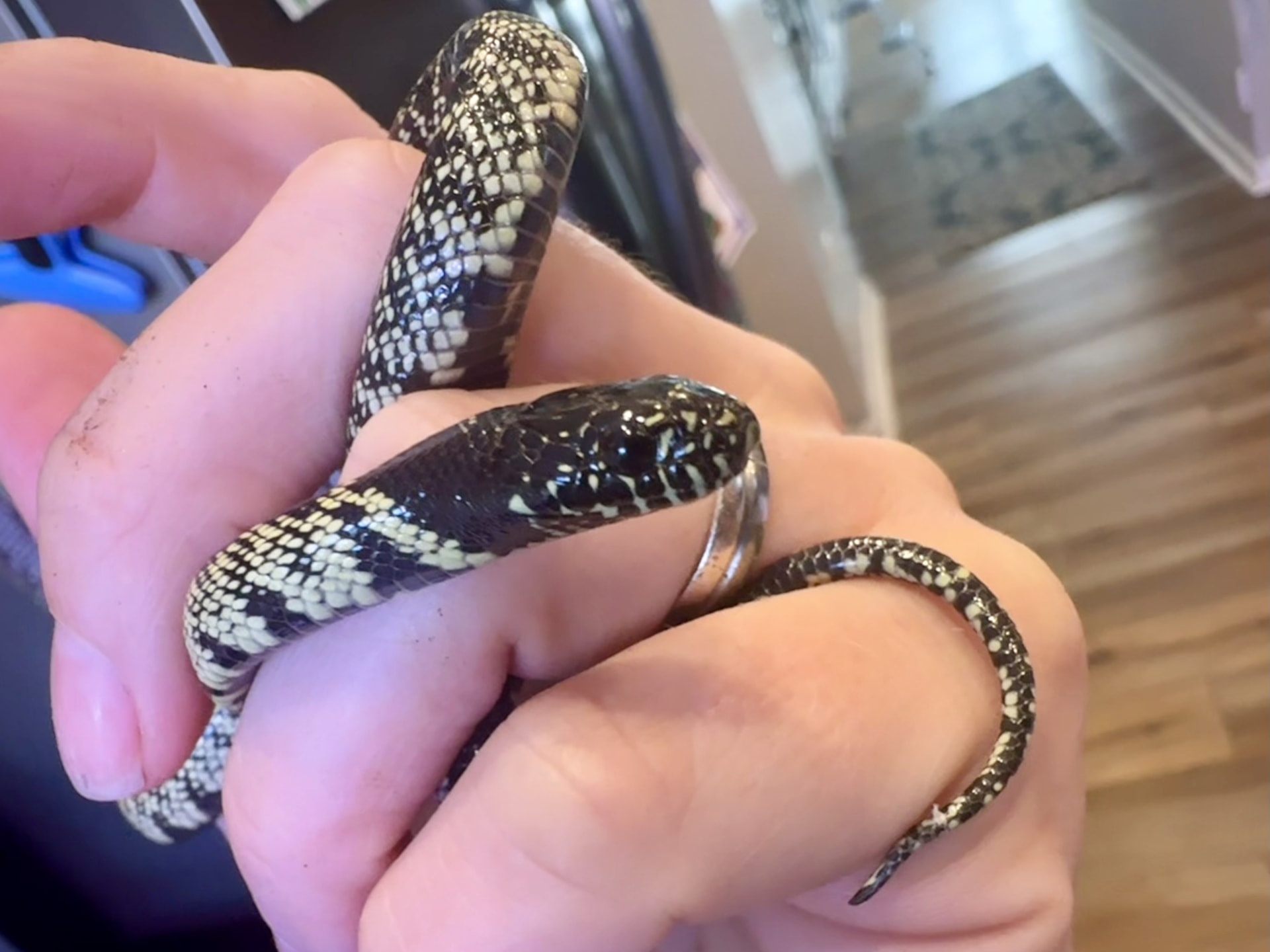
I was sold a kingsnake advertised as a MBK. While I trust the seller, I have an experienced snake keeper who is insisting it is a Desert Kingsnake. Can a MBK look like this as a juvenile? She’s a couple years old now, still very small and the color has not faded. Her description said she is expected to turn all black within a few years.
2 Likes
This is most definitely NOT a MBK. A MBK starts out black and stays black. Your keeper friend is correct. This snake is a CK, and NOT a MBK…..
1 Like
I don’t keep any getula complex kingsnakes, just for context.
But, there are ways to help figure out what’s up here. Photos of parents would help. Some evidence for the ‘turn black’ claim would help – perhaps the seller (breeder? that distinction is very relevant in these sorts of cases) has previous clutches from the same parents that they’re basing the claim on.
MBKs (L. nigrita) cross with Desert Kings (L. splendida) in the wild. Perhaps this snake is descended from recent WC animals that may be natural hybrids. But captive hybridization is getting pretty willy-nilly recently, so that’s also a possibility.
None of that really applies to the fact that the snake is smaller than expected (maybe; when did you get it and what is its hatch date?). Posting details (detailed details) about its enclosure/feeding/care might help troubleshoot that.
3 Likes
I recall hearing that a lot of MBKs in captivity are no longer ‘pure’. They cross breed them out to achieve that solid black color and it’s rare to find a pure one now in captivity.
That said… MBKs are a subspecies. Is it possible that you were simply sold the Lampropeltis getula nigrita and not just the ‘black kingsnake’ under the blanket of Lampropeltis getula?
Not every MBK is hatched solid black…and those few yellow spots will fade as they age. I don’t recall ever seeing one start out looking like the ‘common black kindsnake’ becoming solid black.
1 Like
Not since 2017; they’re currently a full species: Lampropeltis nigrita.
The original description of the subspecies from 1955 states that it is “uniform dark brown or slaty black dorsal coloration without any trace of rings or stripes.” That passage is on the Reptile Database entry, but I confirmed it in the original description (which is on Jstor).
One often useful trick to figure out what some taxon is supposed to look like is to look at iNaturalist. Unfortunately, they have listings for “Lampropeltis splendida nigrita”, which isn’t a valid name and apparently never was, so there’s a bunch of L. splendida photos mixed in.
2 Likes
I may have jumped the gun with my post but I was given a baby MBK a couple years ago and it was solid black. So I’m just speaking from my experience….The snake in the op’s picture looks like a CK….
3 Likes