Is there any way to tell a tessera from a super tessera?
Is it even a real morph google doesn’t have much info on it
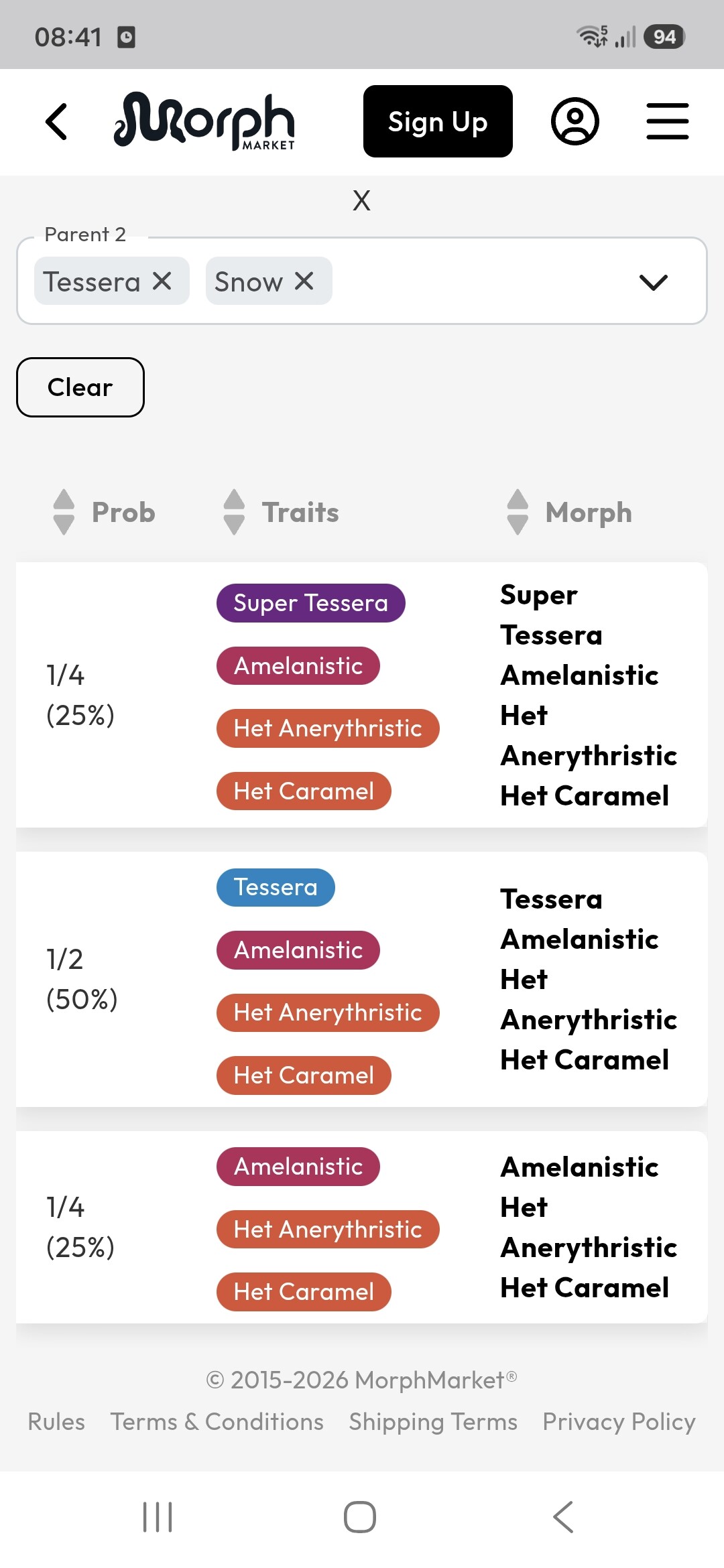
But when I put my paring into the calculator on here is shows this
Is there any way to tell a tessera from a super tessera?
Is it even a real morph google doesn’t have much info on it
But when I put my paring into the calculator on here is shows this
To my understanding, the only way to tell is by observing the offspring of the snake. If half their offspring are tessera than the parent only carries one copy of the gene, but if all the babies are tessera then the parent carries two copies of the gene and is a super tessera. So you would not be able to determine which hatchlings are tessera vs. super tessera unless you held them back and bred them as adults.
Yup. As stated above, it basically looks the same.
Iirc there’s a shed test for it now. . No test yet, but when there is that’s the only way to be 100% positive without having to do all the test breeding
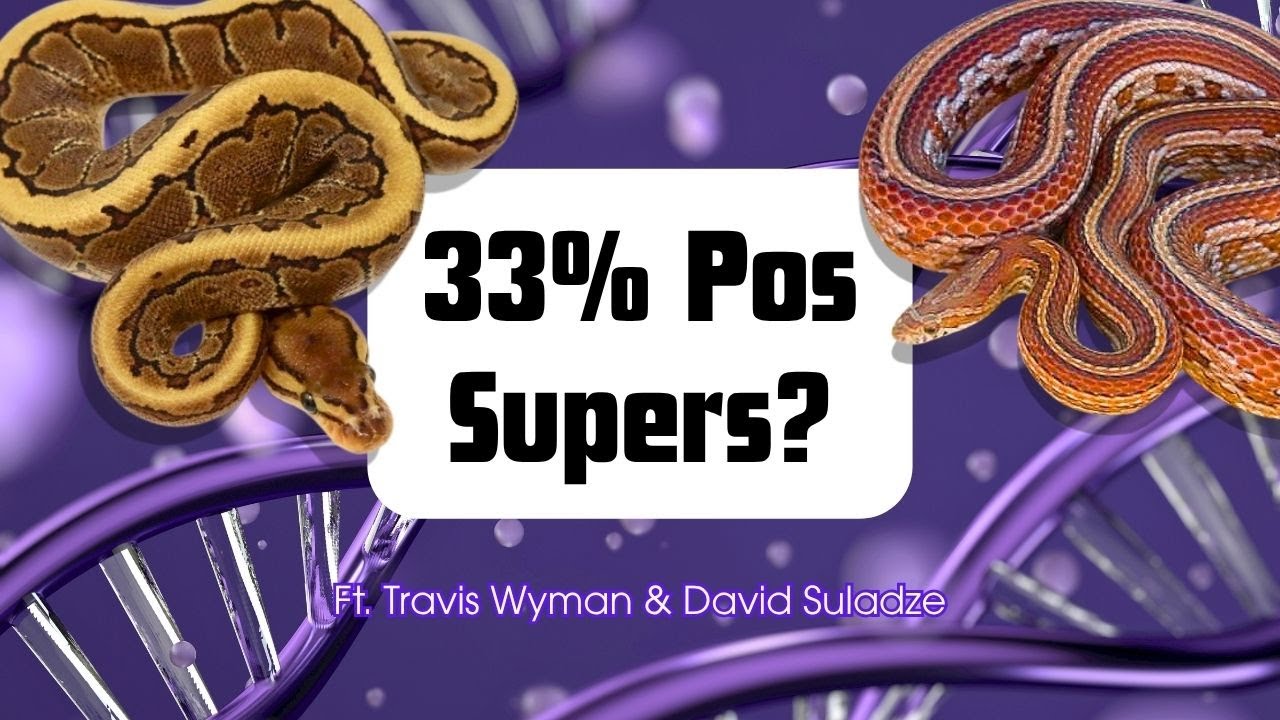
There exists a video from the folks at RGI (featuring @t_h_wyman & one of the MM devs) about this:
Tessera is a real morph but because it is a complete dominant trait (making it 100% visible when there is only one copy), there is no way to know if the babies carry one or two—unless shed testing or breeding, that is, as stated above.
But “super” is a nickname by snake breeders to mean the animal for sure has two copies of a dominant trait. “Super Red Factor,” “Super Tessera,” “Super Halo” aka “Green Blotch,” or for another species “Super Conda”
(for hognoses) etc. Google probably doesn’t fully understand the lingo, but it’s a real thing 
Small correction (but you have the gist correct)
”Super” is just a hobby term for “homozygous” So a SuperTessera is a homozygous Tessera, which is a perfectly viable animal to produce
So theres no way to tell if any of the babies are super tessera
Will just list as tessera if/when there out
Yes, I was using “homozygous” and “two copies” interchangeably, but homozygous is certainly the more scientifically accurate term.
Not by eye, no. You would need to perform either breeding trials or rely on a genetic level interrogation (which we do not yet have)