Check the cage and decor thoroughly. It could still be there. If not, work your way away from the cage. It probably isn’t far away.
Put crinkly plastic bags down along walls it’s likely to travel. Listen for crinkling after sunset and before sunrise. Place bottle traps baited with mice and water among the bags along the walls. Good luck!
I went smugly escape-free for decades until a hatchling corn last year. Then I had another this year—a chubby rosy boa of all snakes! Both were recovered.
I’m so sorry. They’re tiny, and they’re very good at getting out. They are also surprisingly hardy. Keep water out near a wall where your baby can find it. Hopefully it will be recovered. A 2-L bottle trap may be useful, too.
It can be other plastic bottle types too. The idea could probably be applied to other materials as well. You just need to attach a cone to a receptacle.
Over the years, I have had retics burms, boas, ball python, honduran milksnakes, a midland brown snake, and corn a snake escape.
All bigger snakes were found within a day or two. The ball, milk, and corn snakes took 2 to 6 weeks to find. The midland was the only one I did not find. He is native to my area, as I did catch him in my yard. So I am sure he made it outside and went back home.
The ball I found 2 weeks later trying to get water from my laundry sink.
6 foot boa 2 days later under my dresser in my bedroom her cage was in my living room.
Retics, Burmese were found right away. They made way too much noise popping the glass out of their cages.
2 hondurans at different times were in my crawl space. They were found the same day in the fall. One was even under the clear vapor barrier covering the ground.
My favorite escapee was a wild caught corn snake. He was gone for over a month. I found him on the top shelf in my sink cabinet. He was coiled up, looking at the hole where the drain hose tube of the dishwasher was. This is where the mice would come in and out of. I live in a forest near the national park, and I always get mice in the fall. He even was a little bigger when I got him back.
I don’t know what the actual percentages are, but an awful lot of those who go on the lam do end up being recovered. We’ve had a couple who turned up really quickly (including one I found before I knew she was missing when I heard the cat ripping things apart to try and get her). One yearling was gone for a couple months. The family came home for the holidays and I hear my daughter call, “Hey Mom, there’s a snake in front of the toilet!” There he was, looking up calmly like we’d interrupted his business.
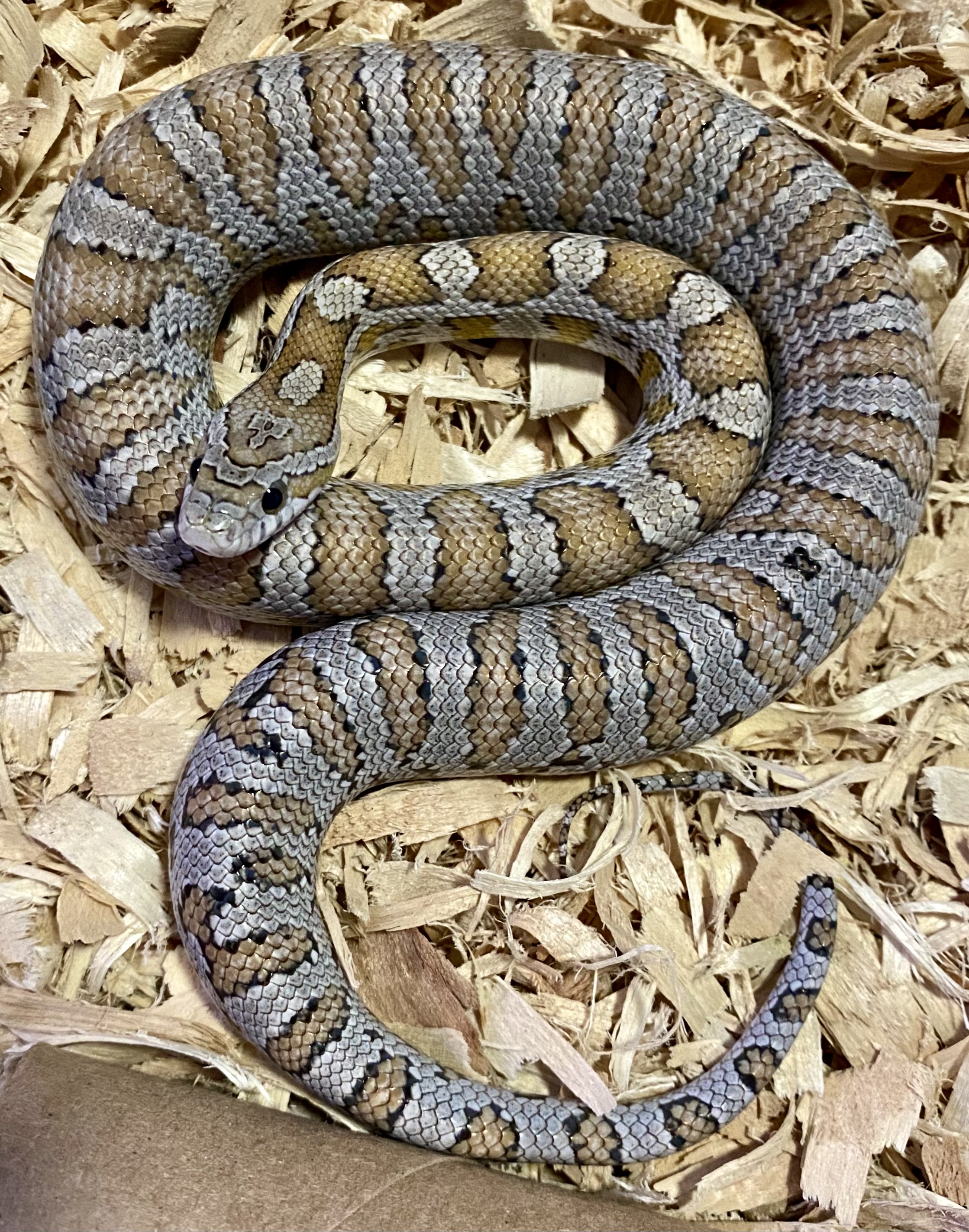
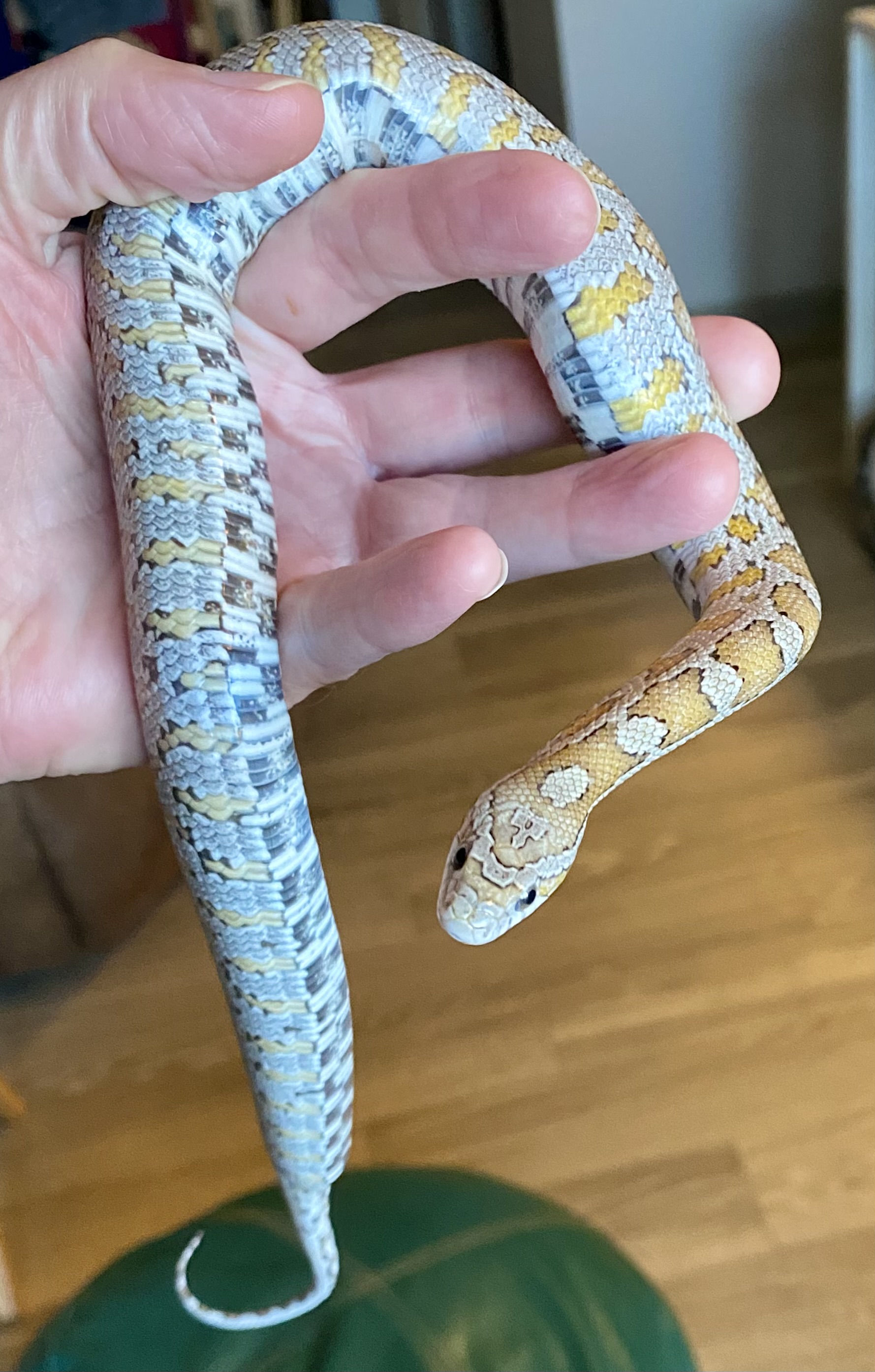
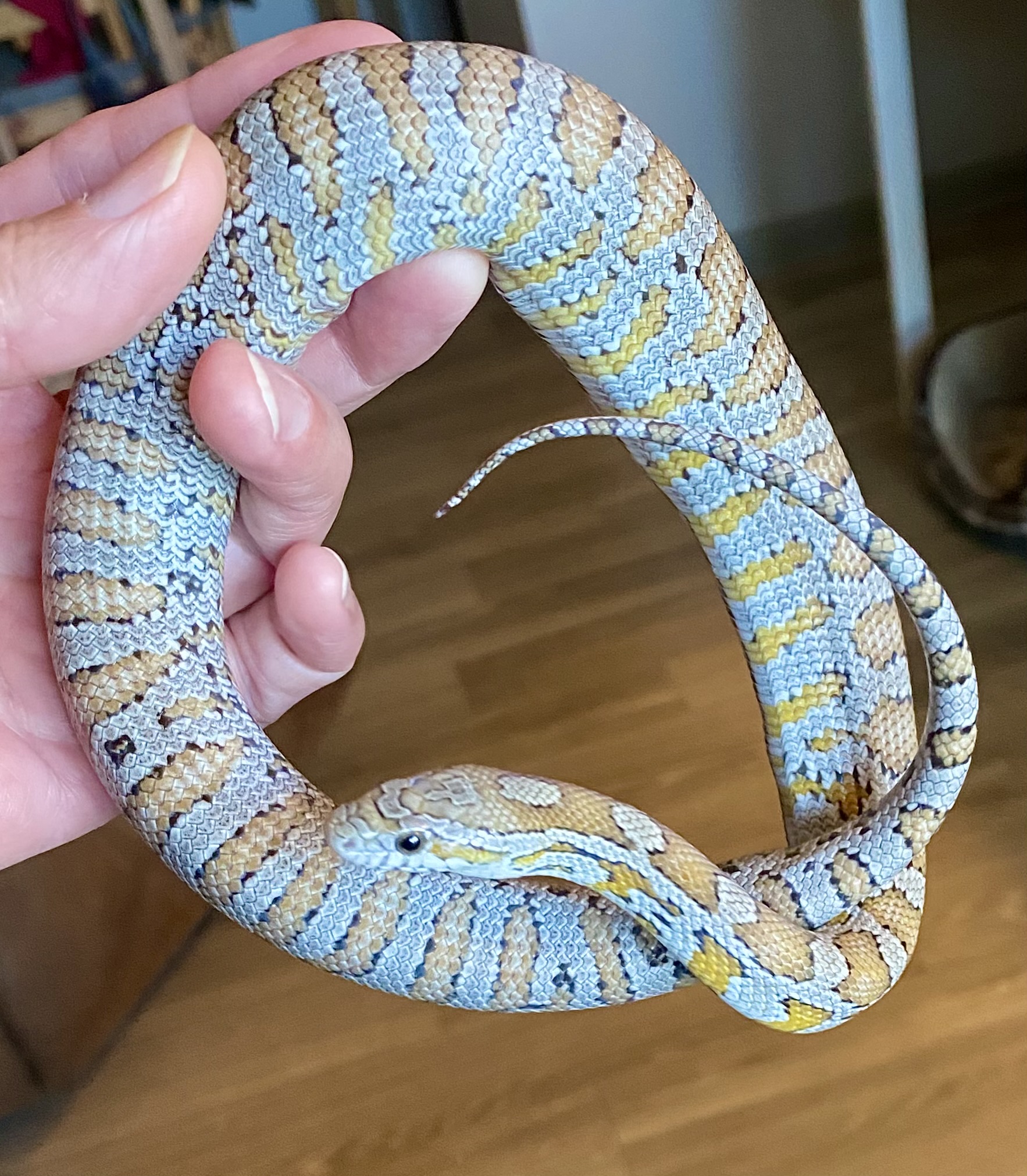
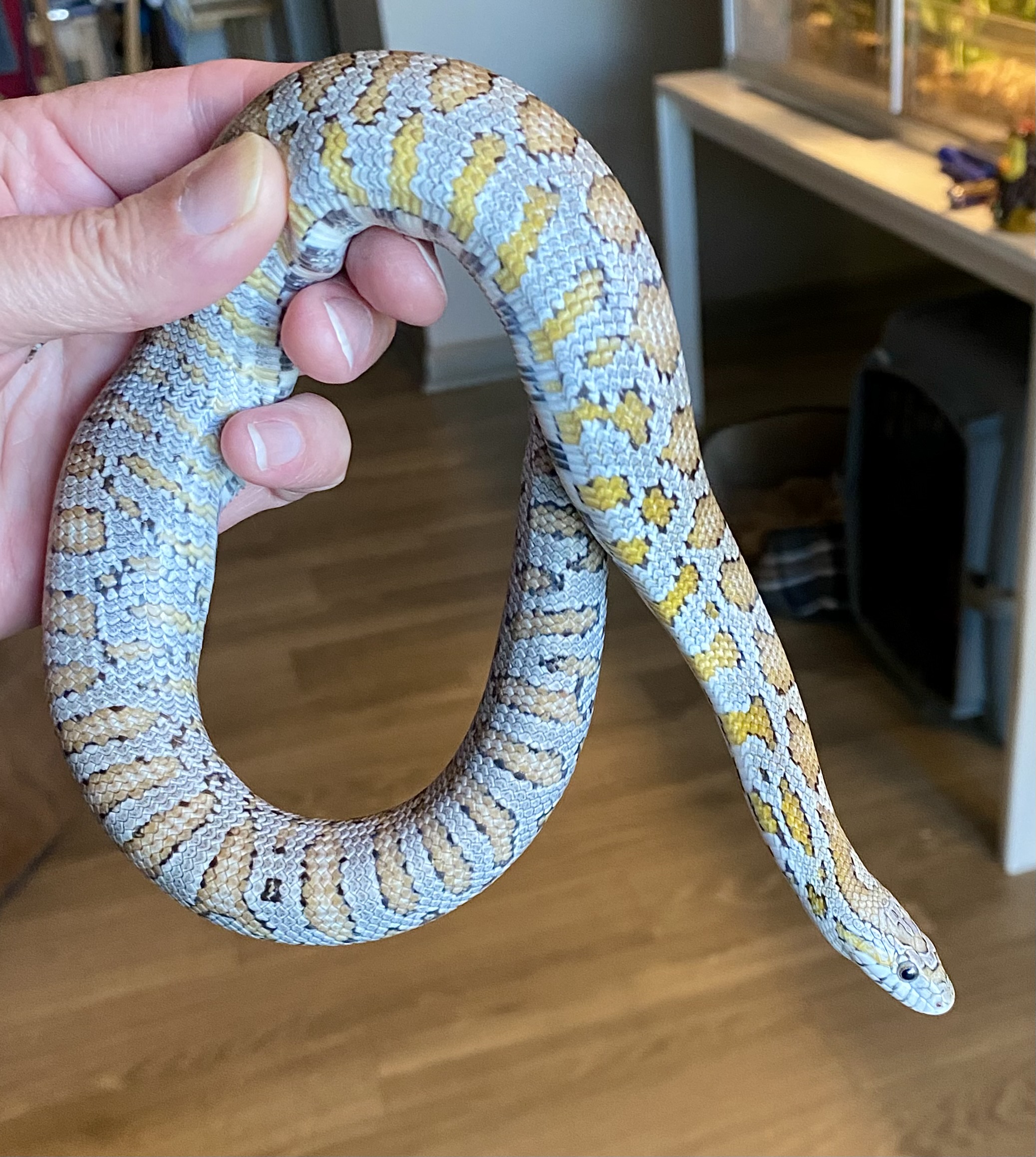
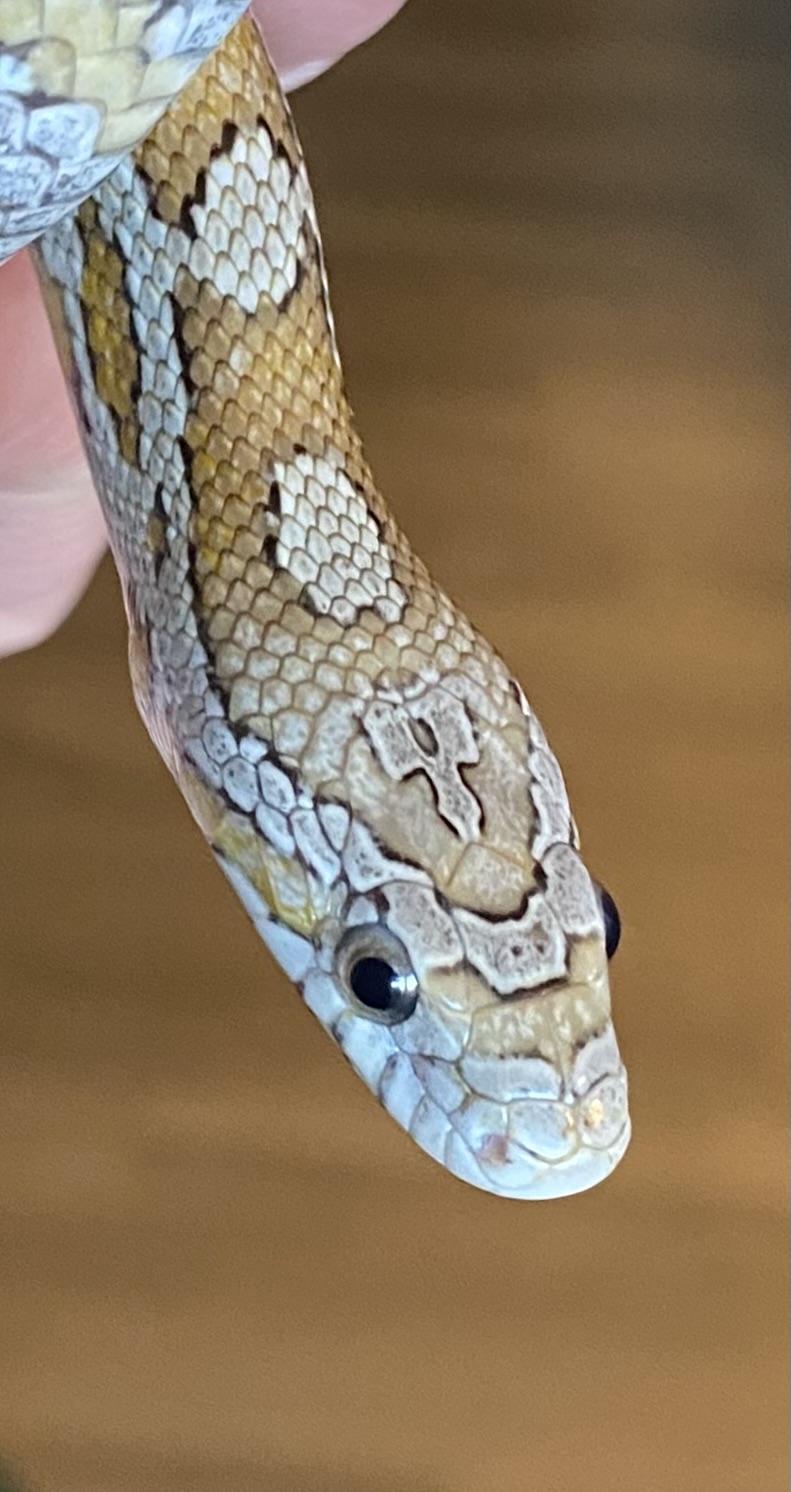
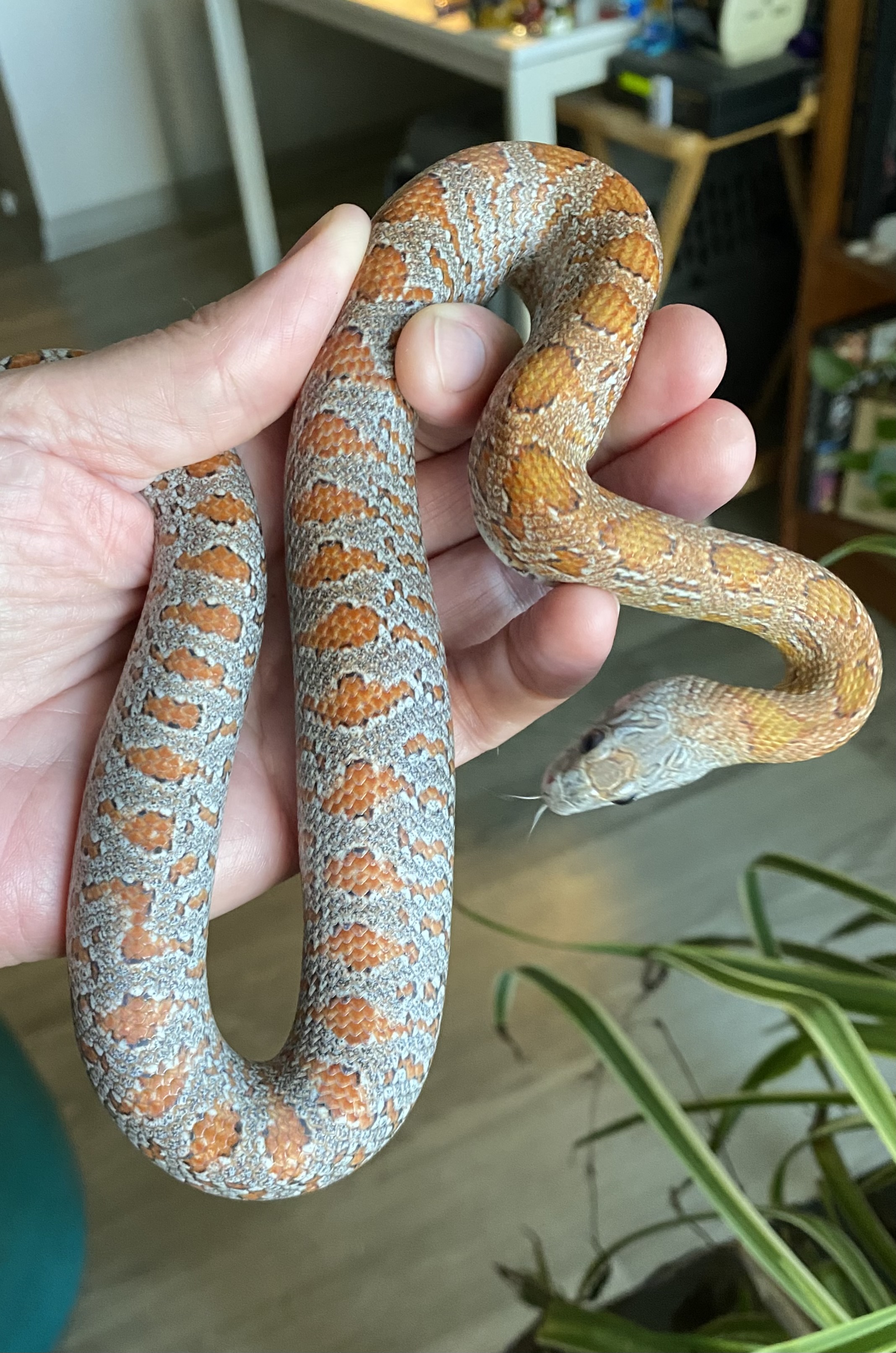
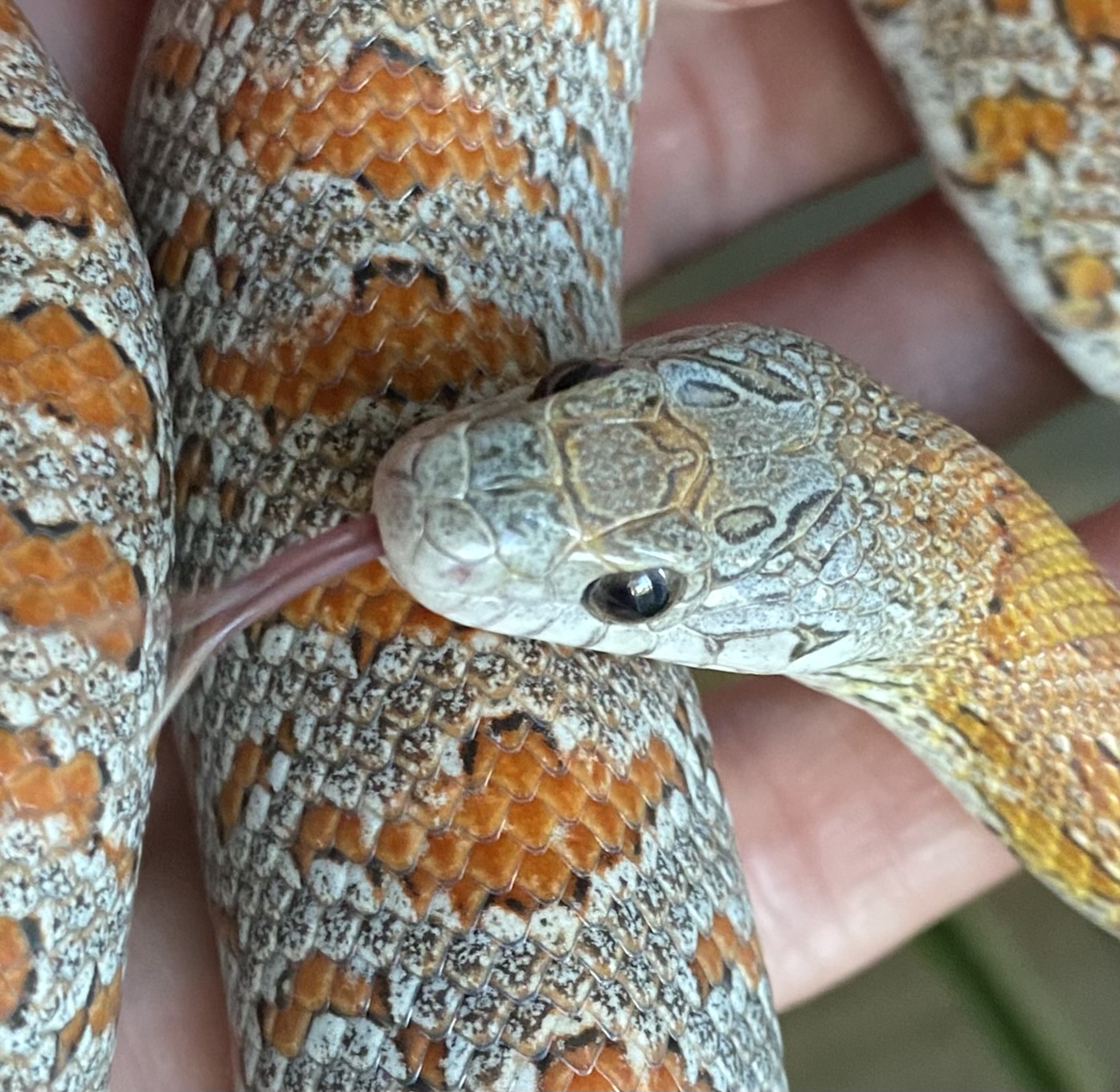
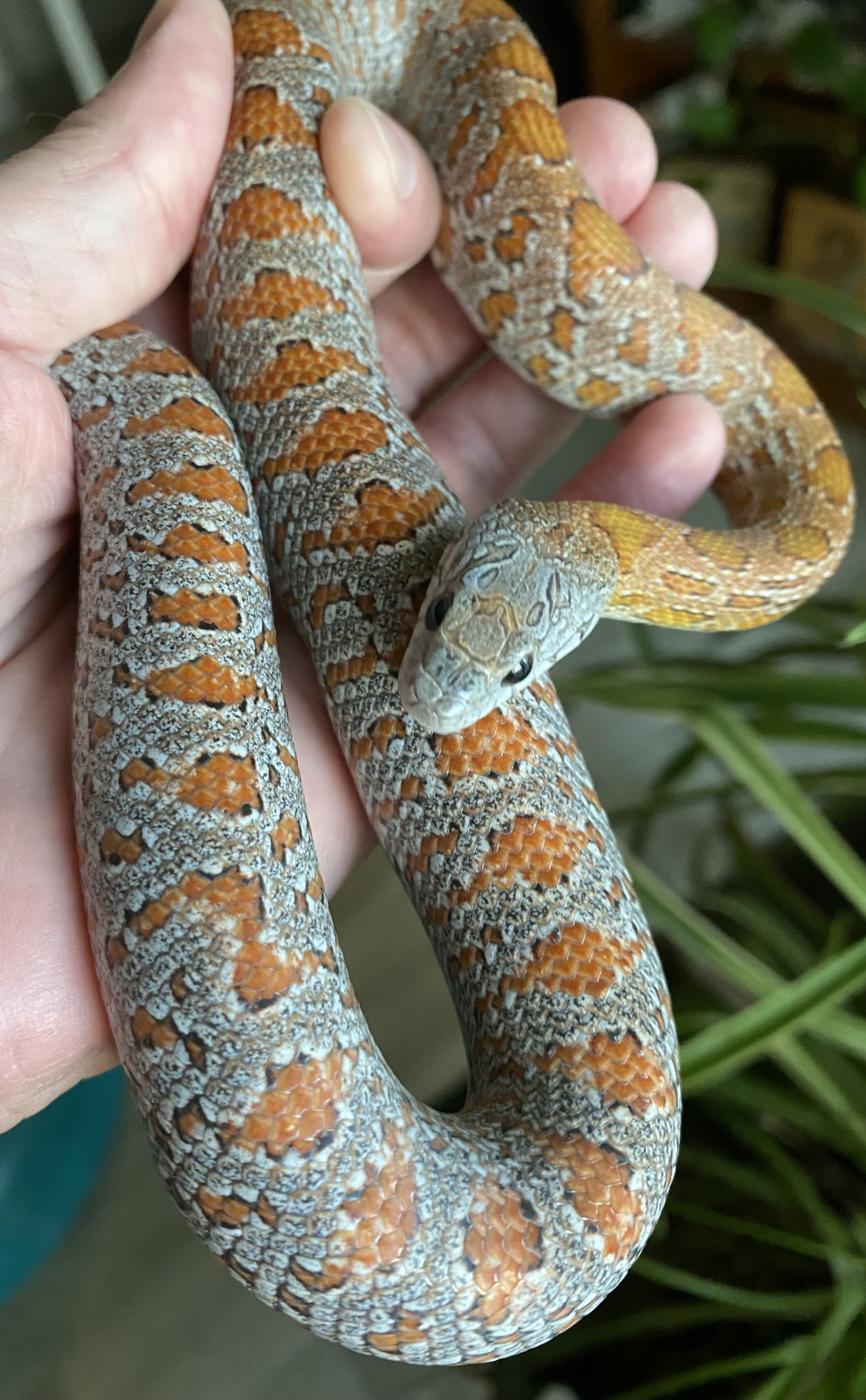
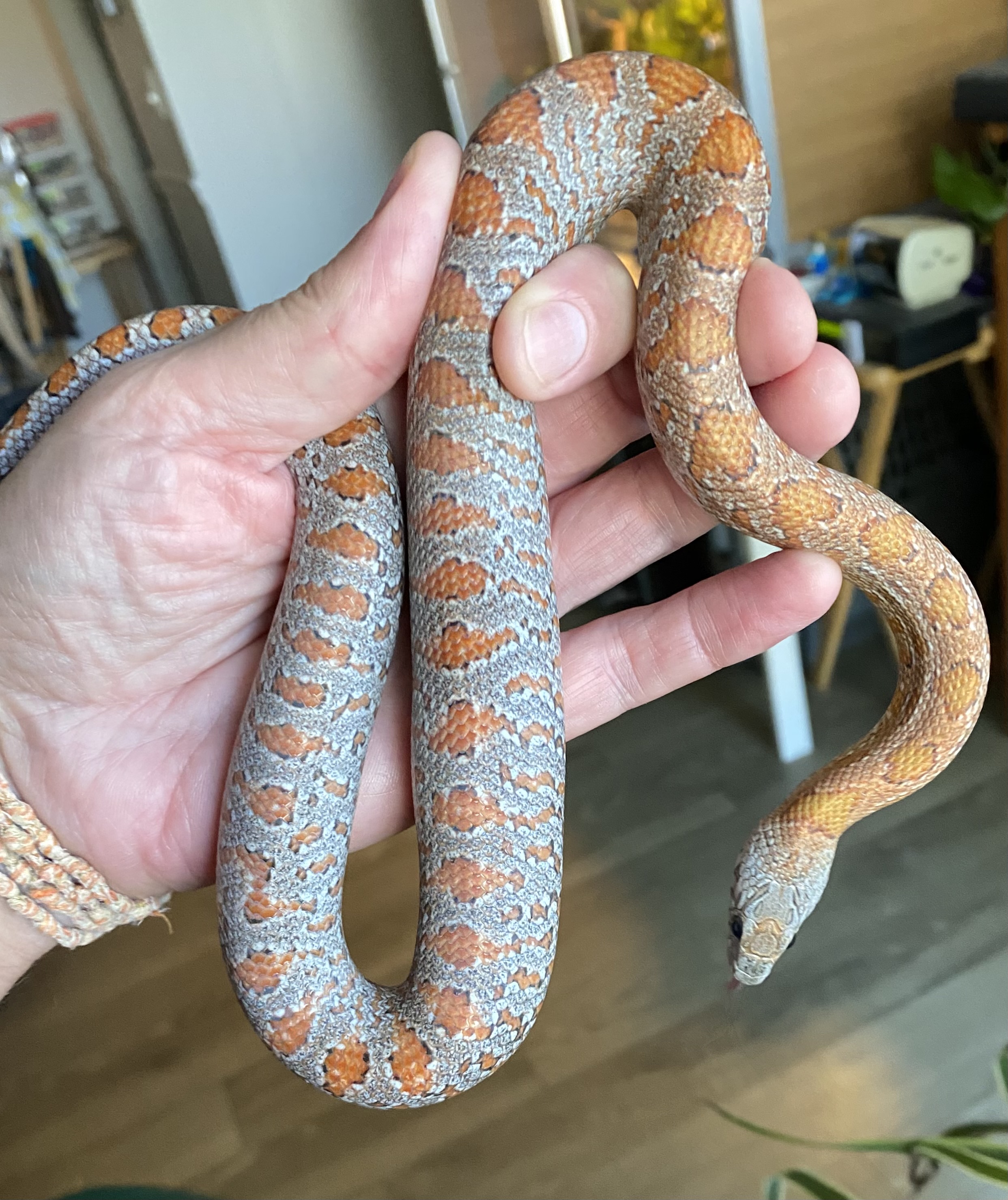
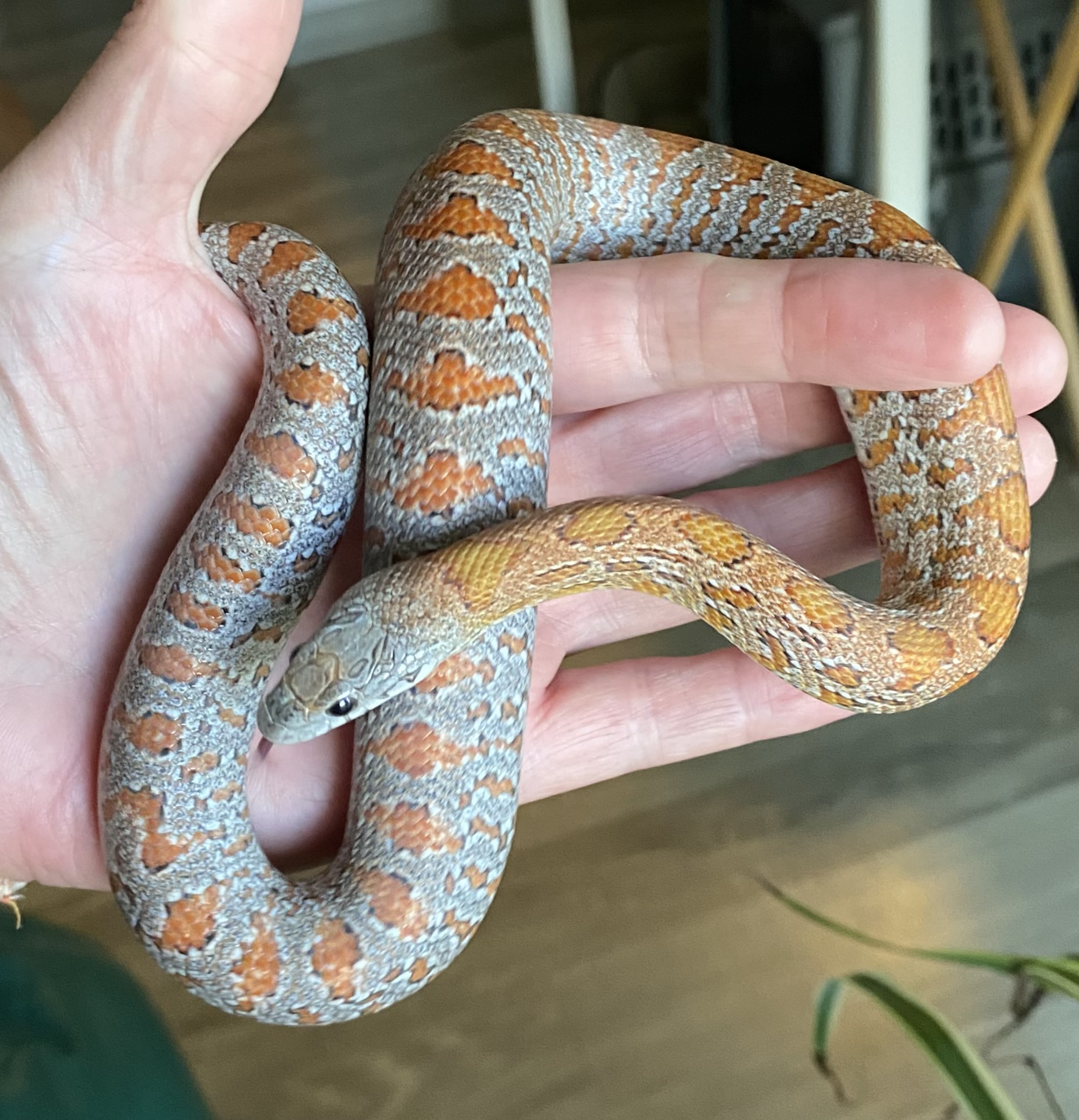
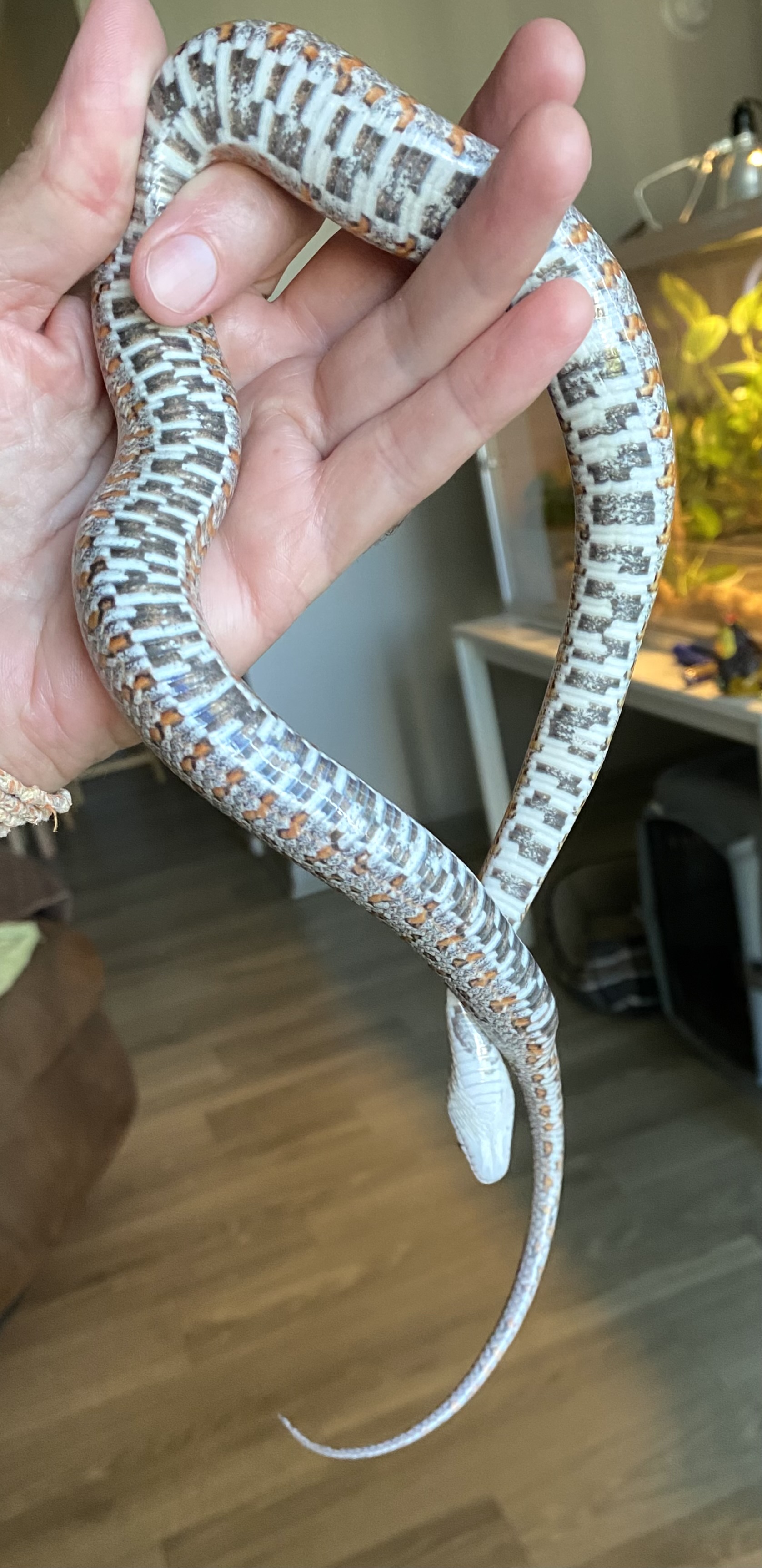
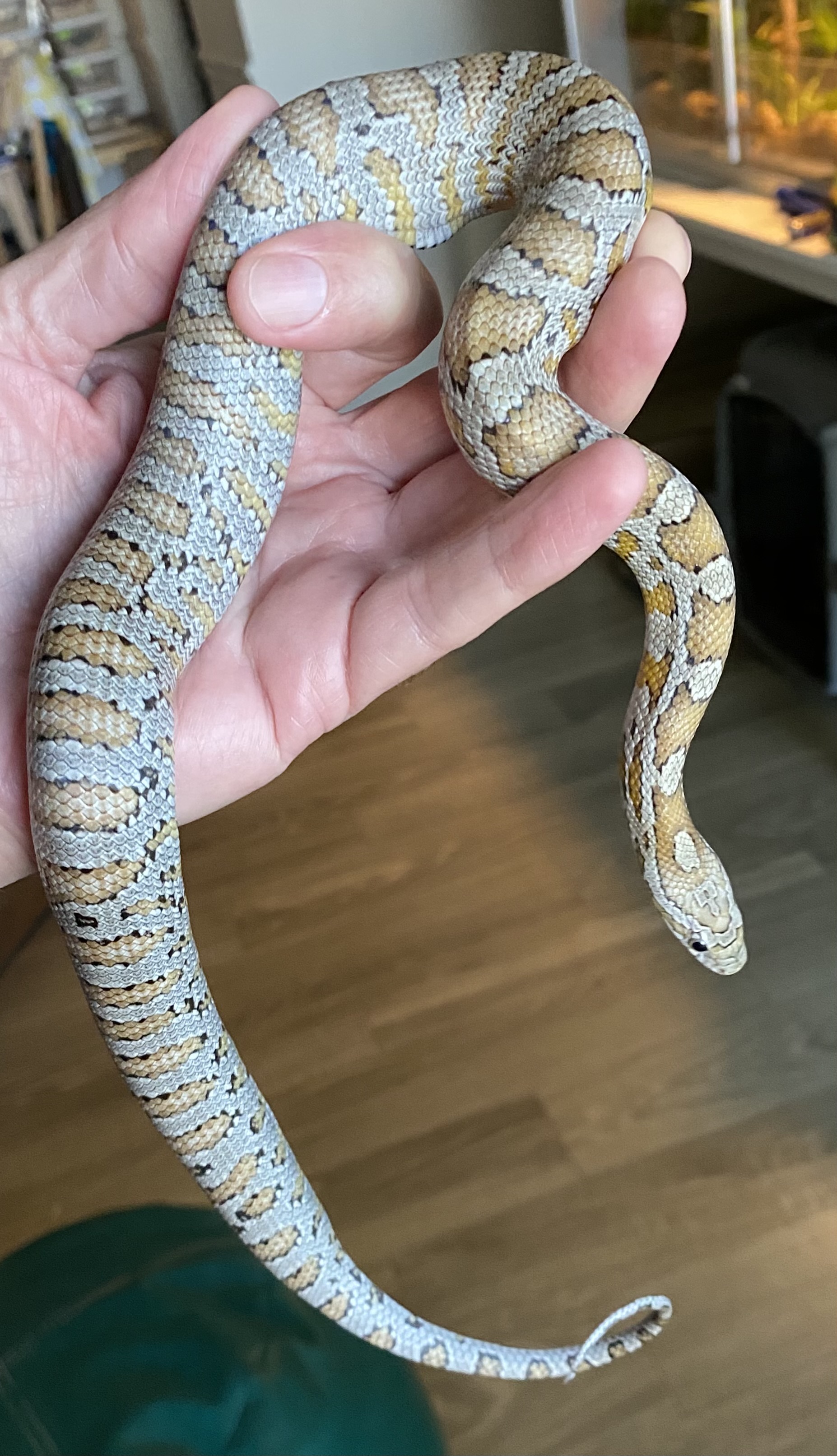
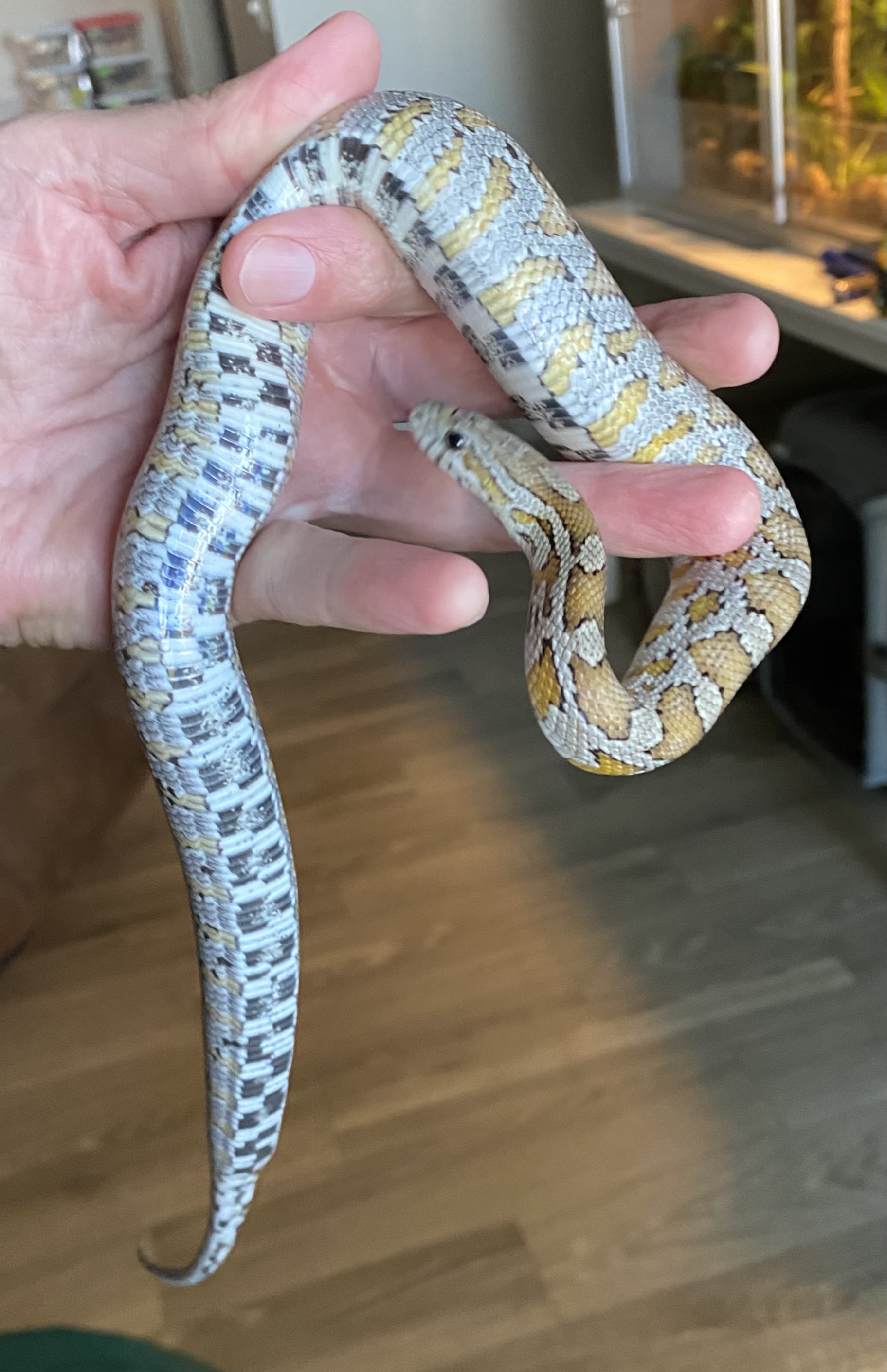
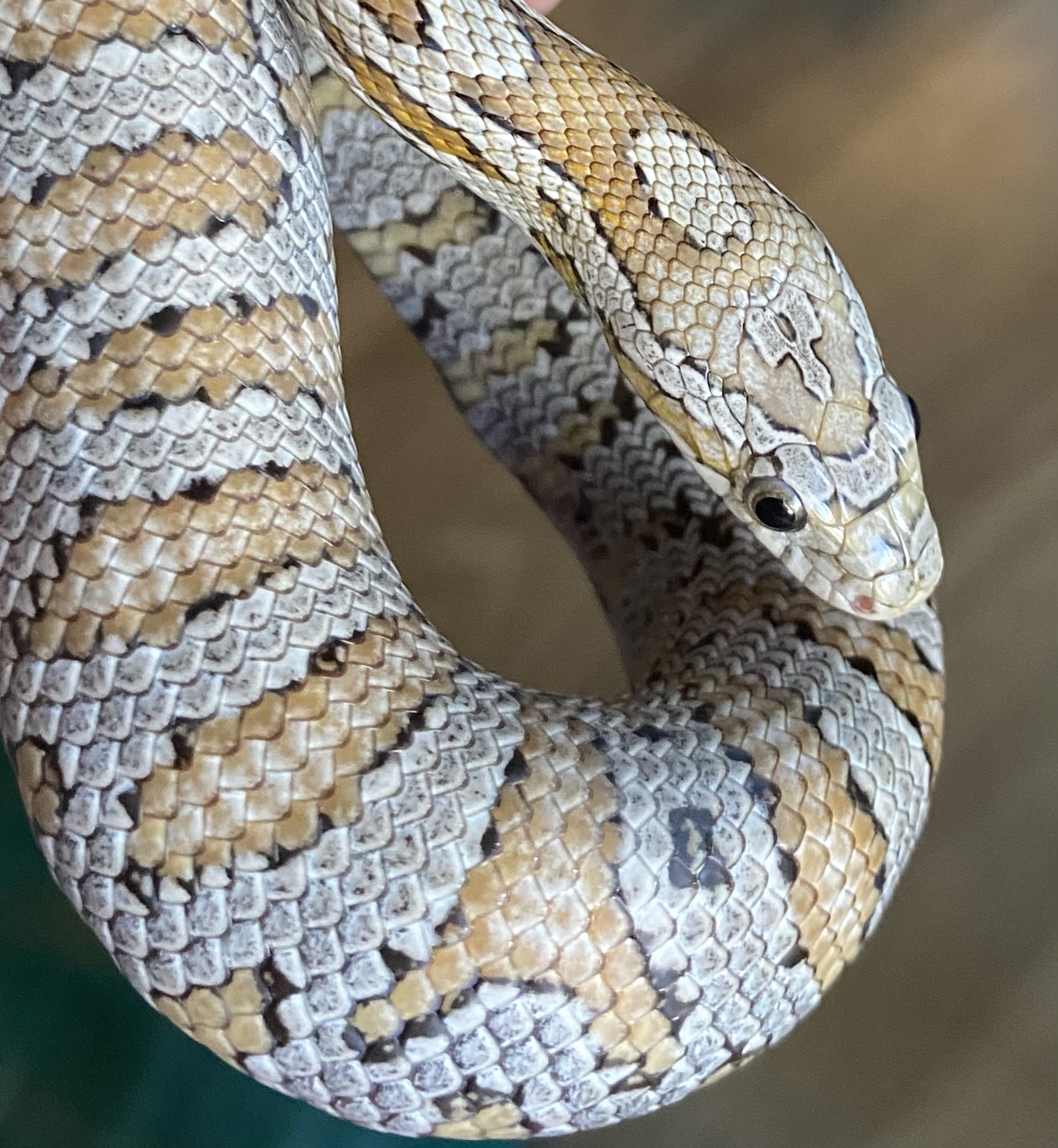
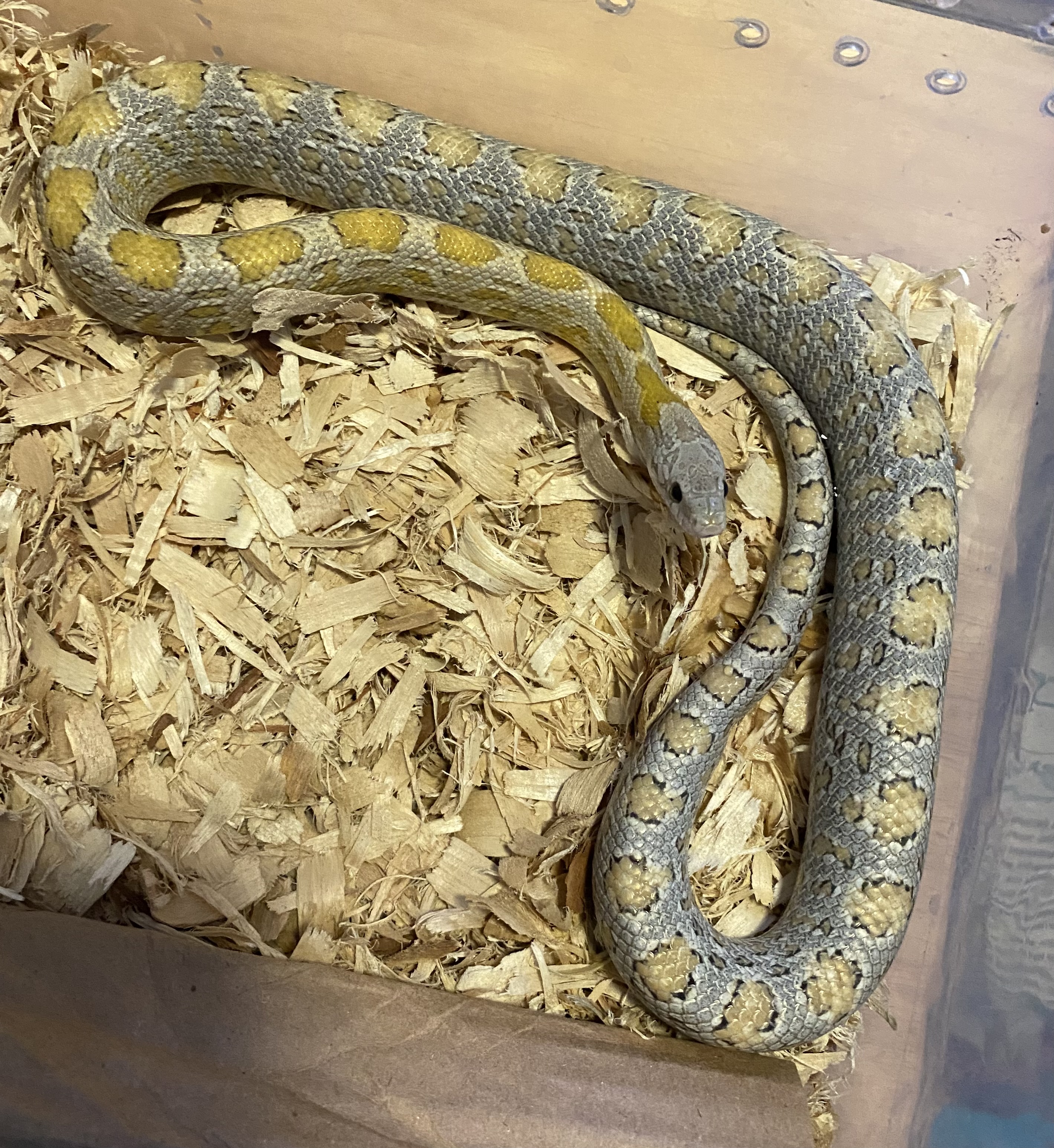
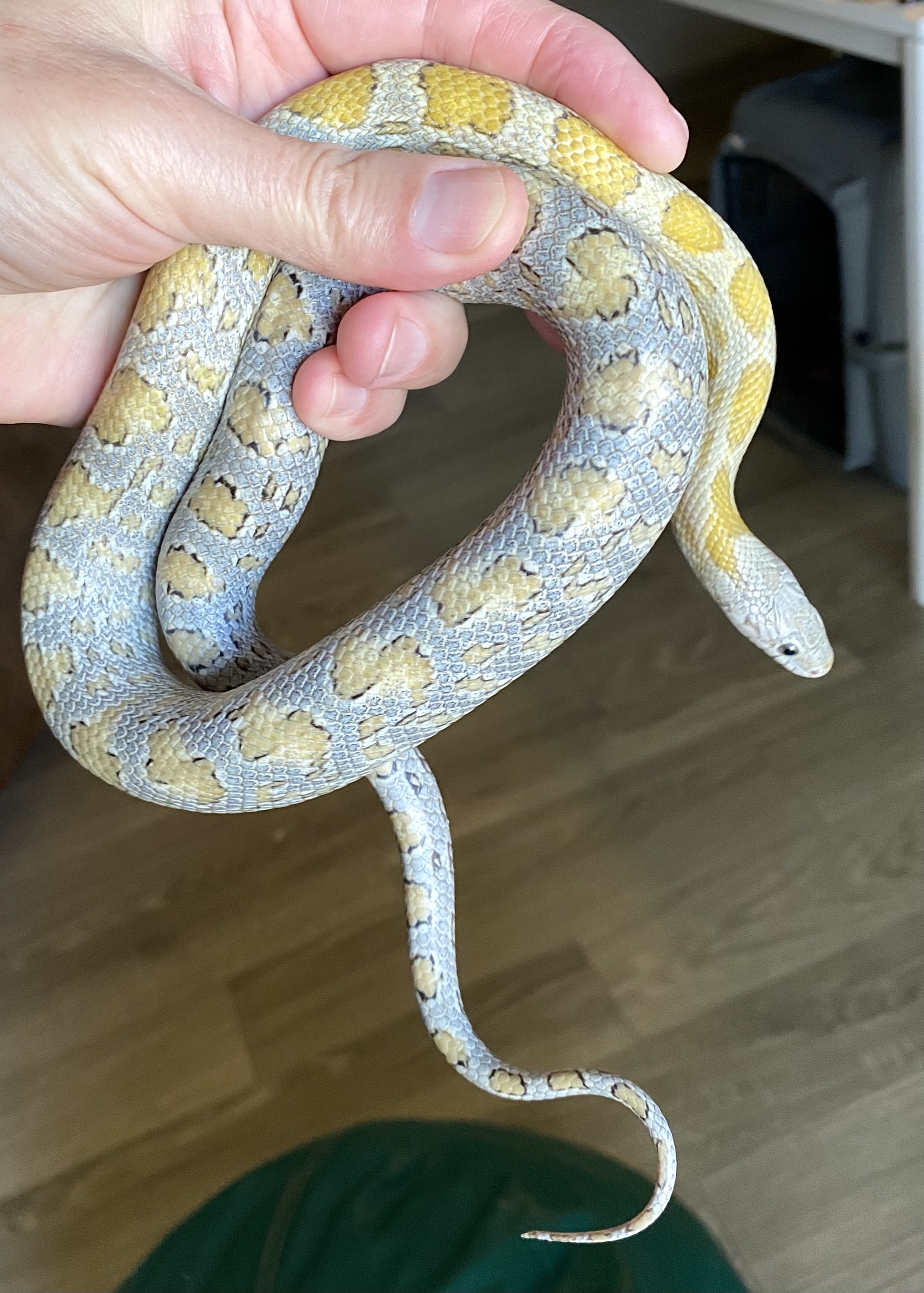
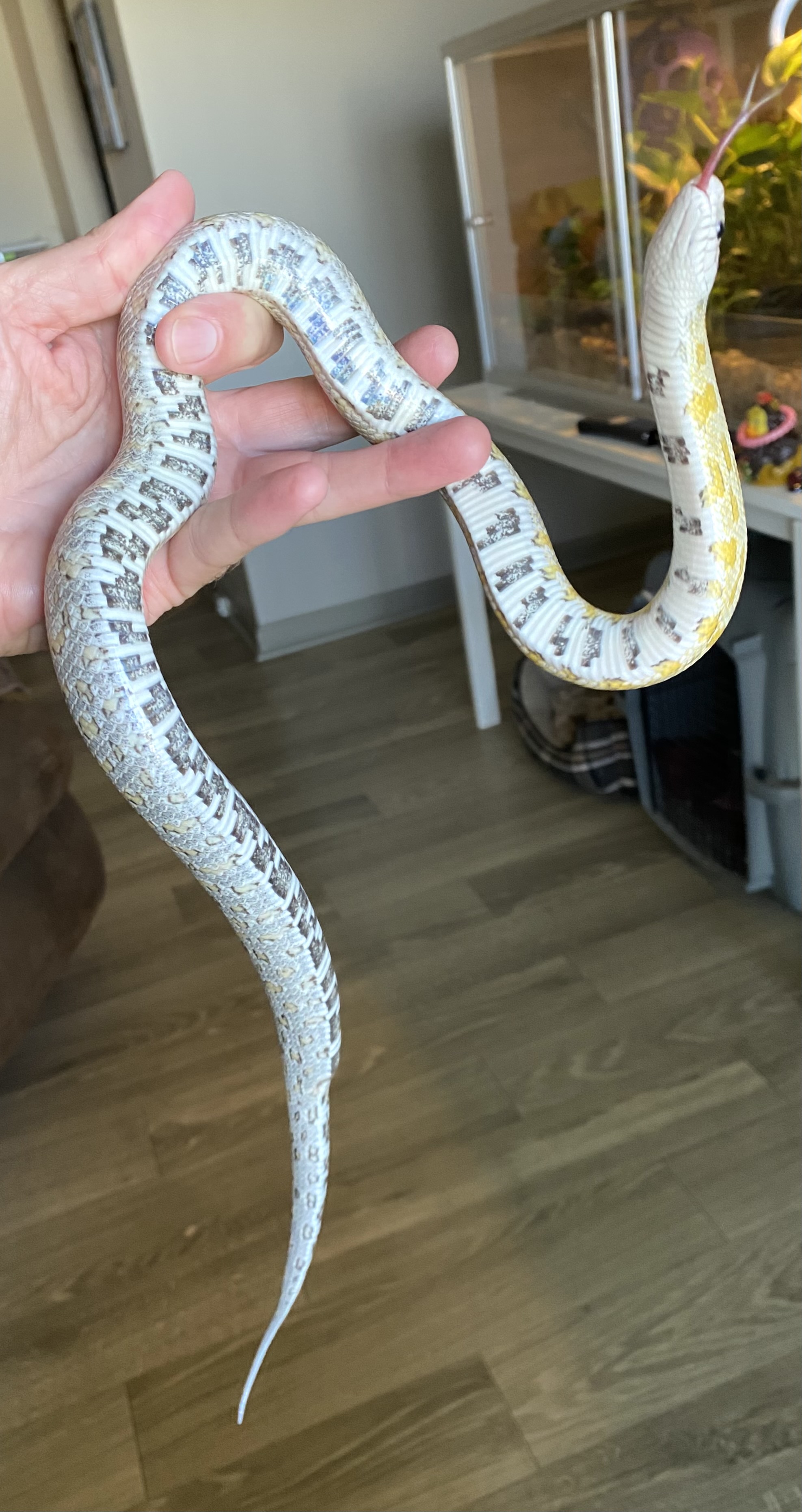
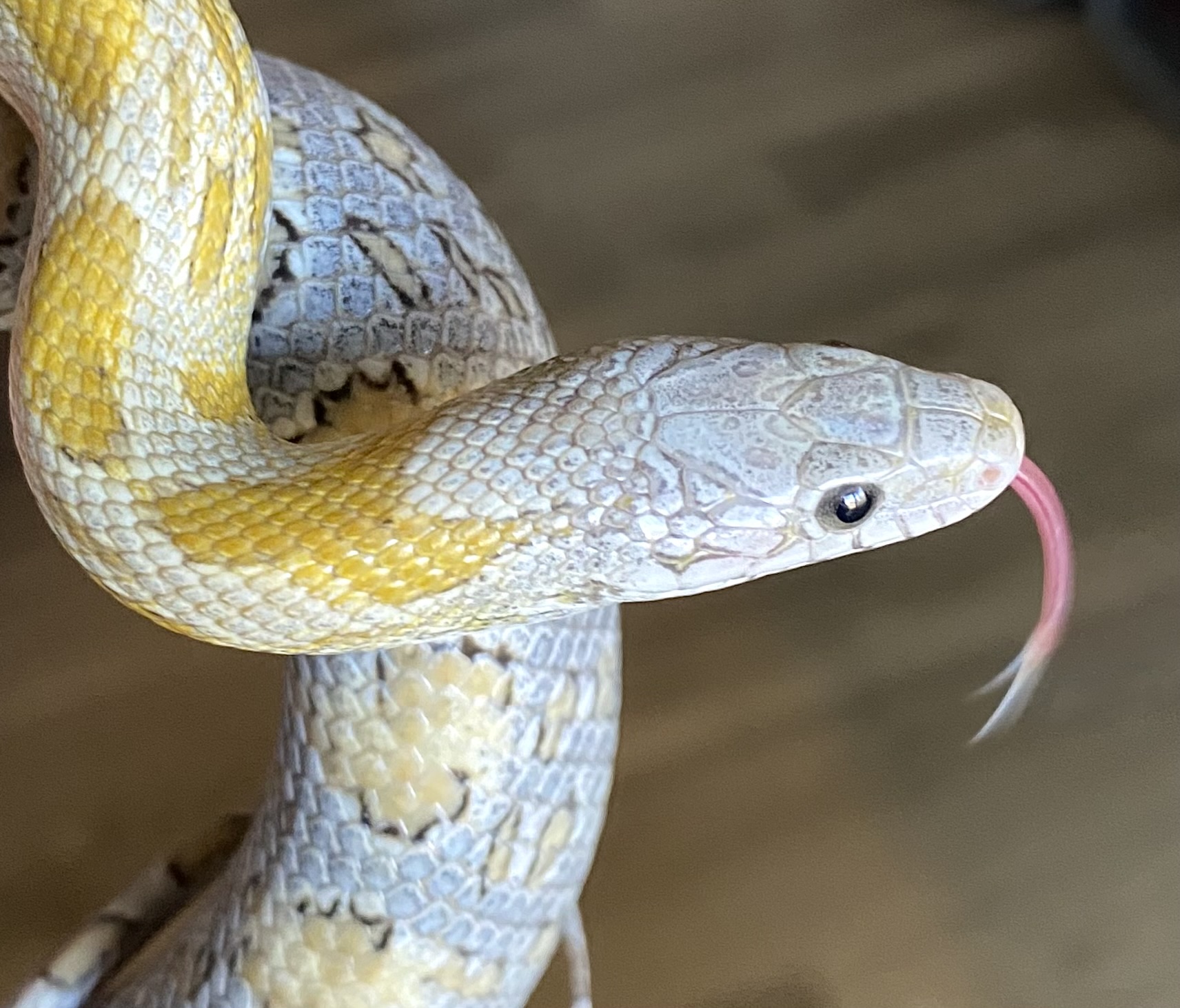
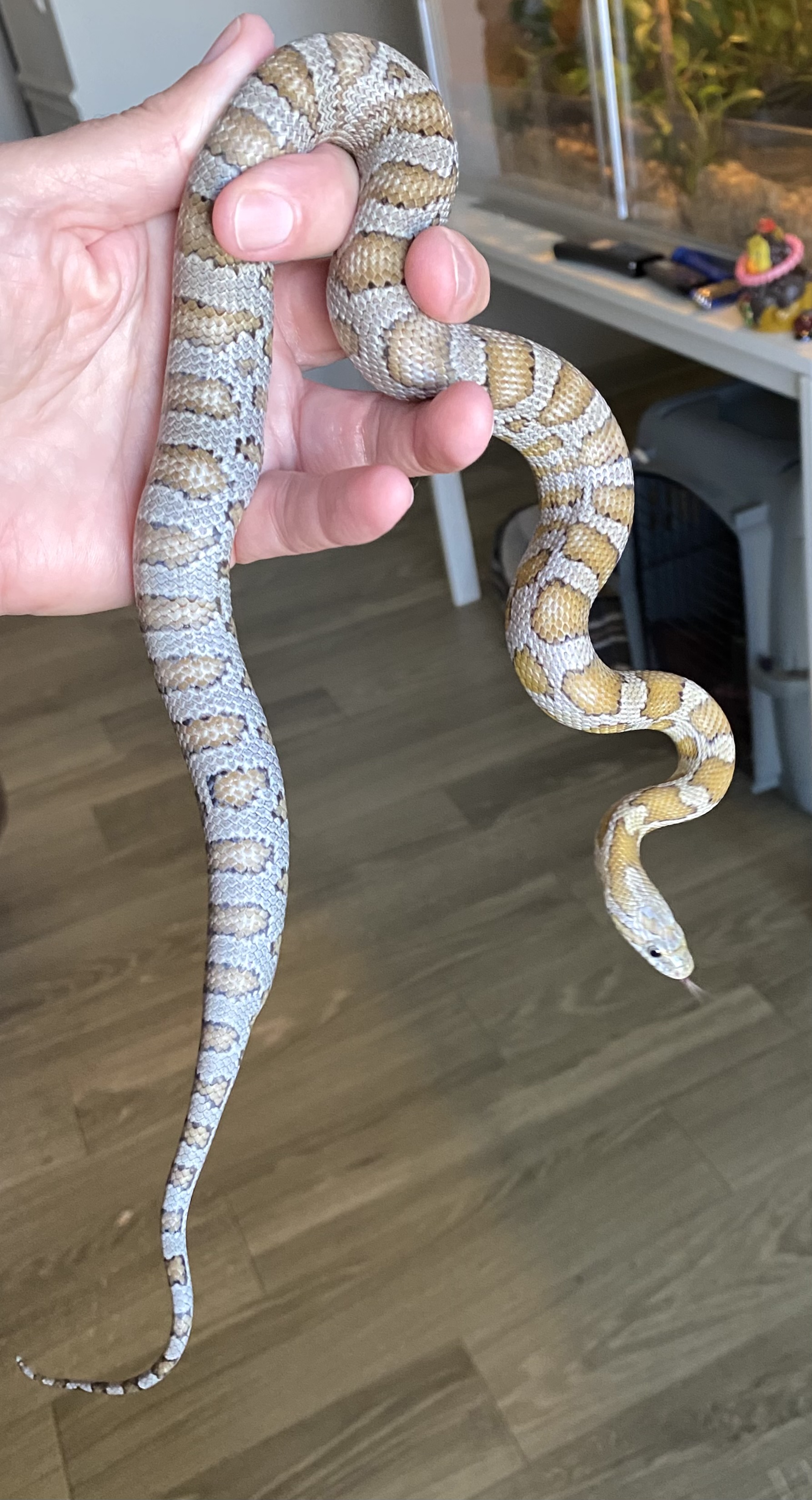
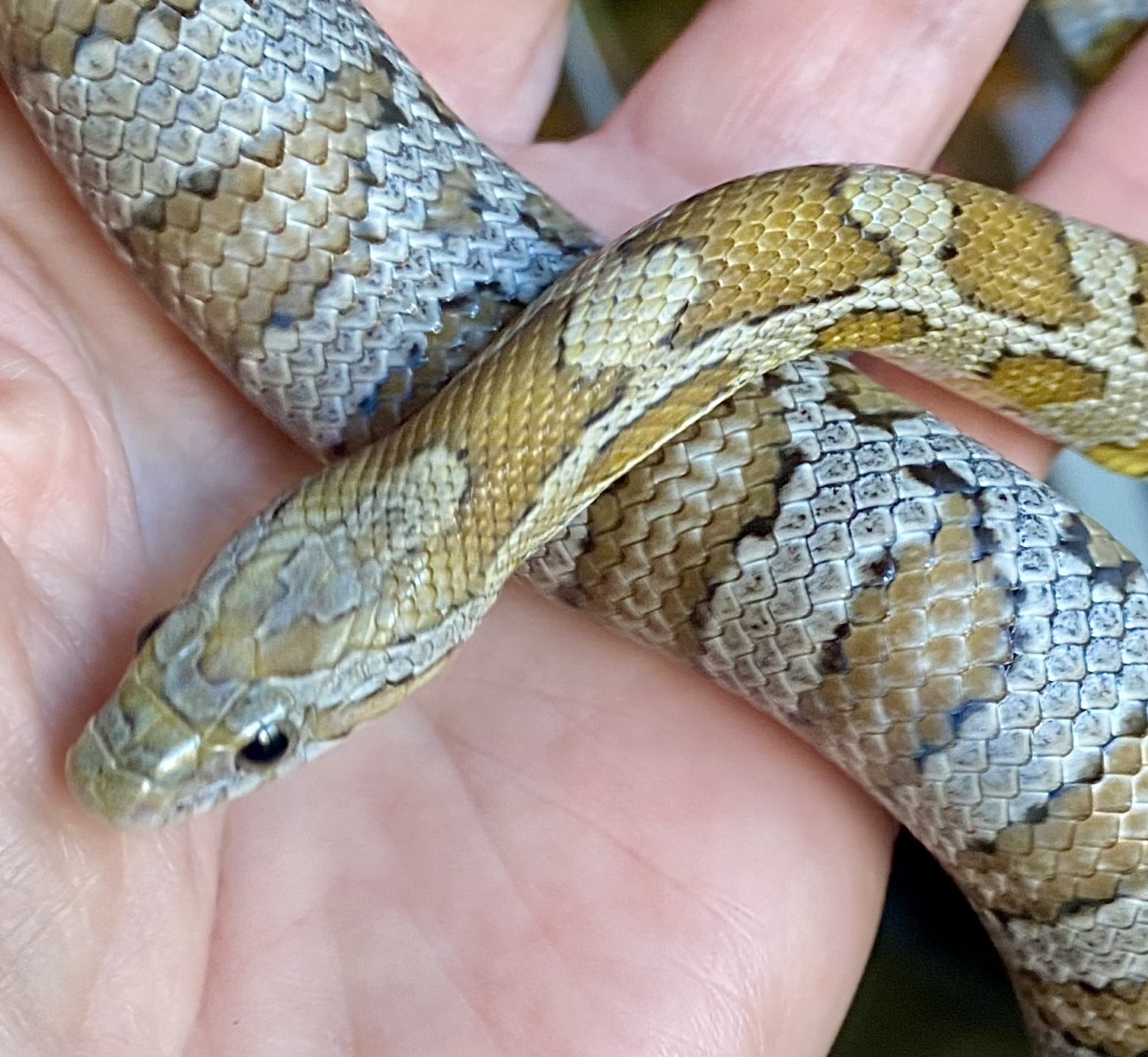
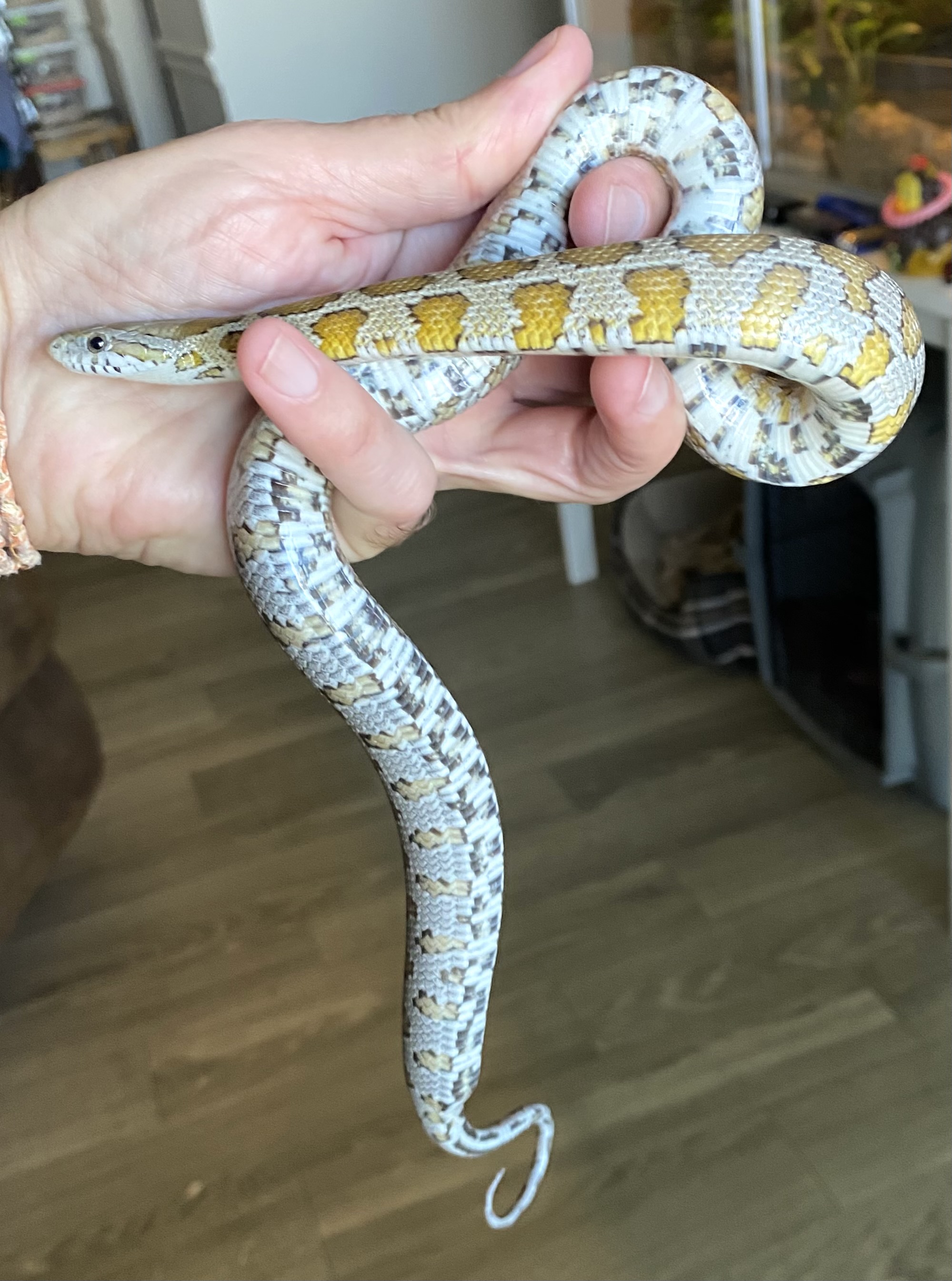
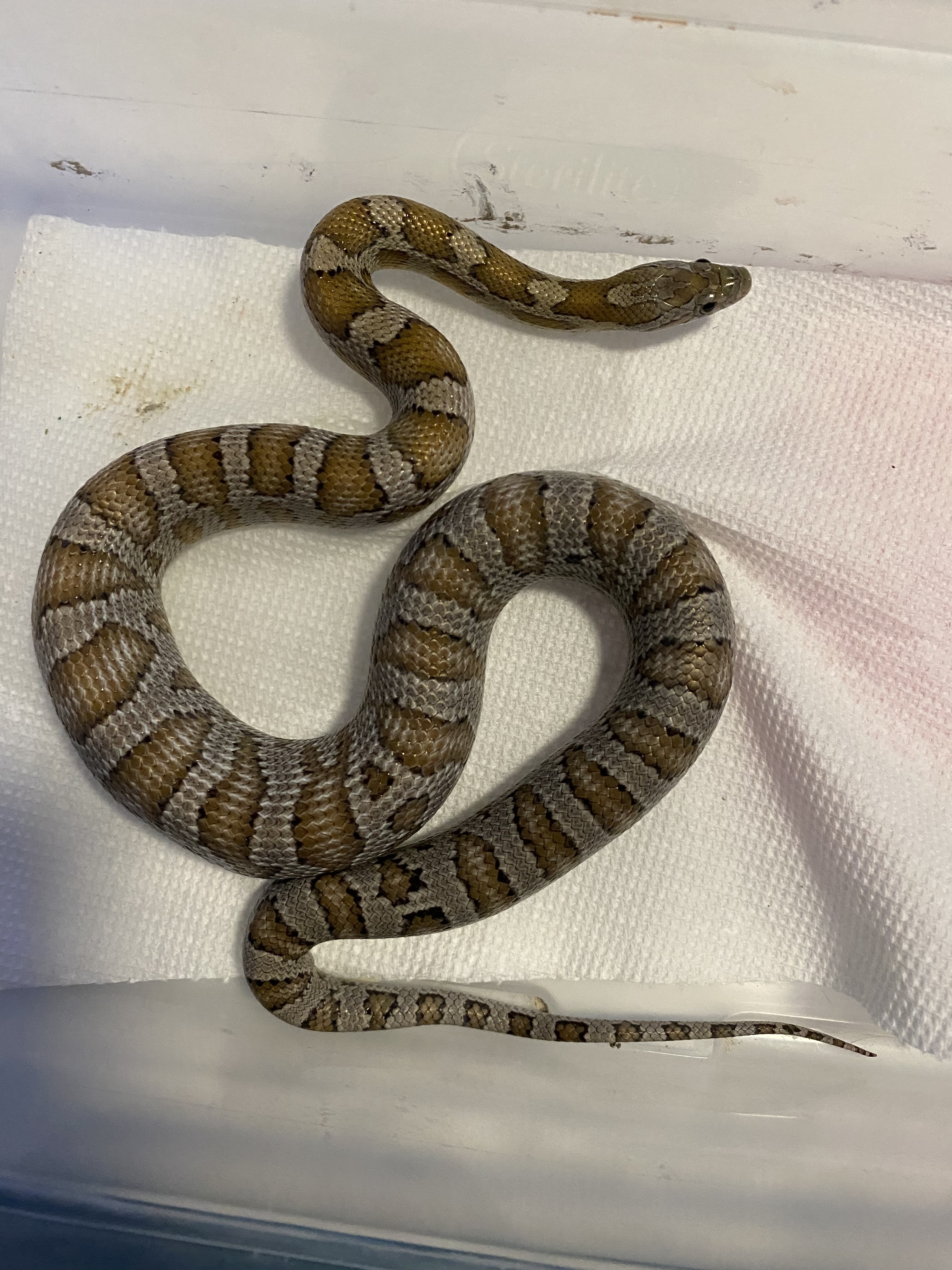
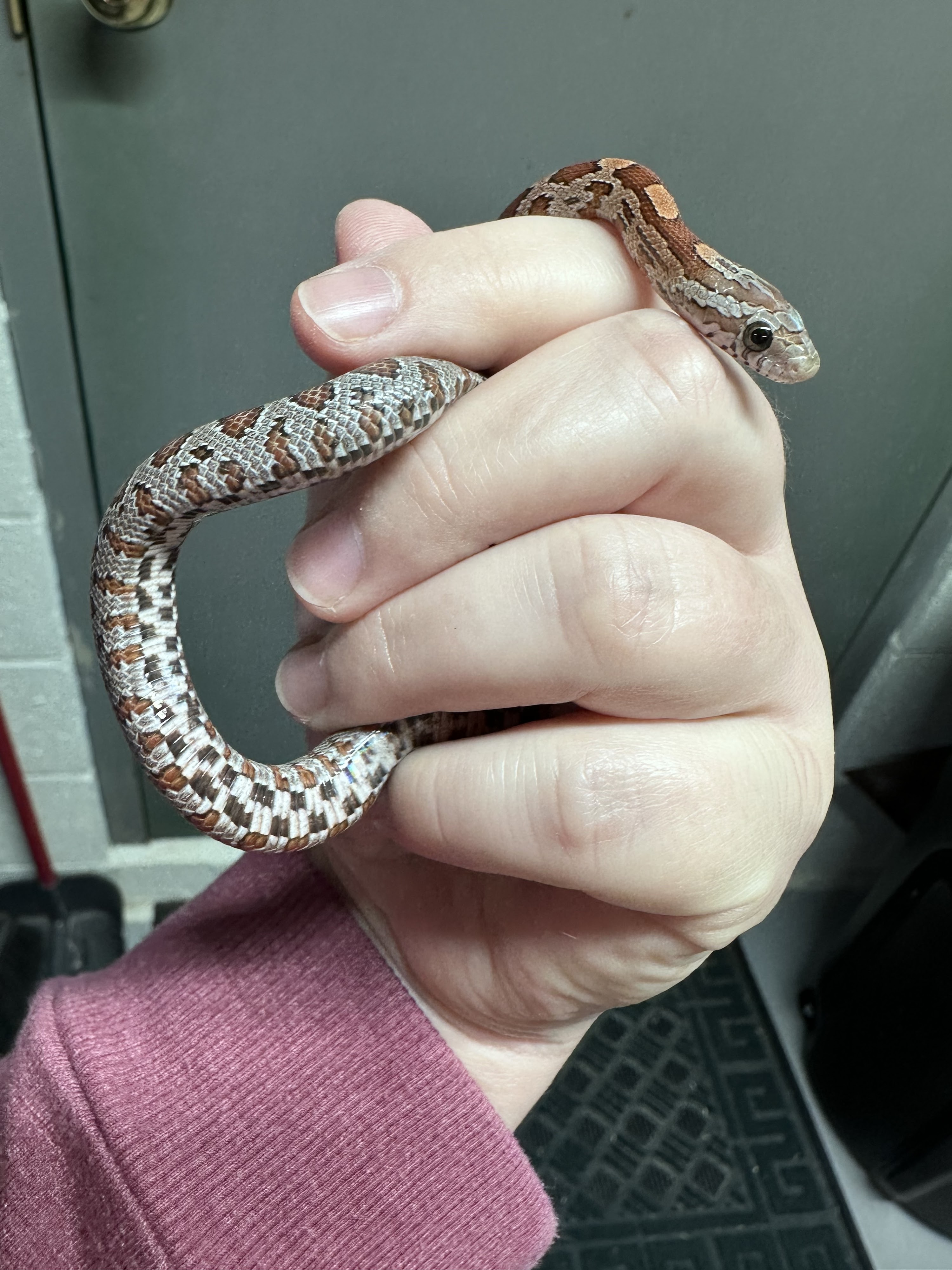
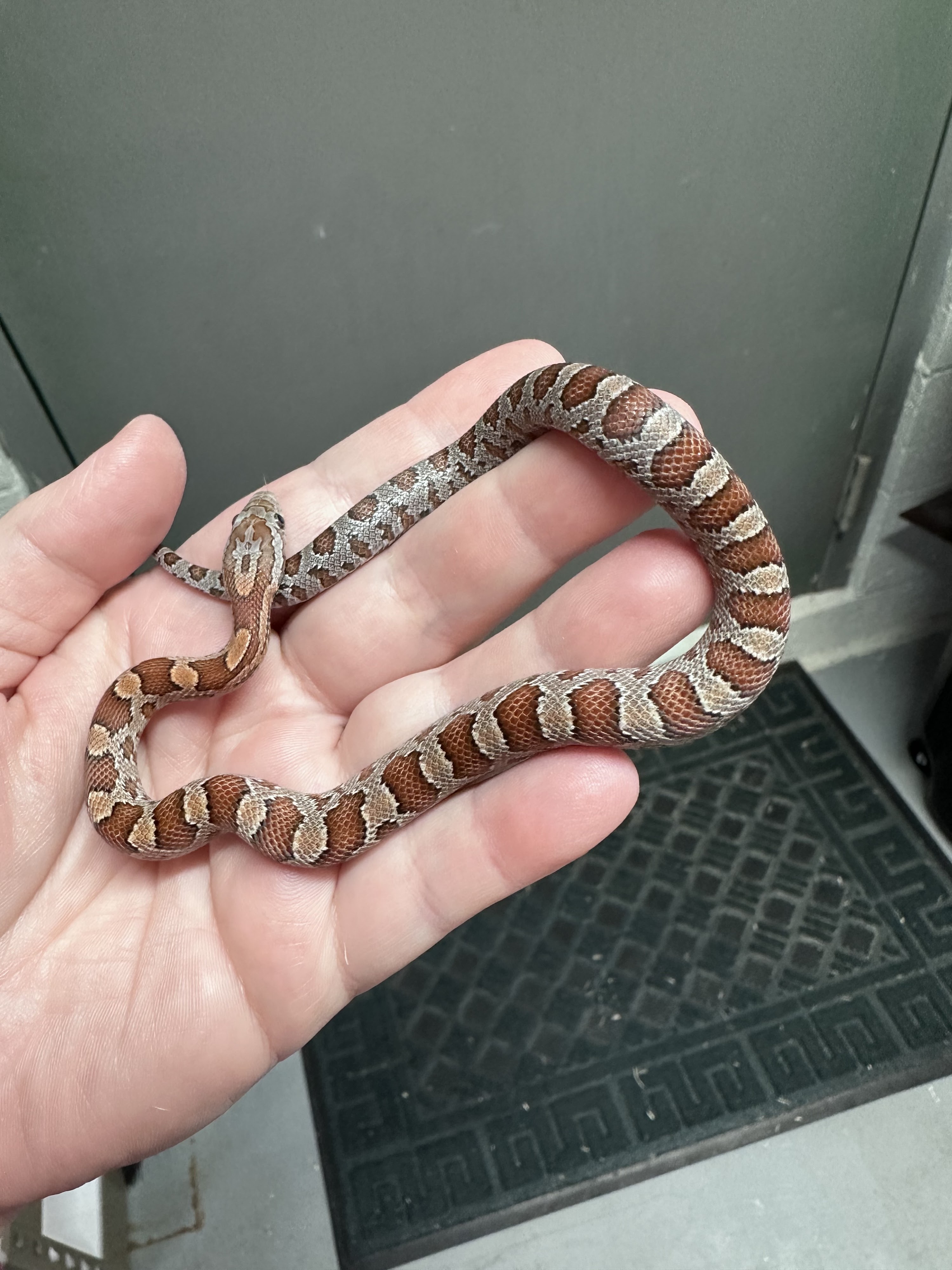
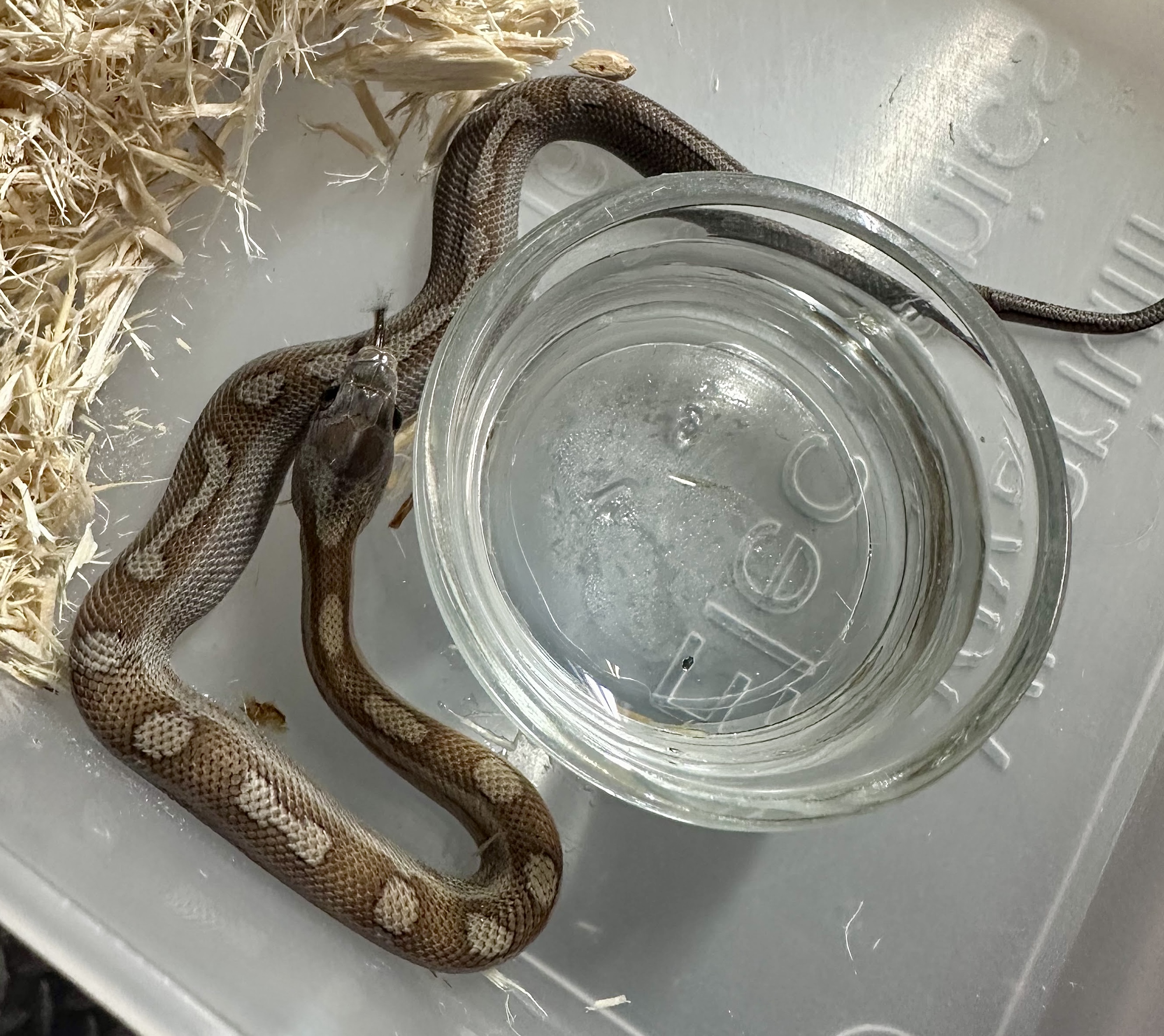
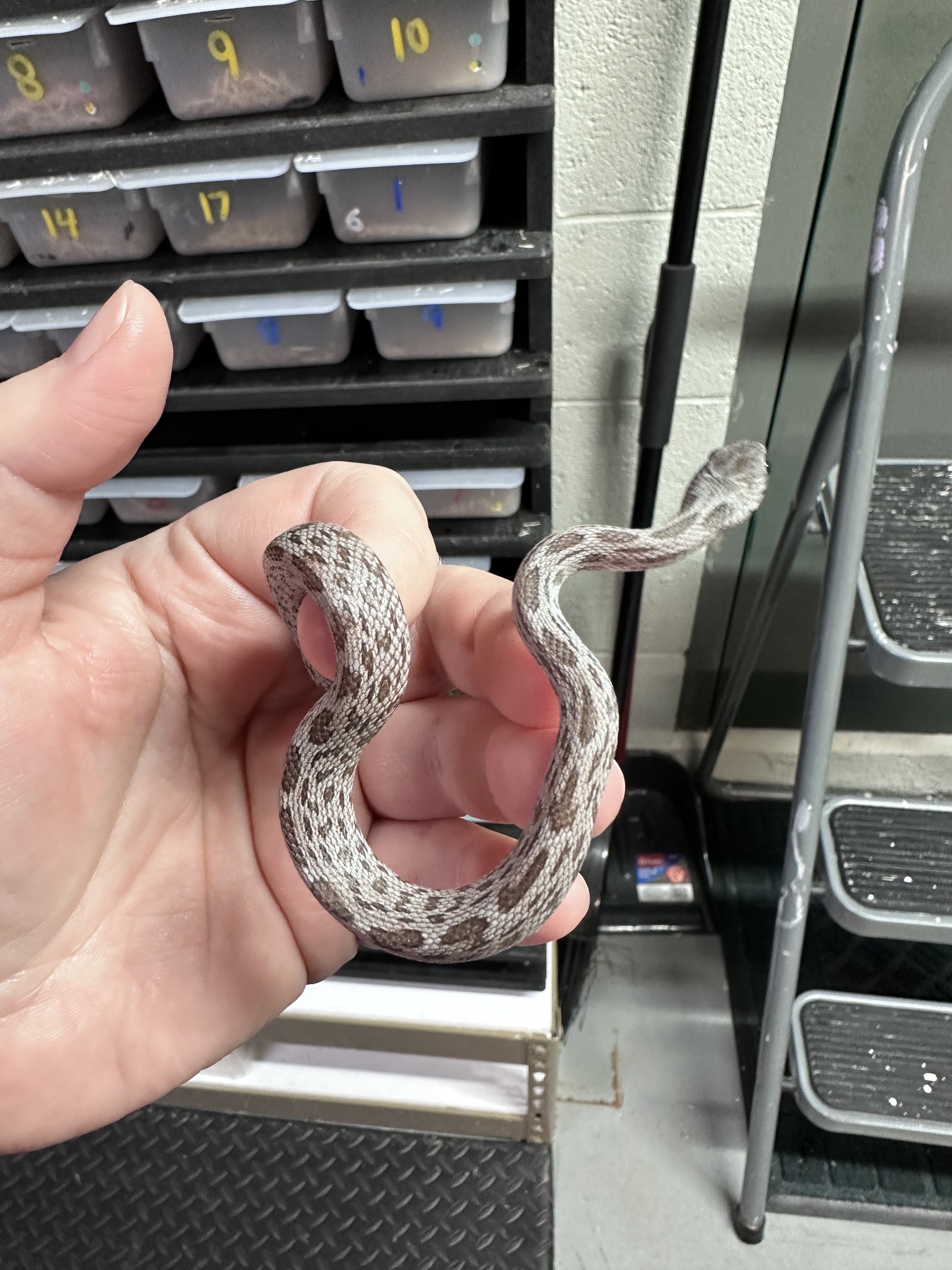
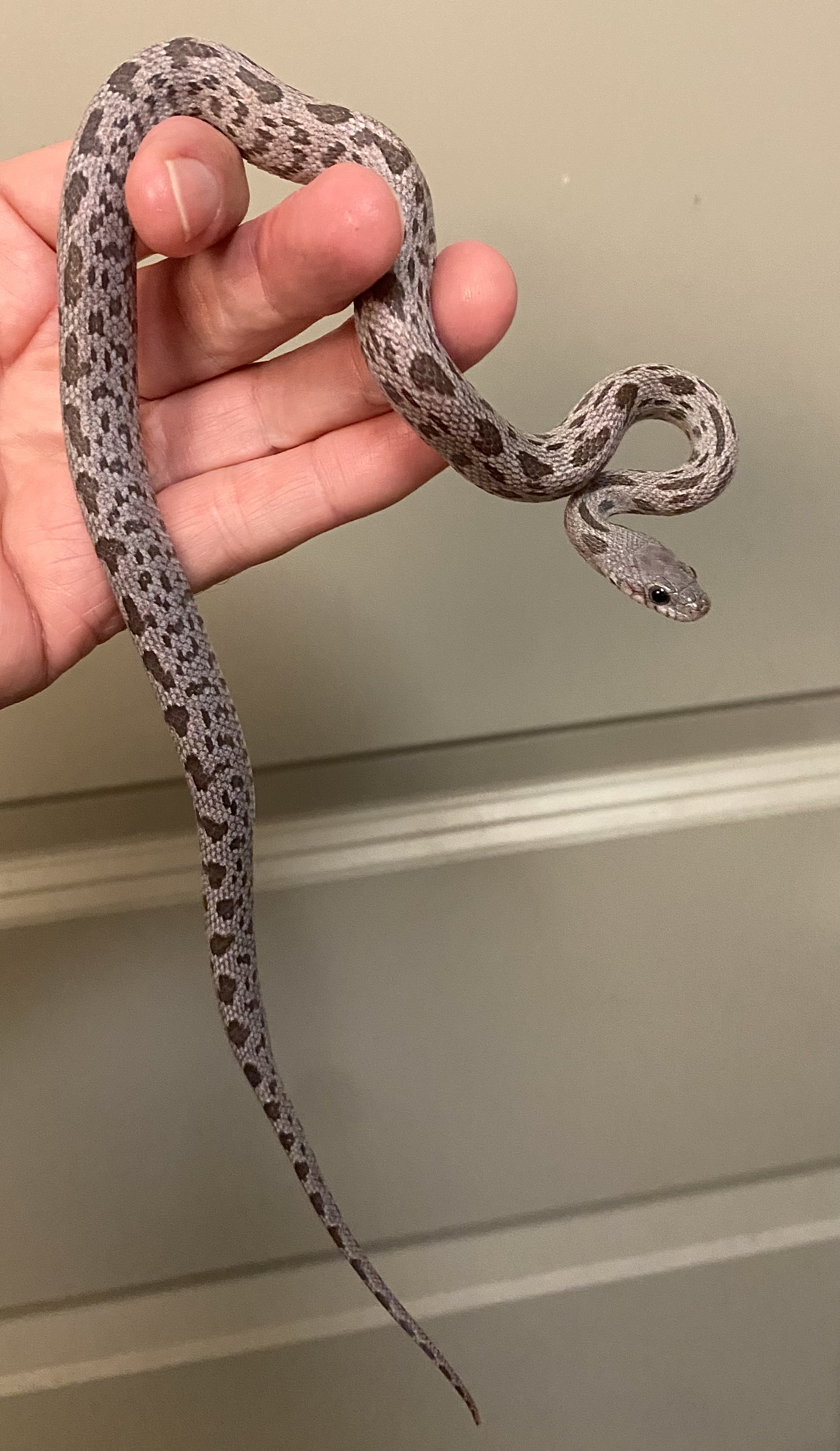
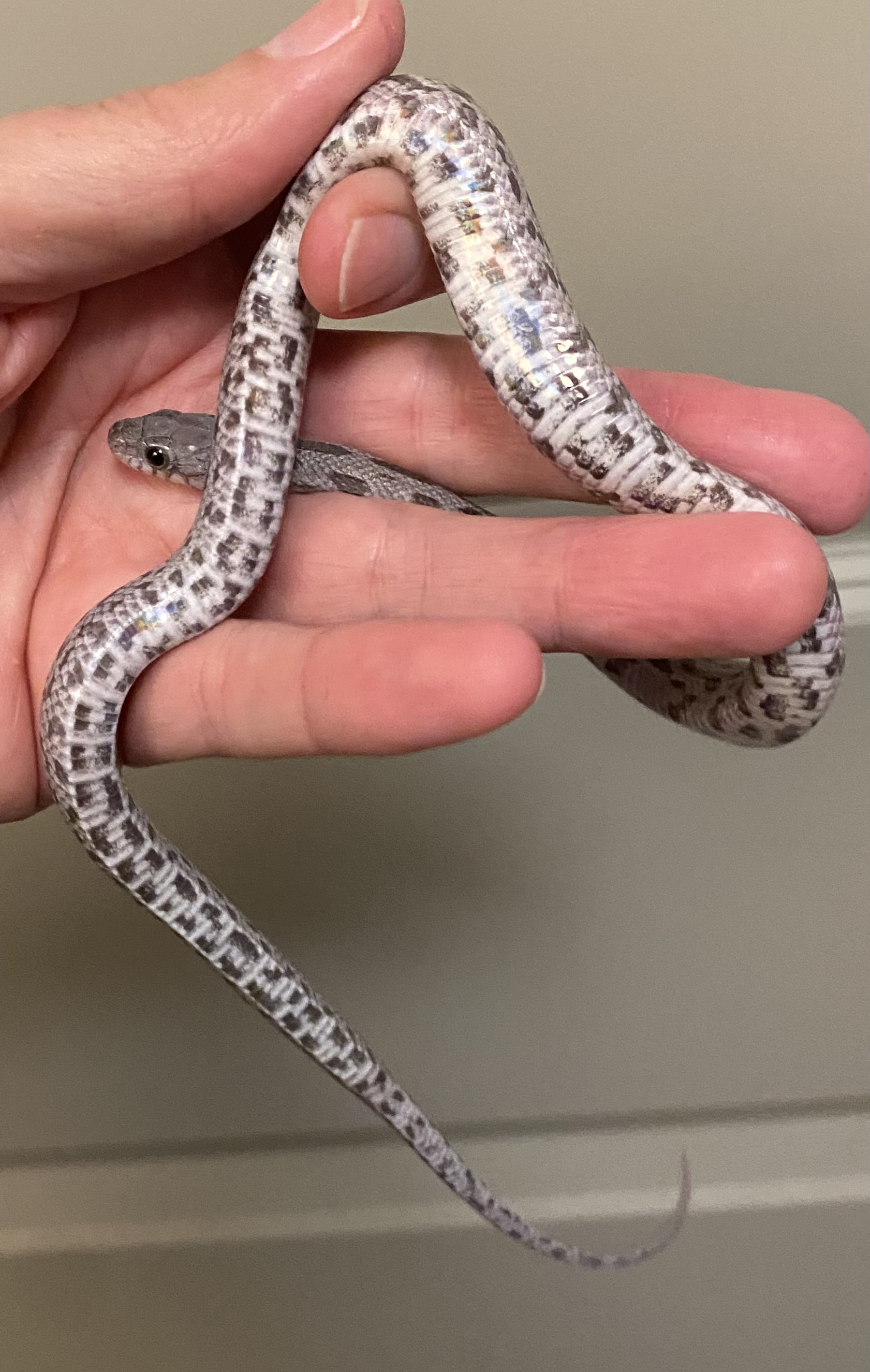
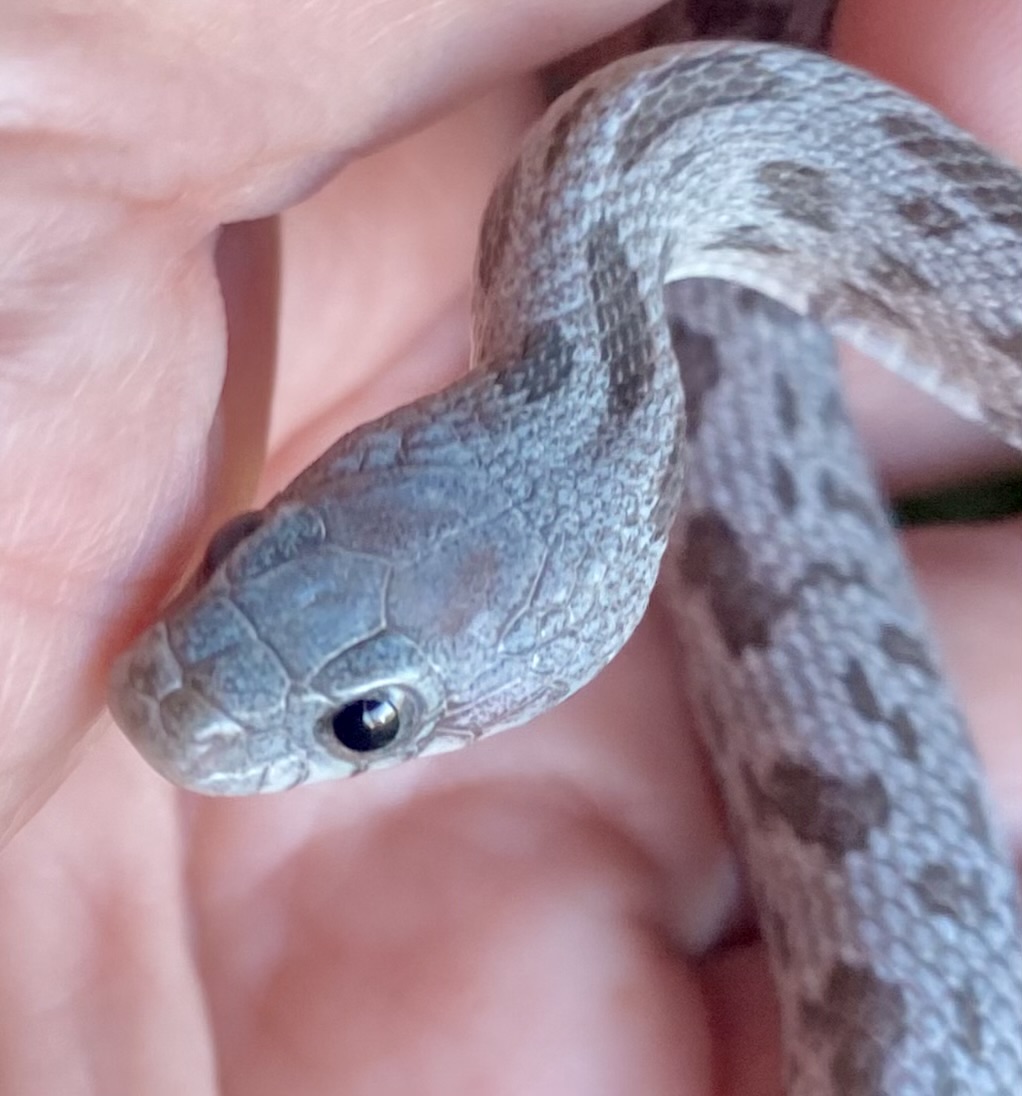
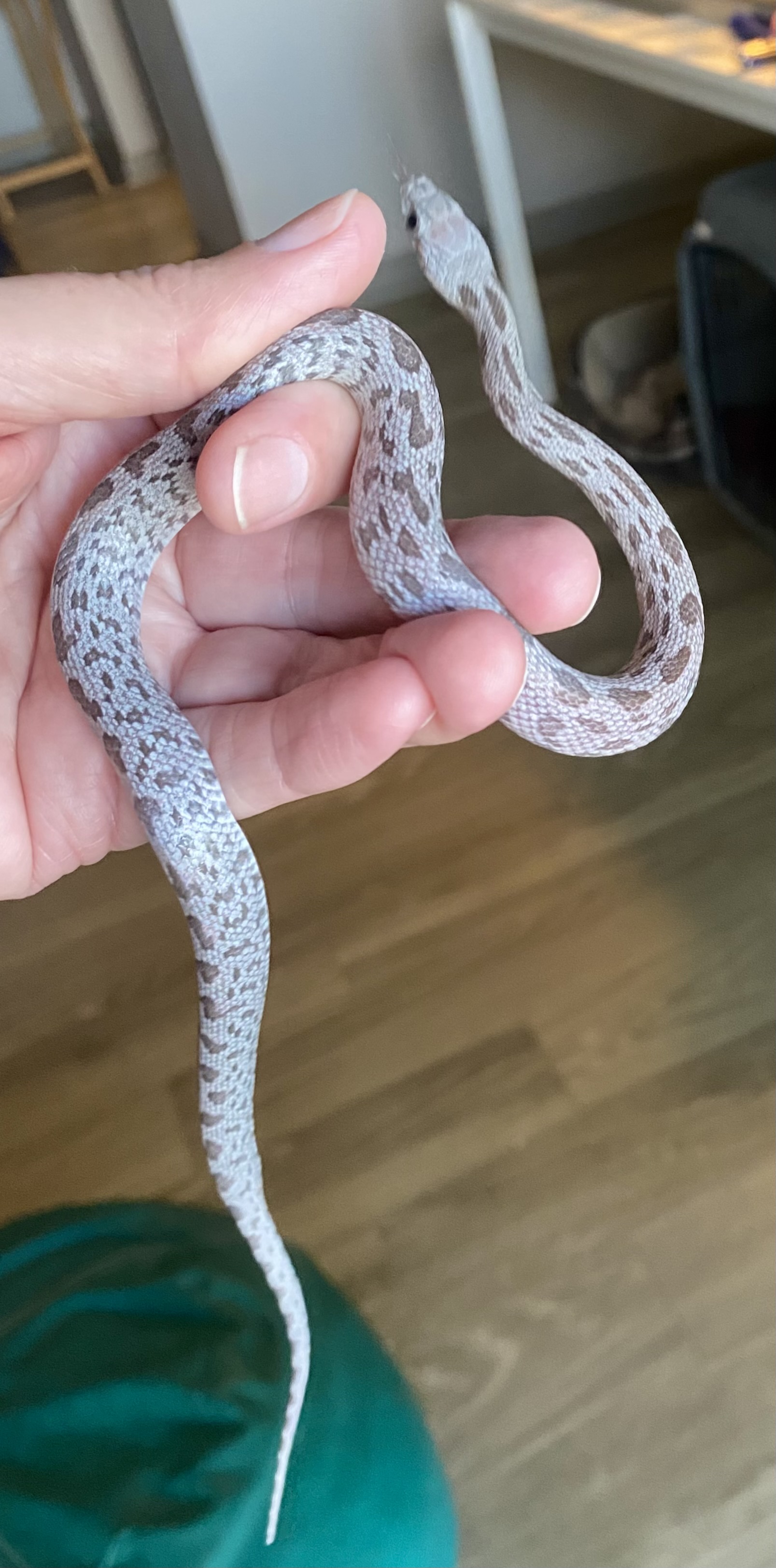
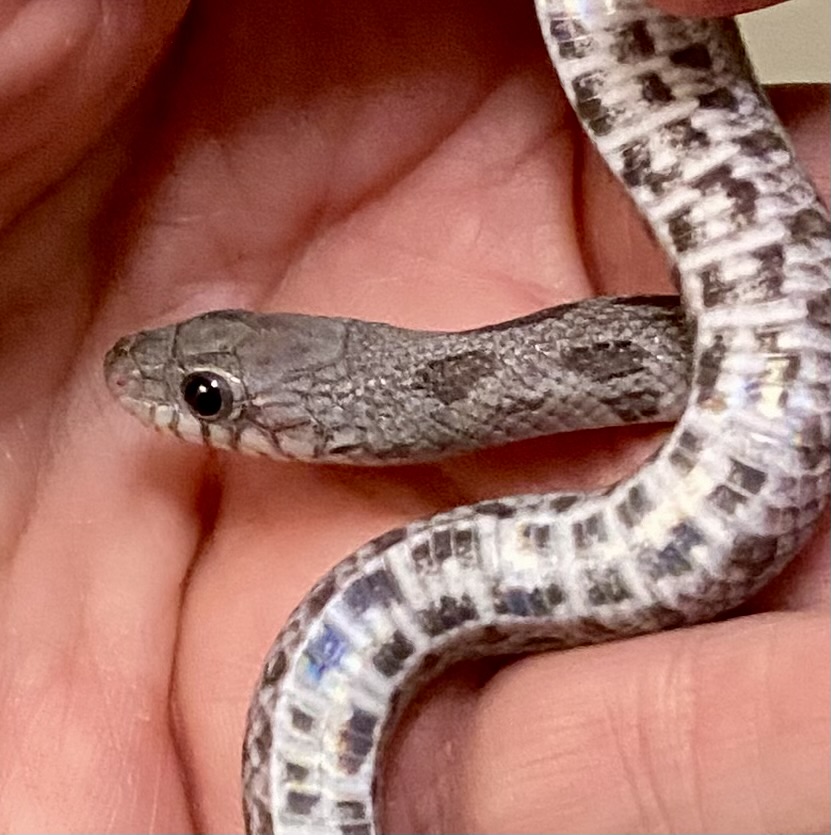
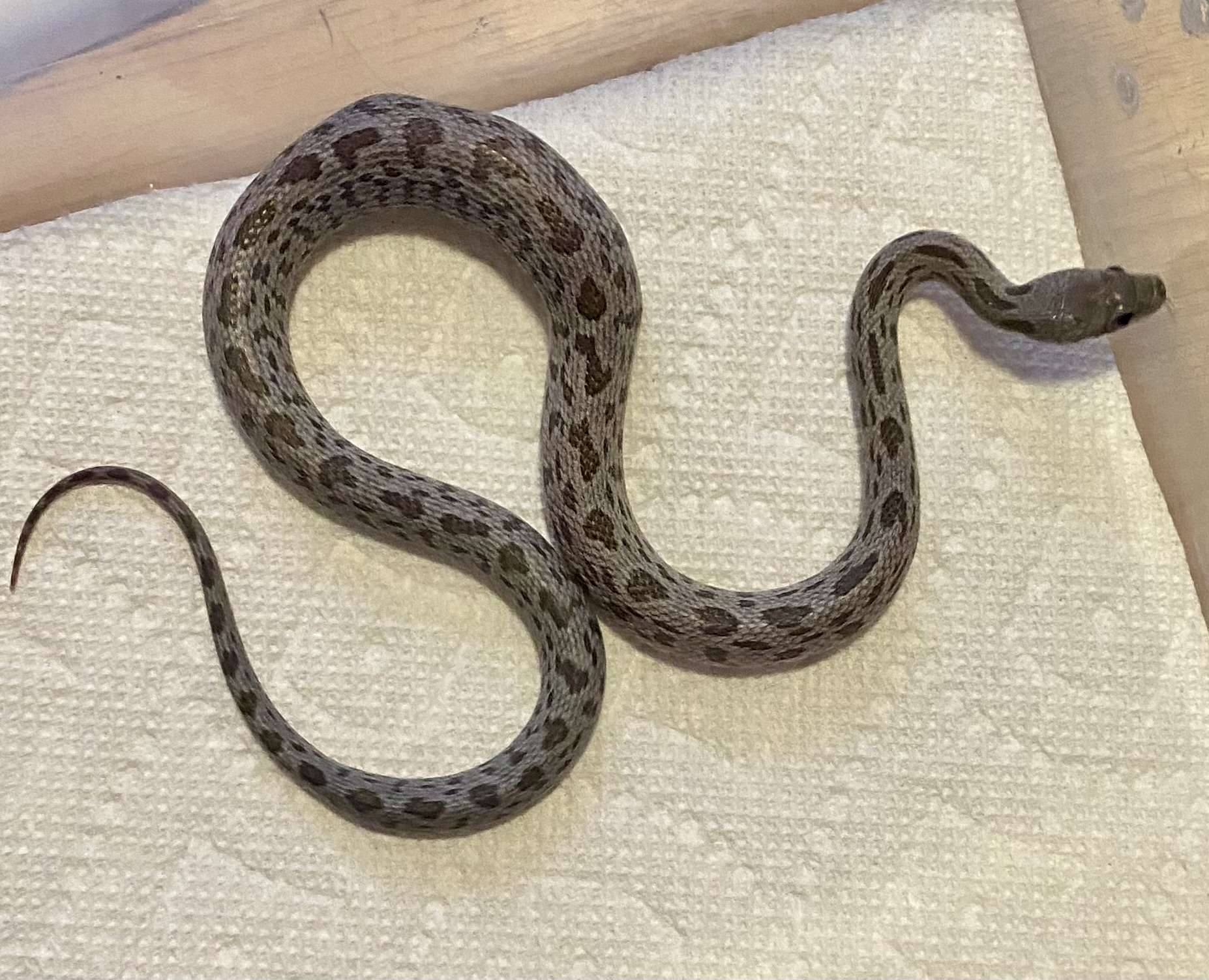
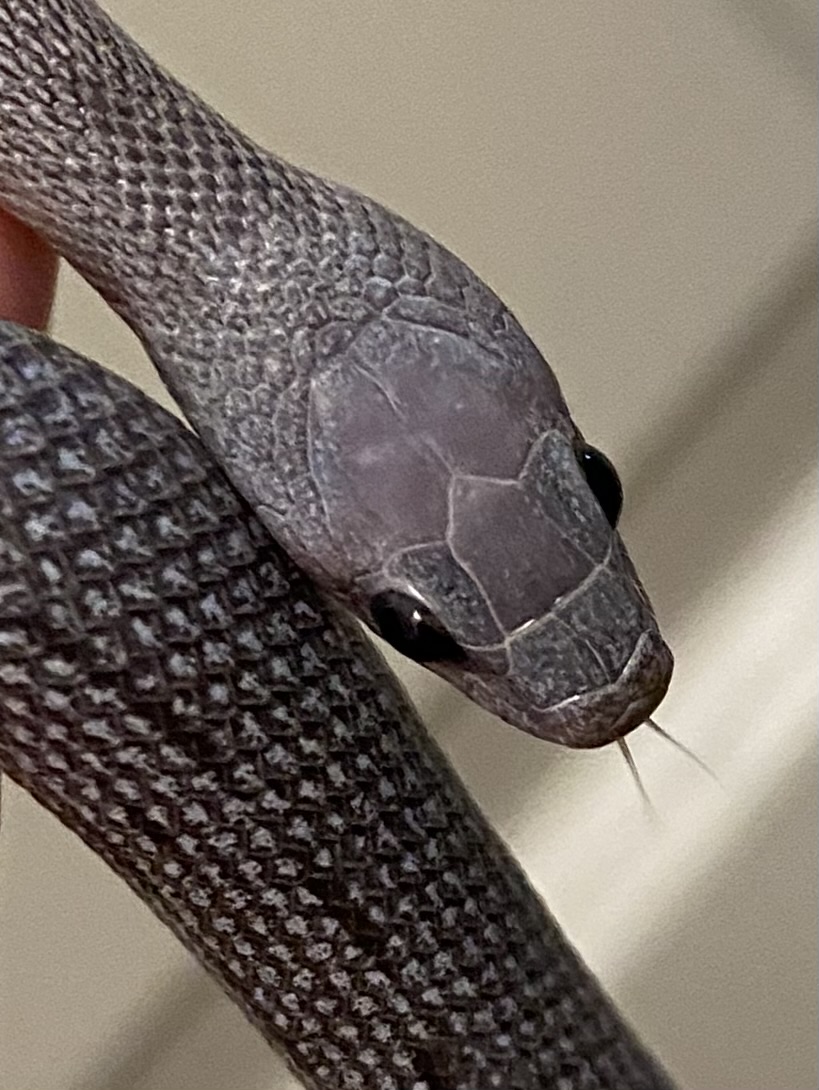
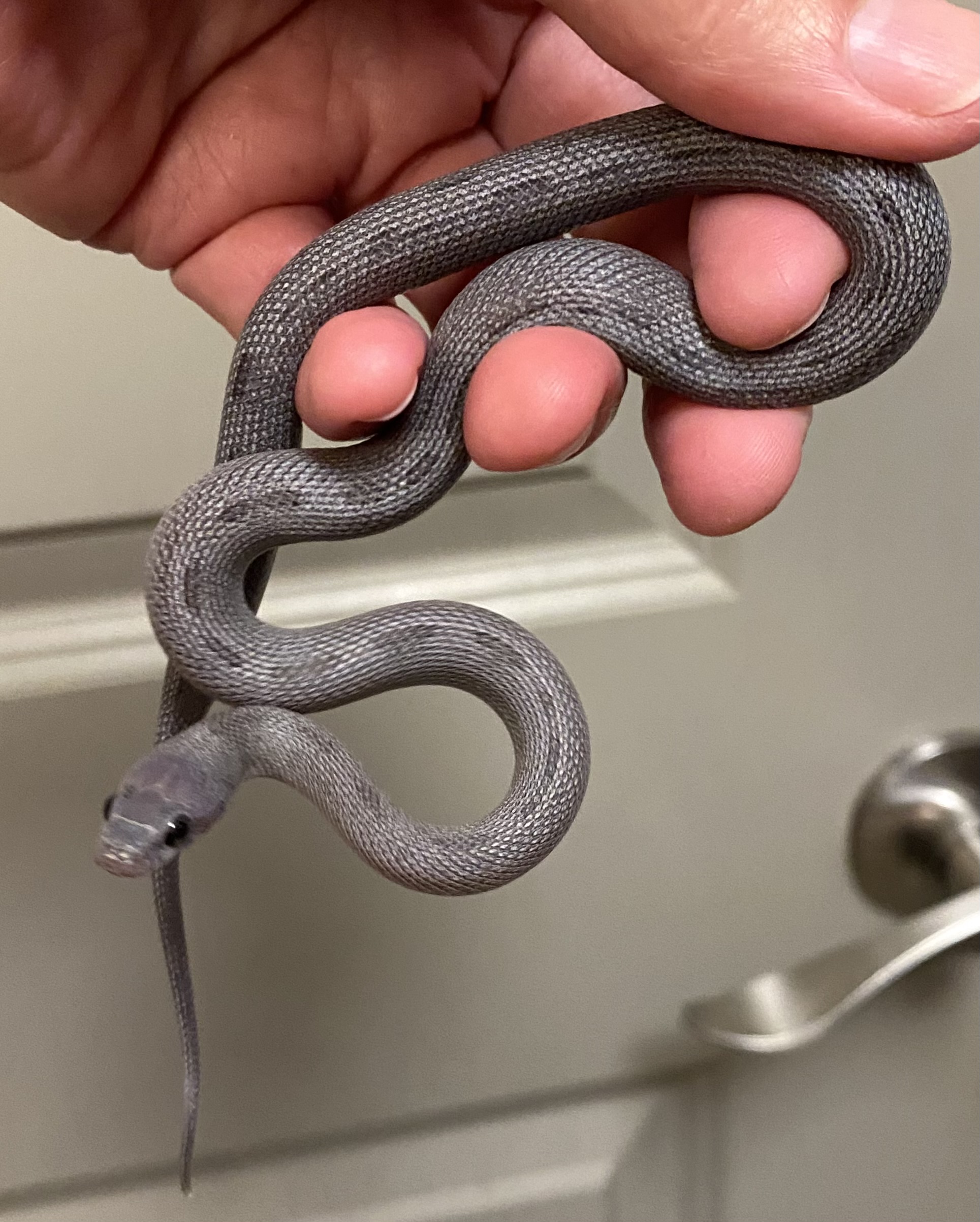
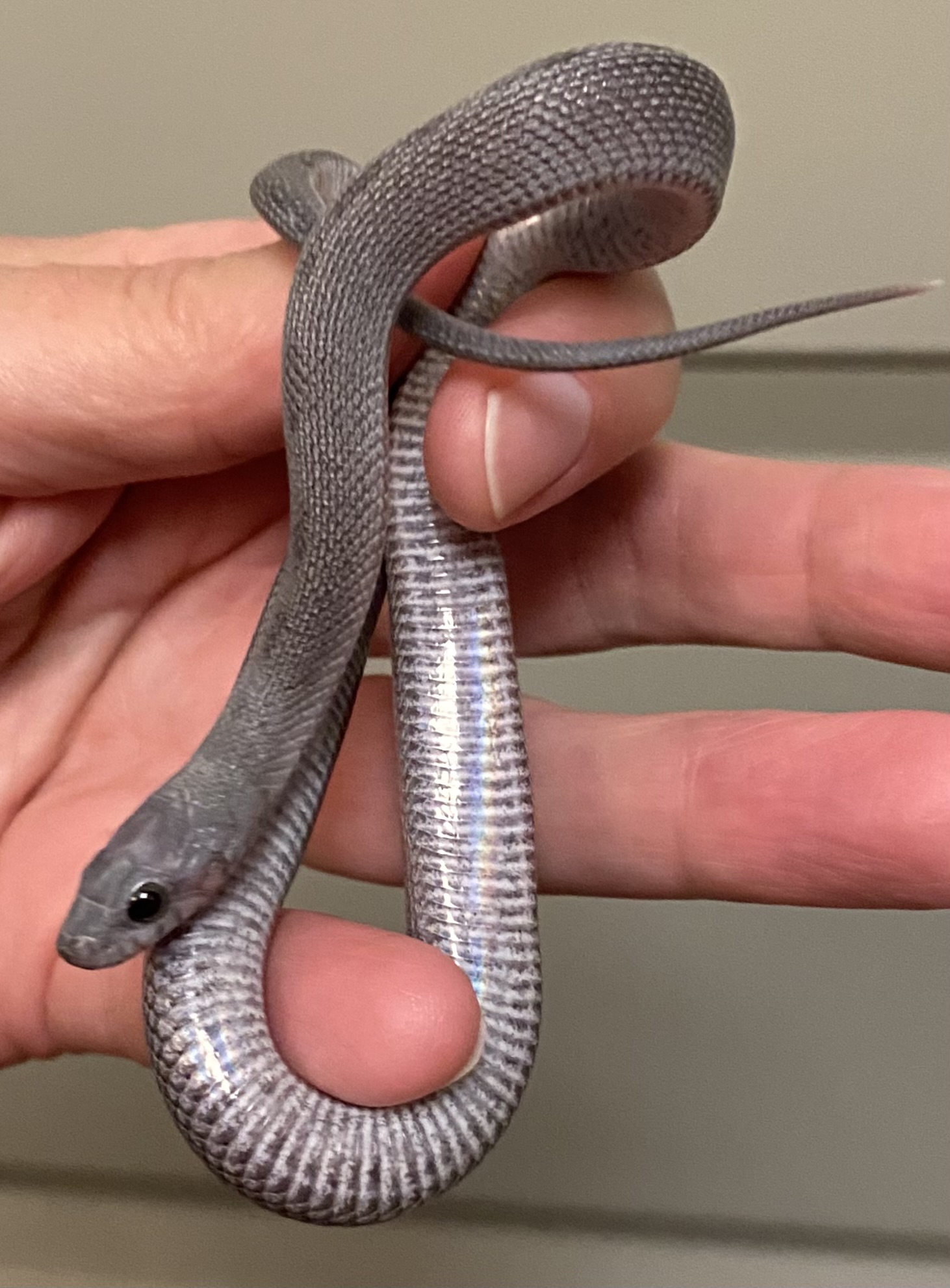
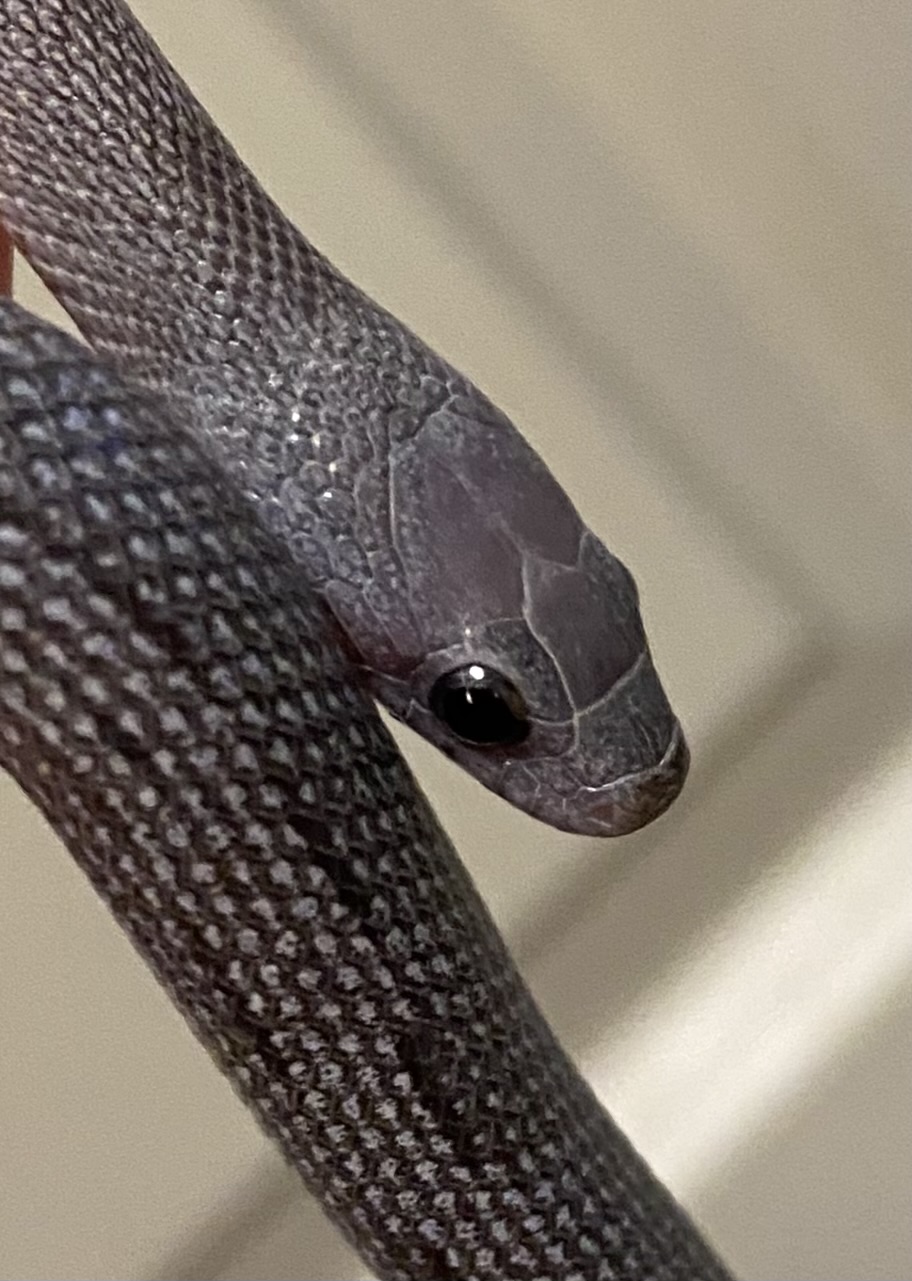
Some pics from my friend Mikelle (Serpentine Works) of a few ‘24 Bantams I sent her. The male Shatter is giving her a hard time feeding, but the female Miami Masque and female Caramel Irregular-Stripe are chowing.
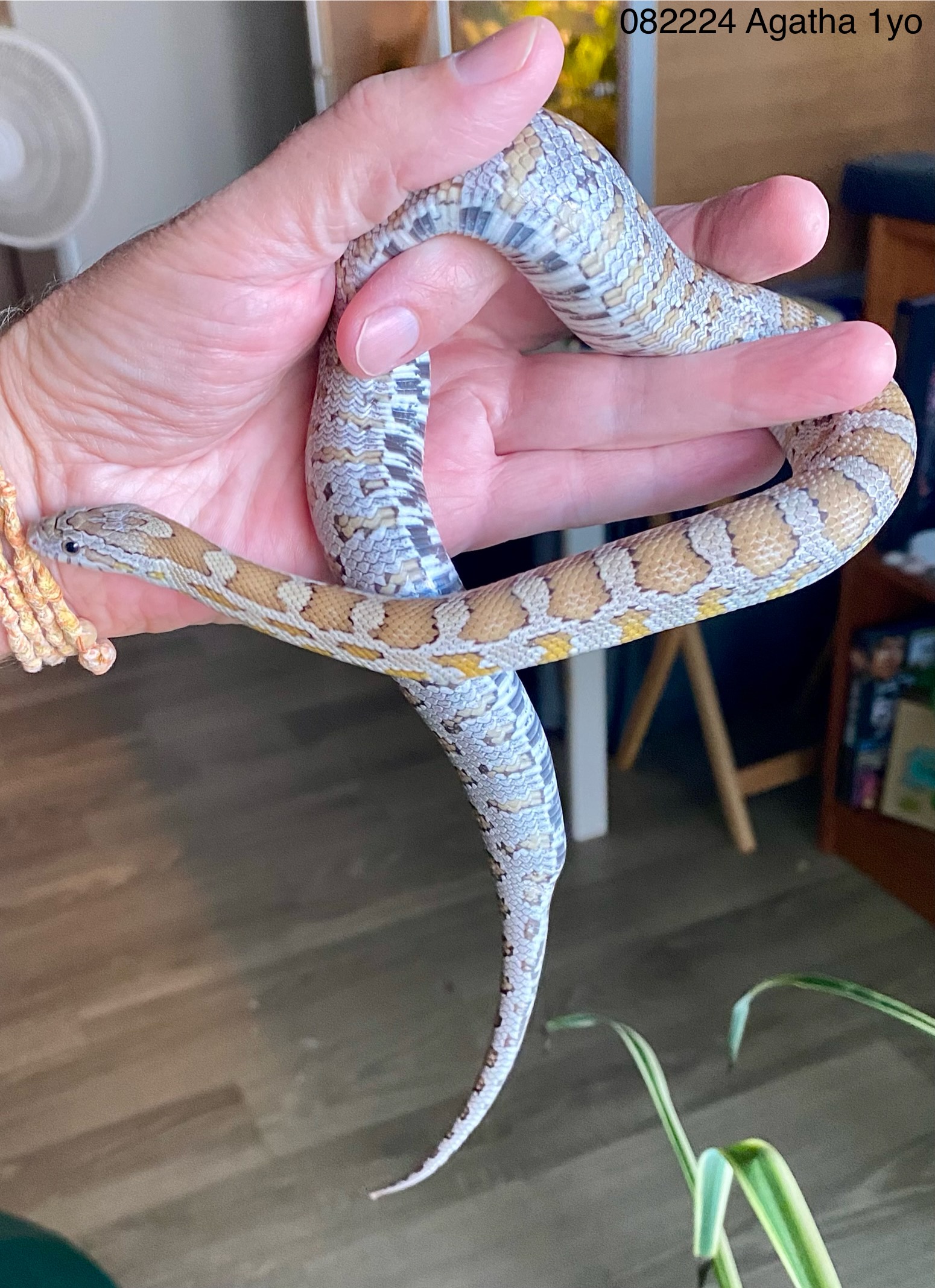
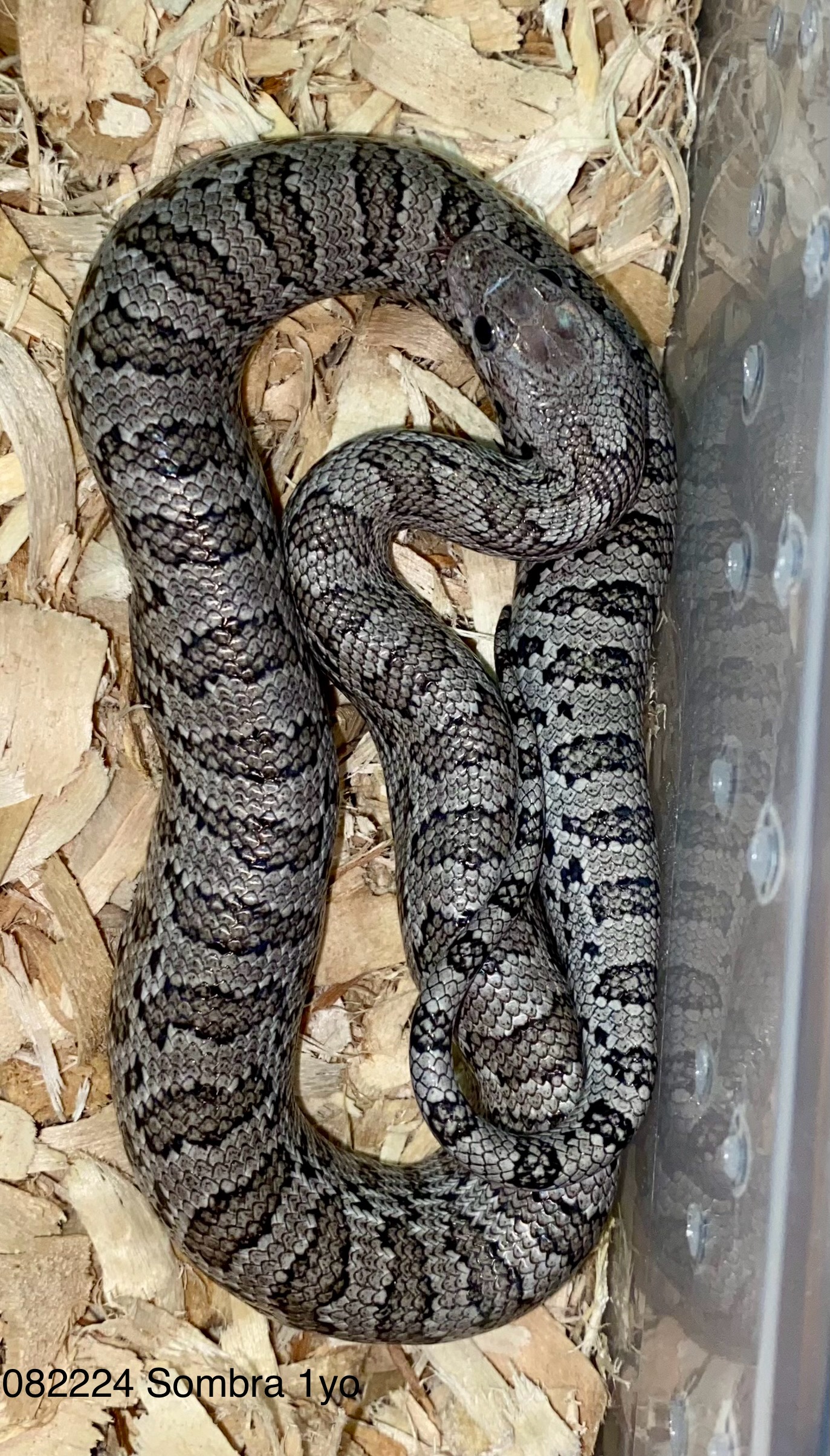
Thanks Caron. Well, it’s been proven repeatable with the same pair of presumed hets, if it’s recessive. My friend Mikelle is collaborating too, and she has an X-ray appointment for one of the highest expression females. So if everything looks good, she’s considering outcrossing right away. My tentative plan is het bantam mom to homo bantam son, and a homo x homo pairing, if I feel a female is ready. That should reveal the nature of the mutation, if it is one.
There are a number of questions about reproduction that will hopefully be answered positively.
I sent a group of ‘23 and ‘24 Bantams to my friend Mikelle at Serpentine Works a few months ago, and she took them to Colubridfest where they were well received, and where a herp vet did a cursory exam of two subadult females and said they seemed good.
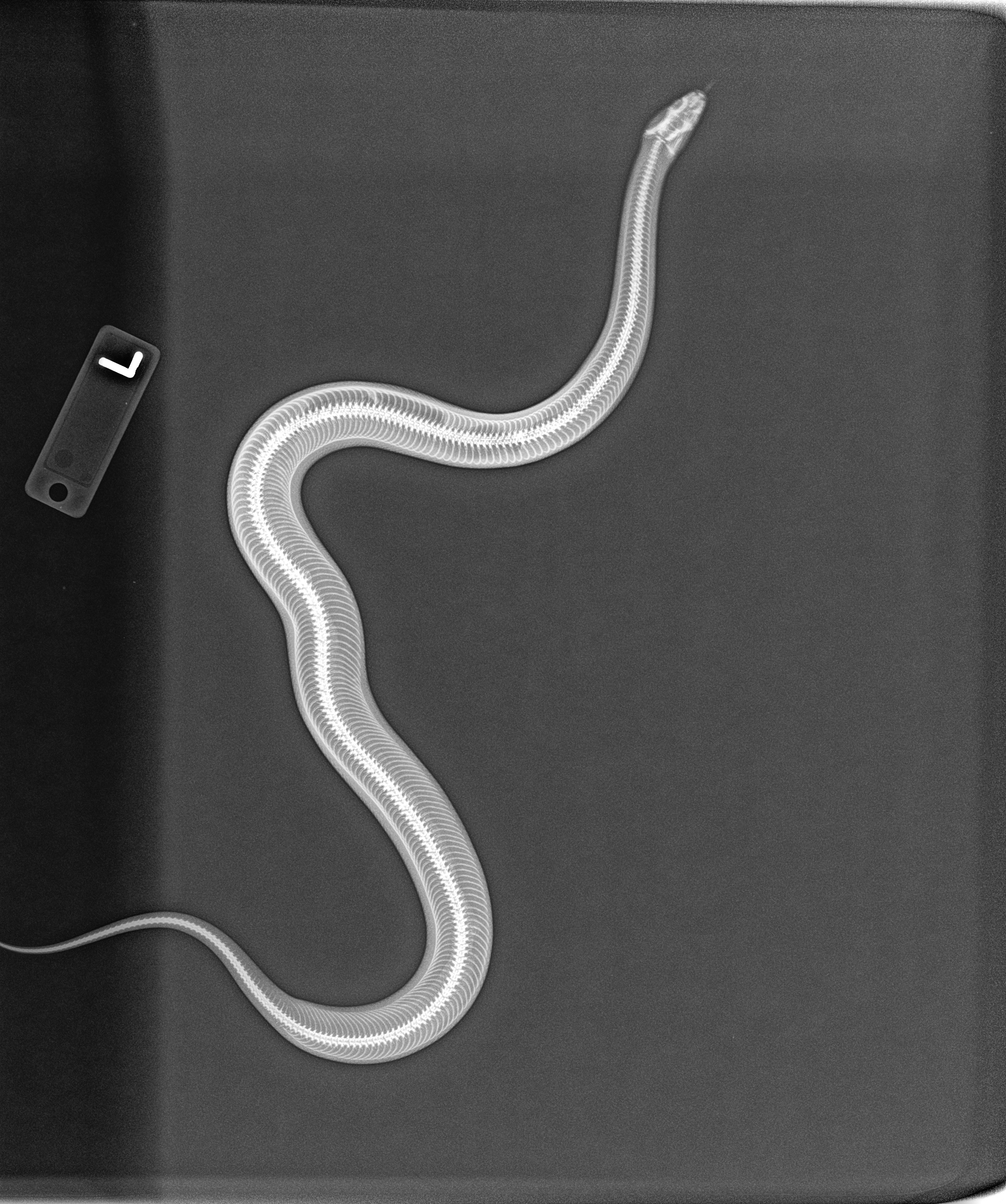
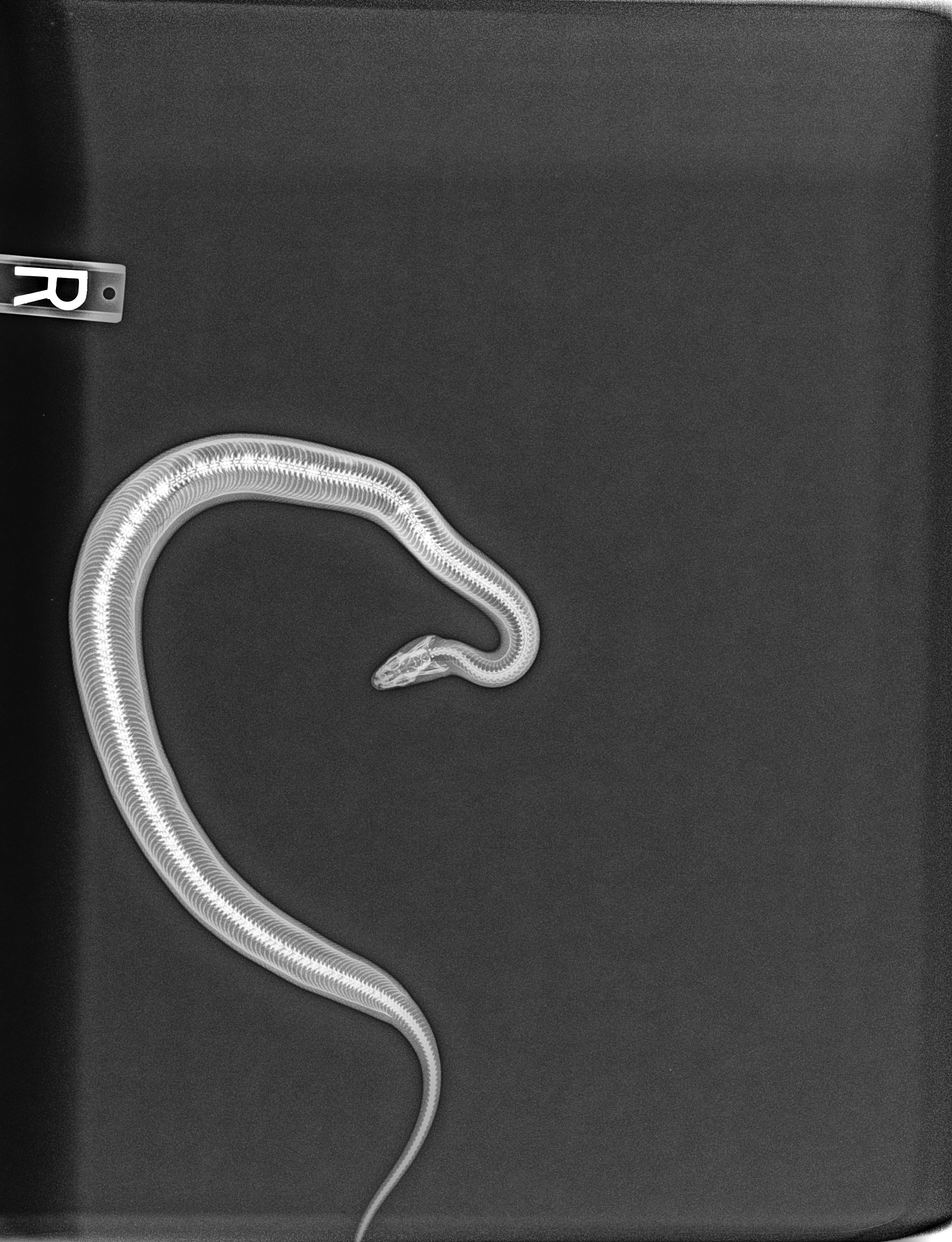
Today Mikelle took those two subadult females to a herp vet and had them examined and x-rayed. The vet said they looked good, including the internal organs.
So that’s a relief. The “L” x-ray is Agatha and the “R” one is Sombra. Both are high expression Bantams.






 .
.