He was at about 4g, which is 1-2g above hatch weight (my scale doesn’t handle decimals well) and yes, I was giving 1ml at once to him, I was actually feeding via pipettes given it was about the smallest thing I could get for them
3 Likes
Pardon the odd hours I’m answering at, I’m falling super sick again out of nowhere, so I’ve been sleeping most of the day and staying up at night with as unbearable as the headaches and my nose are
3 Likes
Also pardon a THIRD POST IN A ROW, but final egg just hatched! I believe them to be an anery masque. Every single baby that came out was masque except one, including those dead in the egg.
But boy oh boy is this guy a chunk, and has hatched at two times the girth of his 8g sister who’s been eating regularly for me now
@deanaii the bantam specialist since I wanted a second opinion on this guy. Obviously not a bantam since that’s your deal, but could something similar be going on? Obviously I get yet to see how he sheds and poops, but the little one definitely has some good movement to him so far
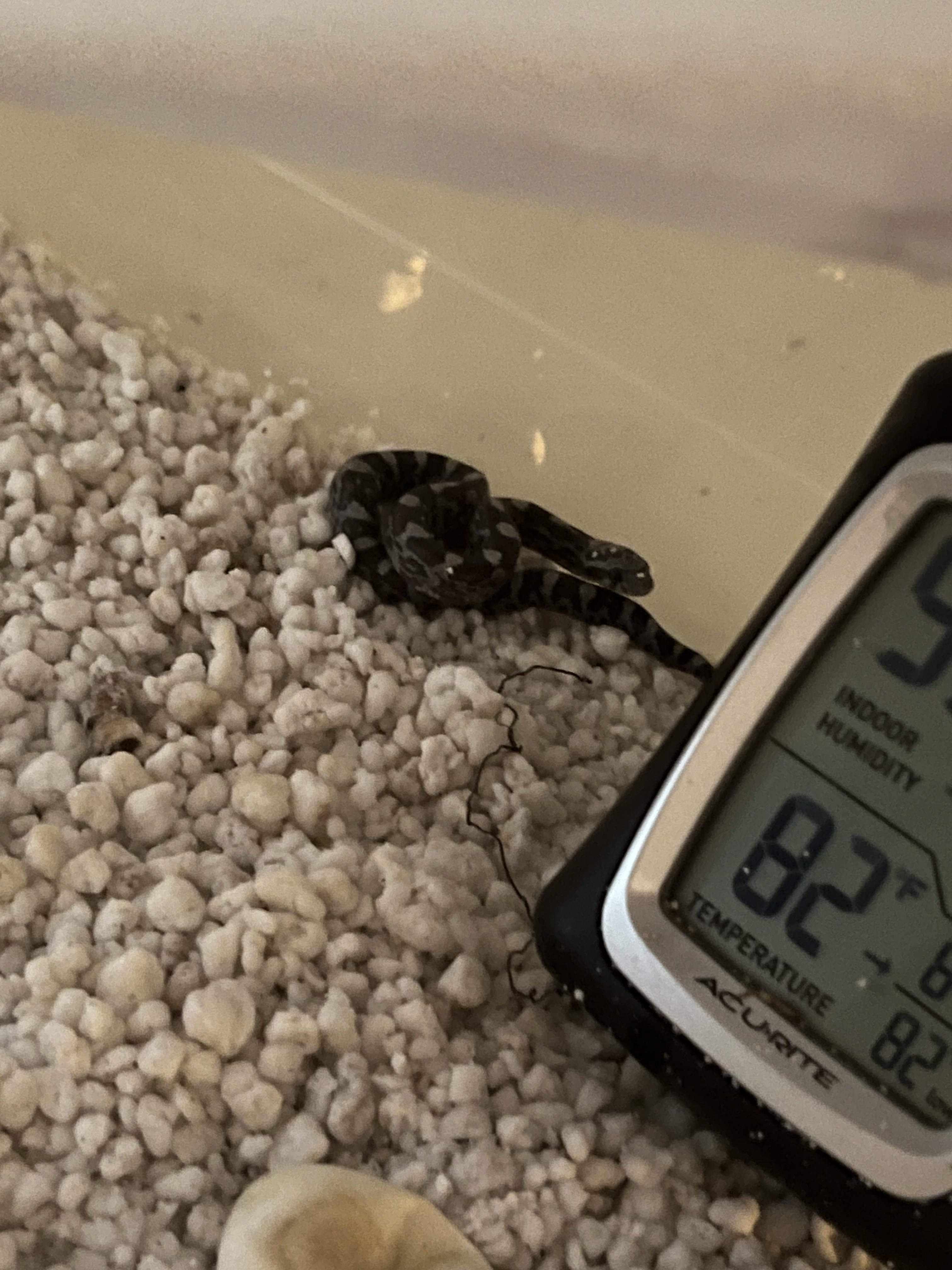
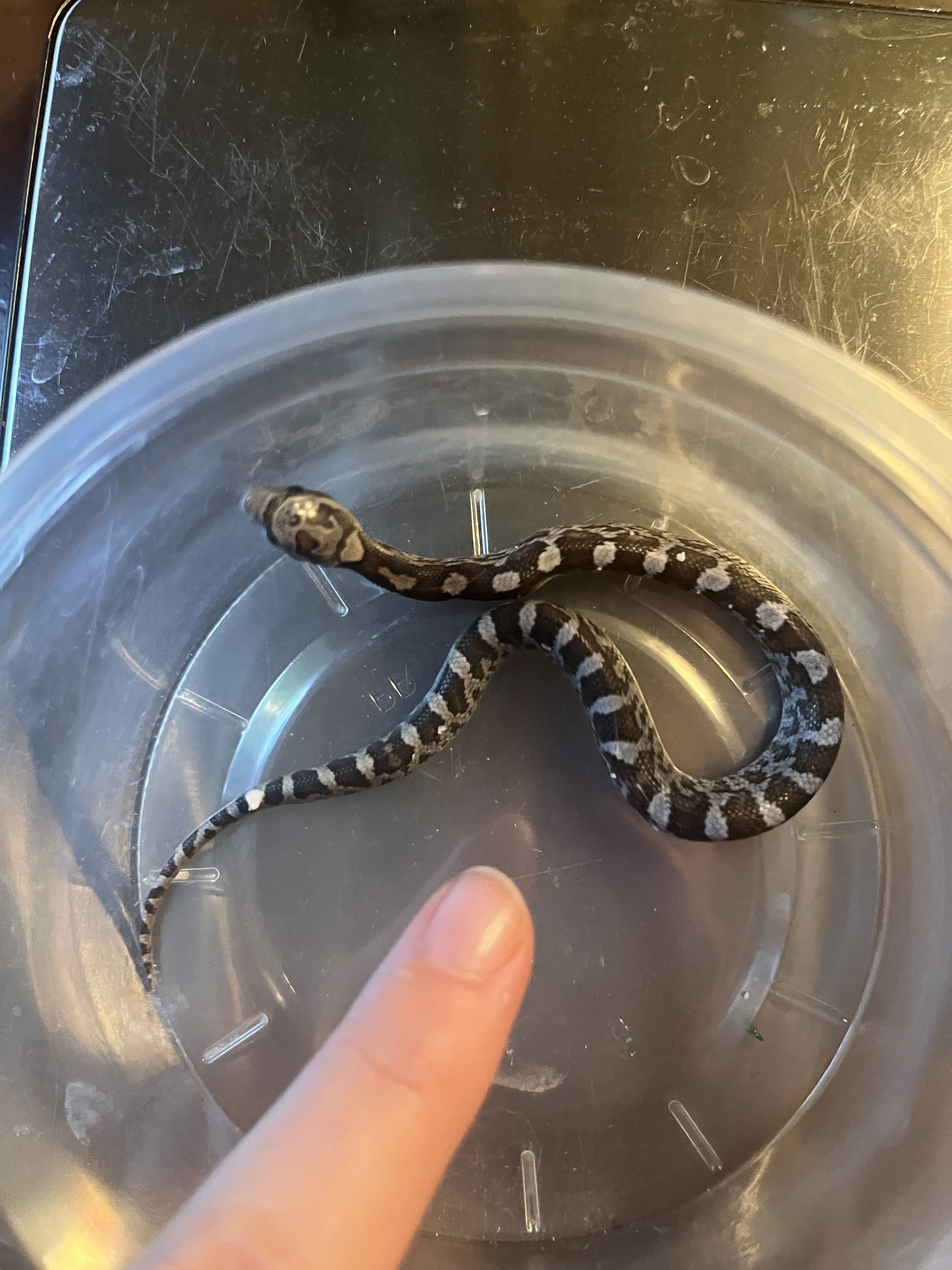
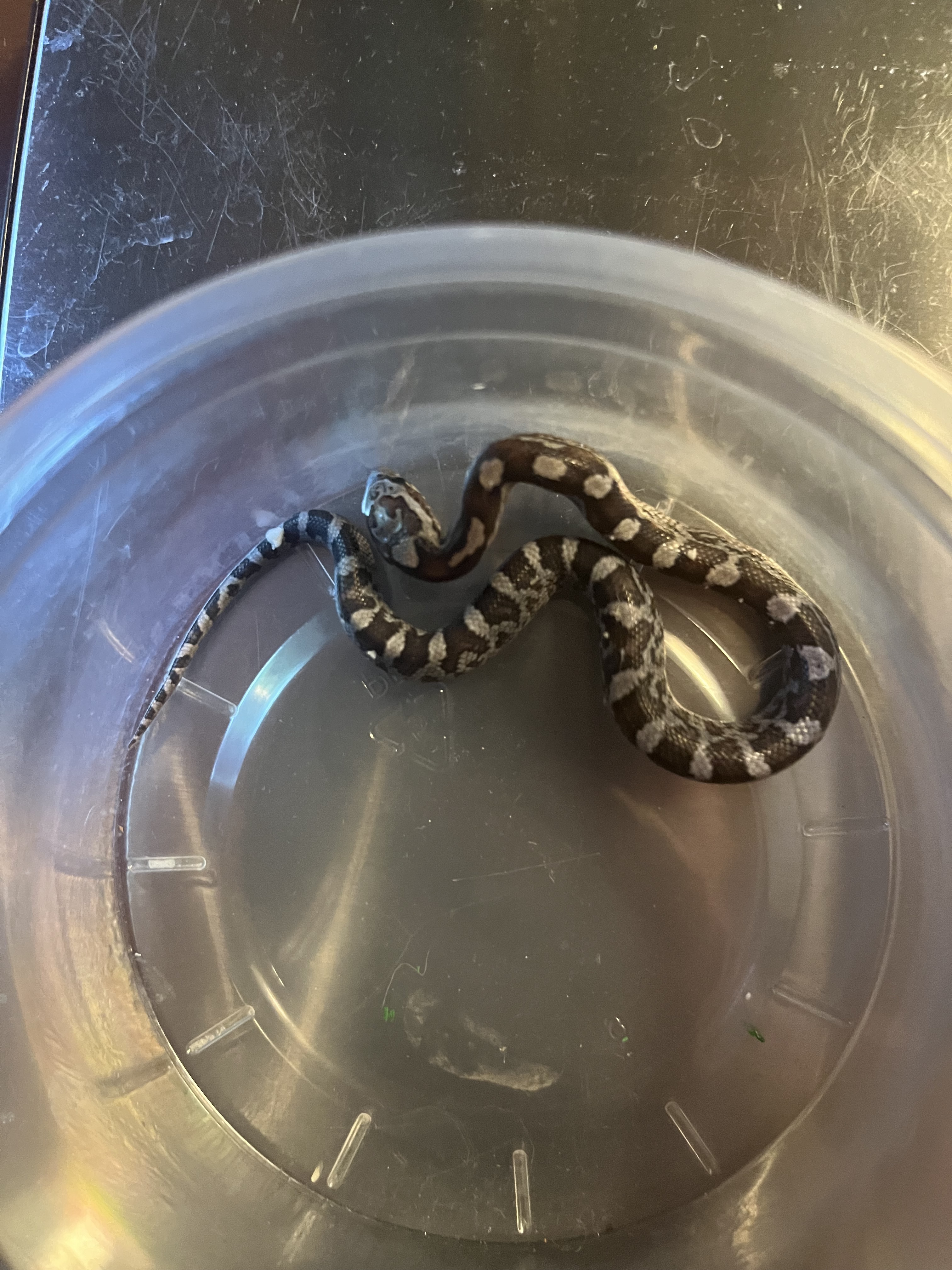
Edit: I am a HUGE fan of his two broken saddles, they almost remind me of ringers in ball pythons but a cornie equivalent
4 Likes
I wouldn’t say it’s obviously not a Bantam! That mutation is out there. A guy in Indonesia reached out to me with a suspected Bantam, and to me, it looks like he has one. And there are accounts of other people producing them. I was just the first to ID and prove the mutation. 
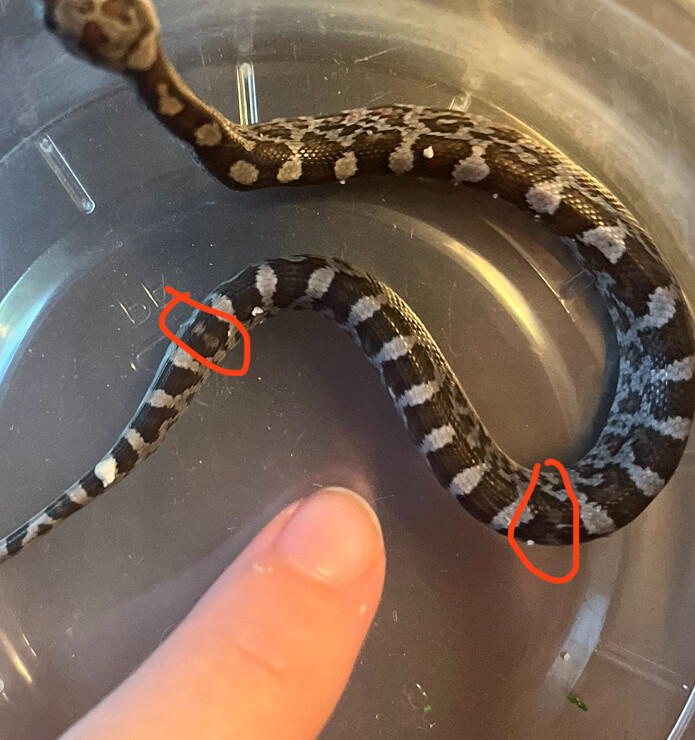
I’d like to see good belly pics, since the width of the belly and the narrowness of the belly scales are big identifiers for Bantam.
4 Likes
Here you go! Along with a small comparison pic, this little guy is DEFENSIVE, it’s still pretty early where I’m at hence the not so good lighting
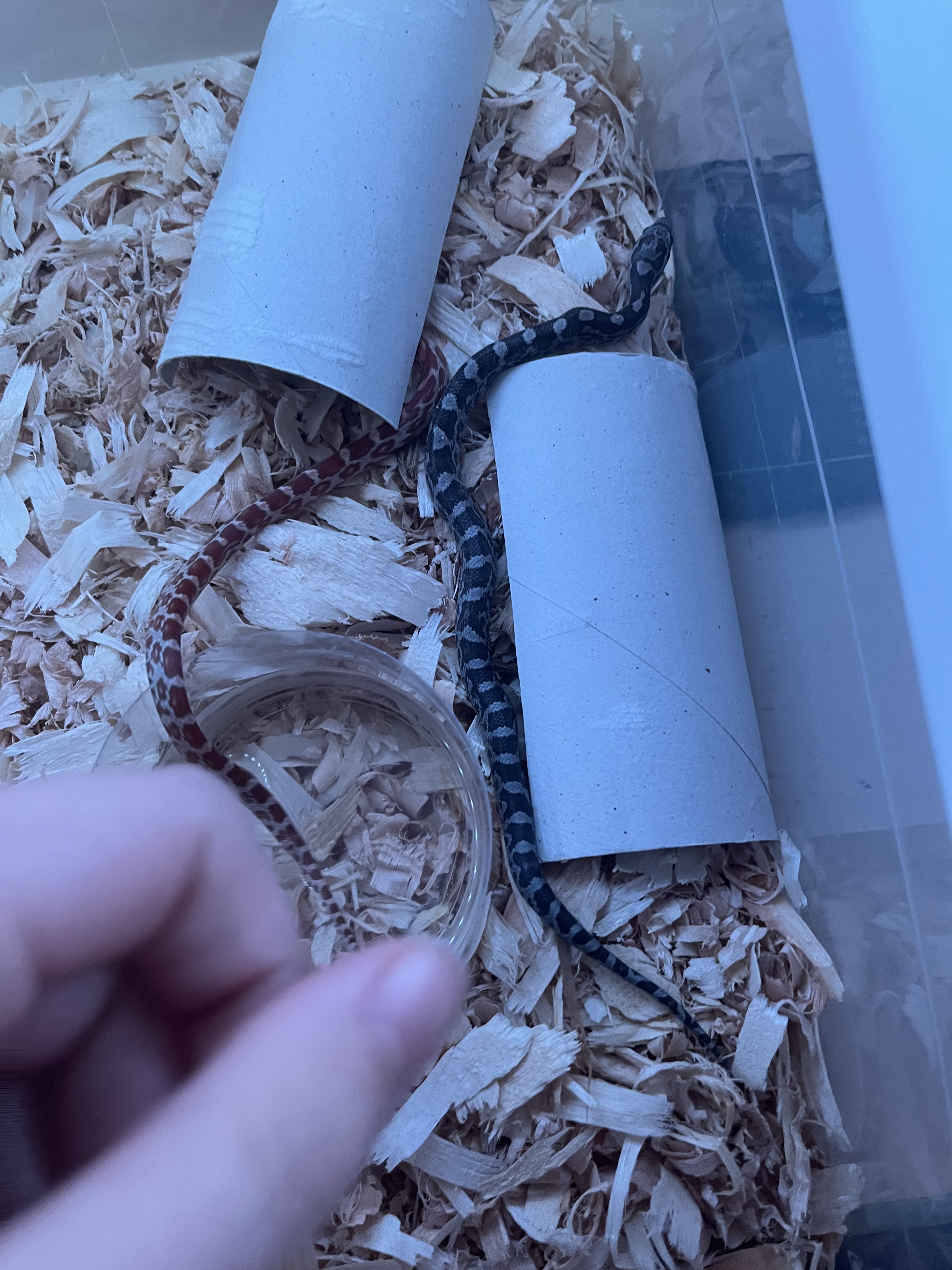
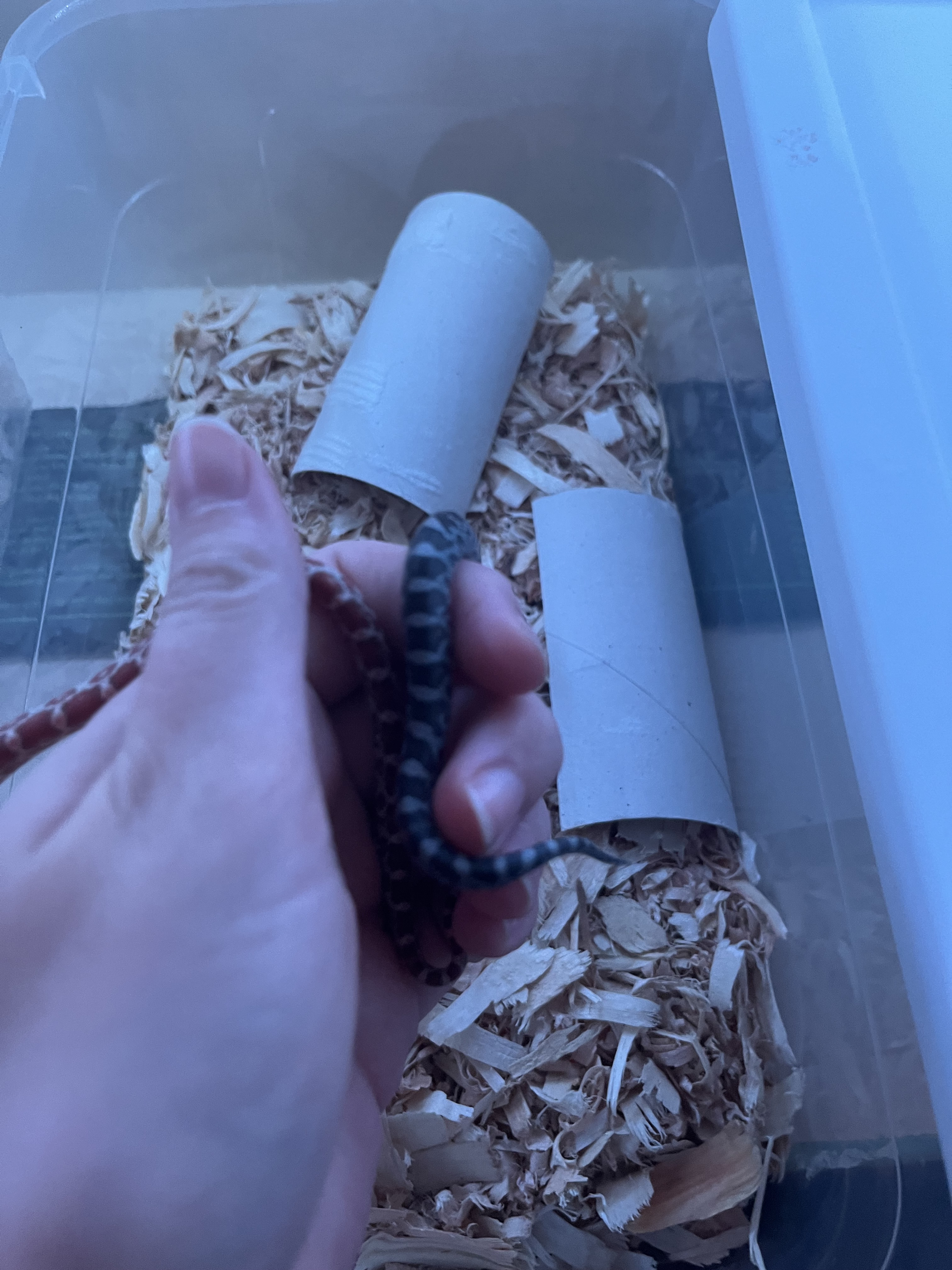
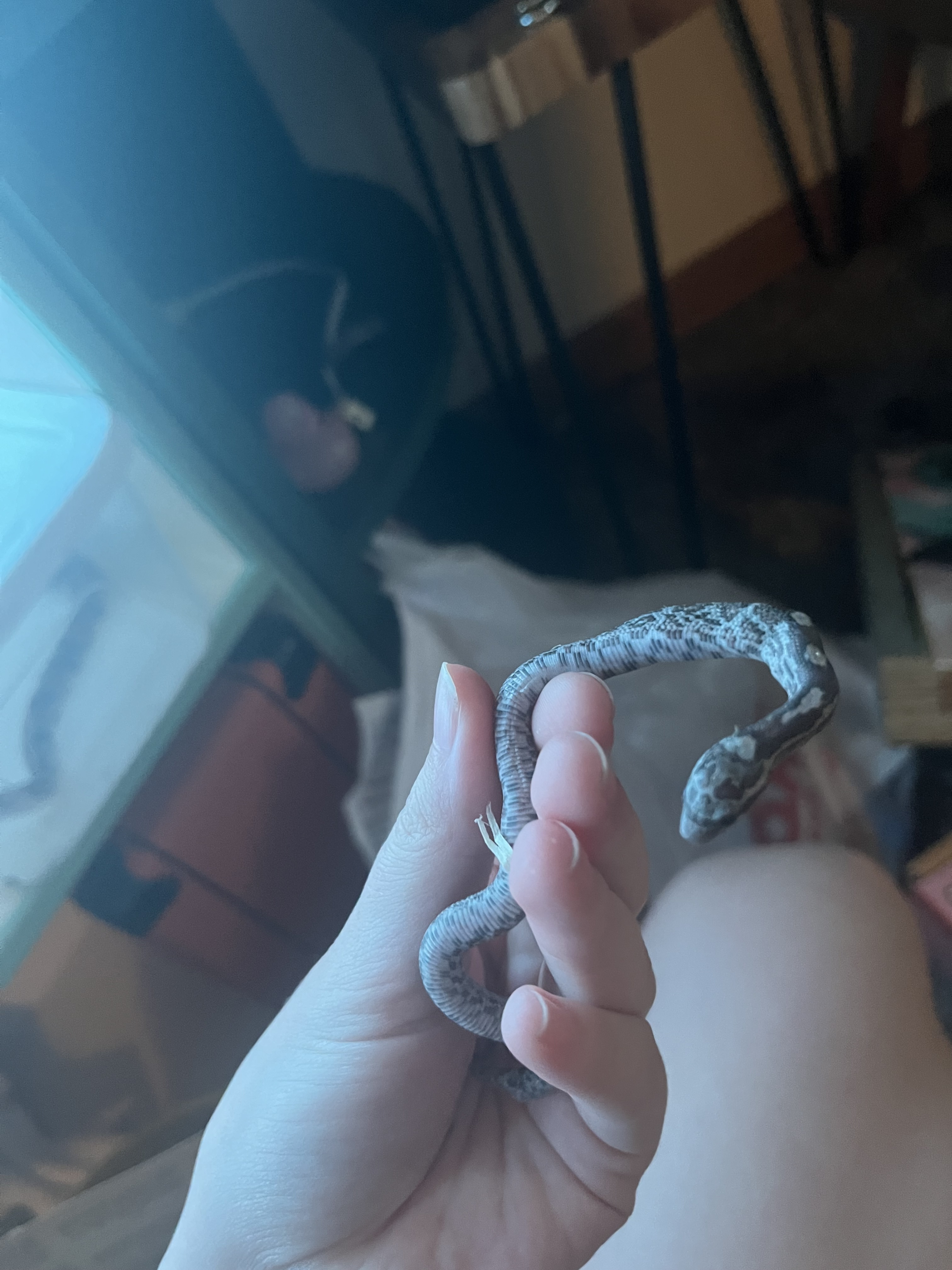
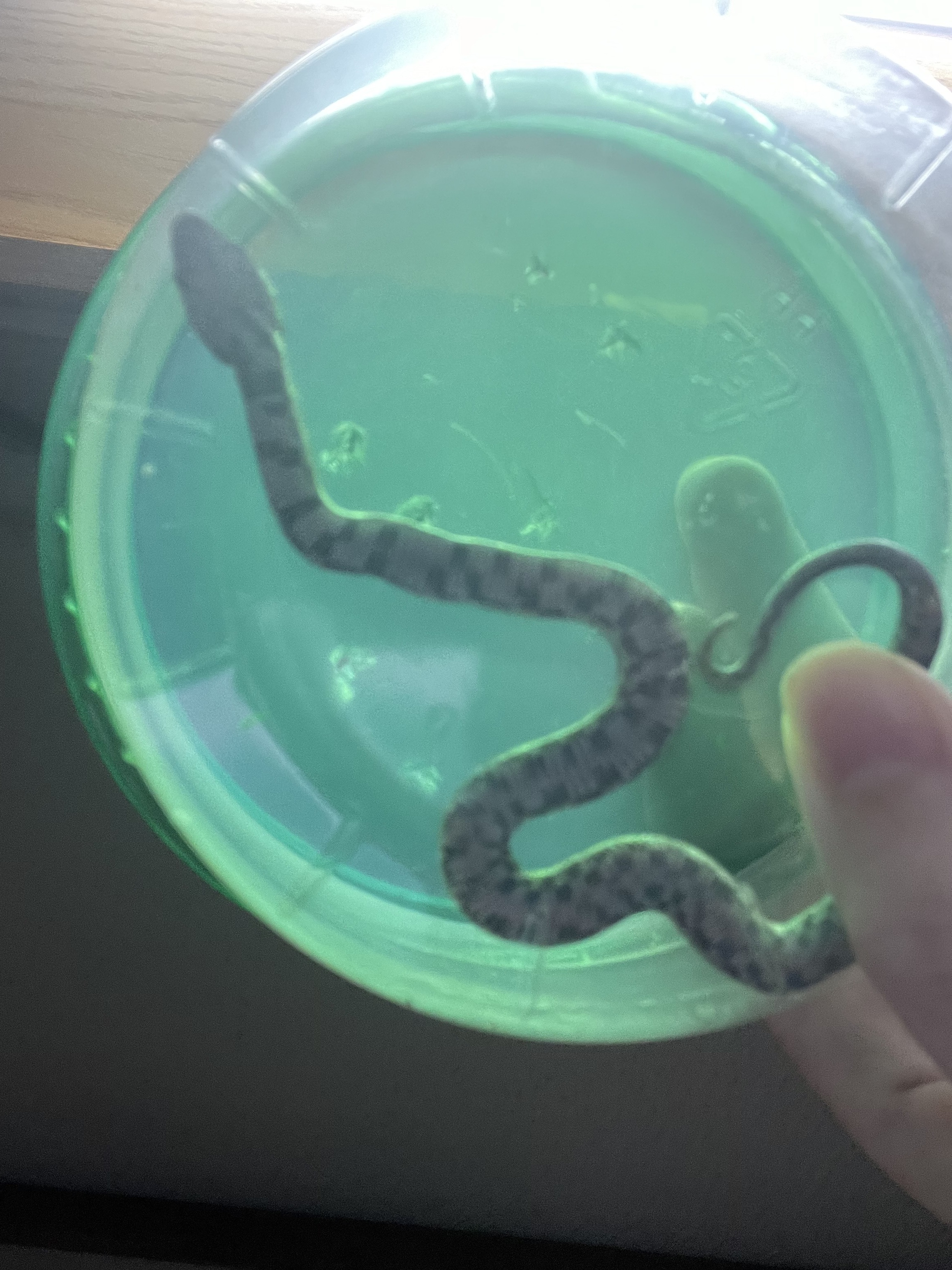
5 Likes
Congrats if Bantam! I am no good at ids personally but when I saw this one Bantam came to my mind! 
Edit to add: I suppose that’s only because poor Dean has tried to educate me on “morphology” but identifying a possible Bantam is the ONLY thing I can possibly do after months!!! 

5 Likes
He really does look it.
@solarserpents has evaluated many. We’ll see what she thinks.
And let’s evaluate again after shed.
5 Likes
He definitely is short and chunky, but he looks like he’s a little kinked in the neck area? I hatched a kinked girl last year whose deformities include being short and fat (meant in the nicest way possible!) So I’m thinking he has something else going on physically, not Bantam.
6 Likes
he does have a very small kink in the neck, but nowhere else does he seem to have issues, I’m waiting to see how well he eats for me, but I’m a good 98% certain he’ll do fine with as minor as the kink is, it’s in the lower neck area too, so hopefully he won’t have any problems with initially getting a pink down
6 Likes
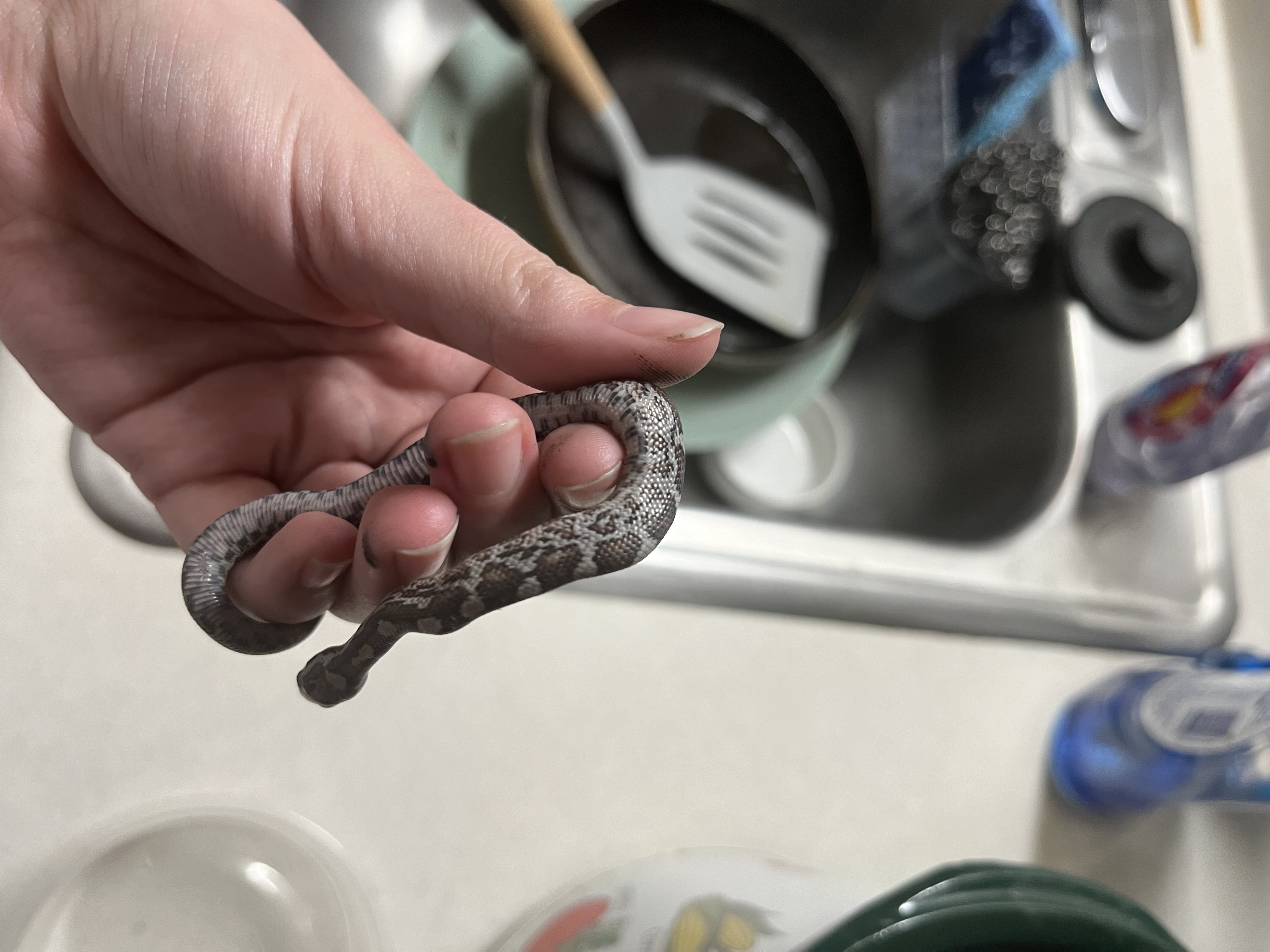
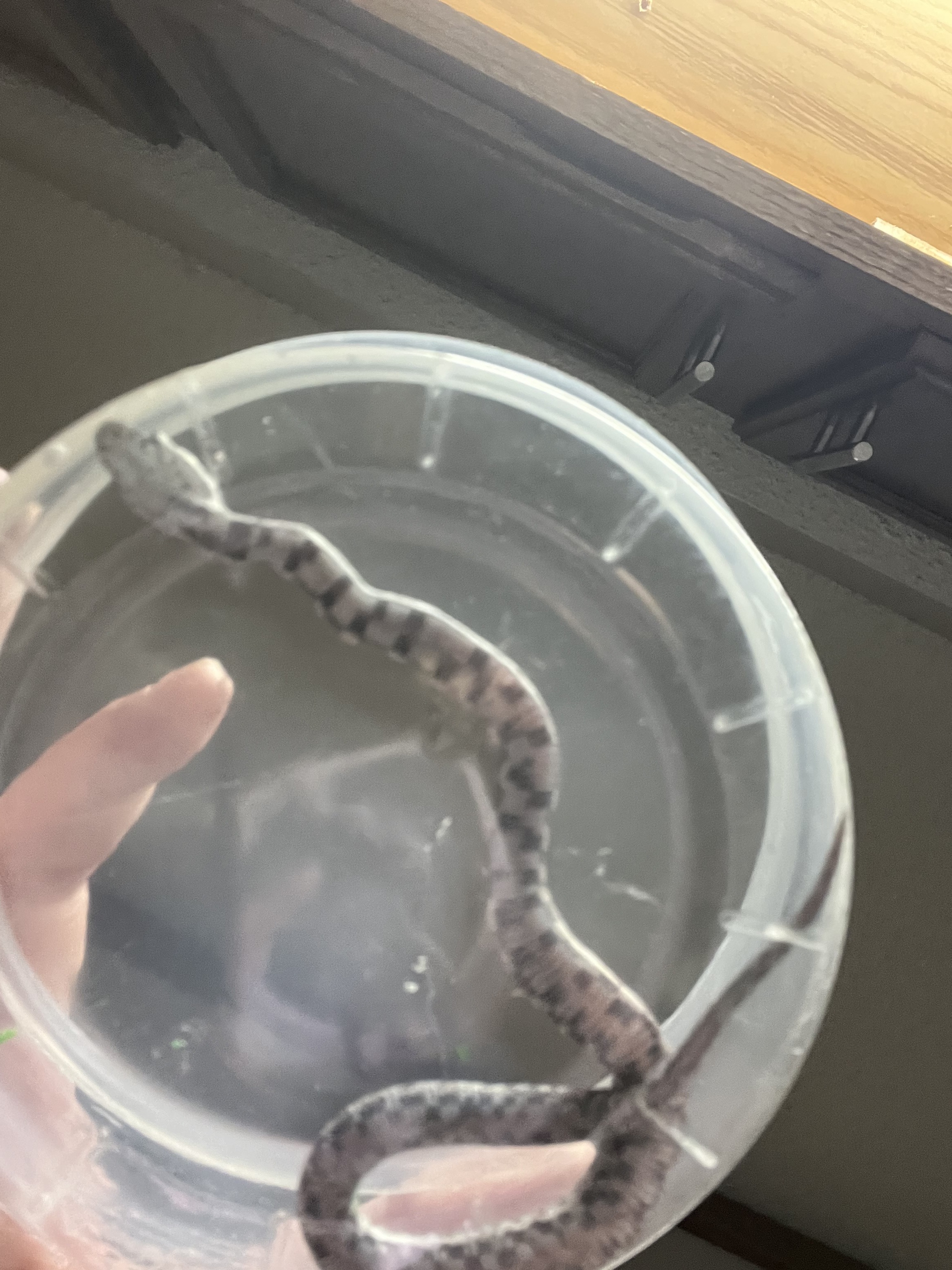
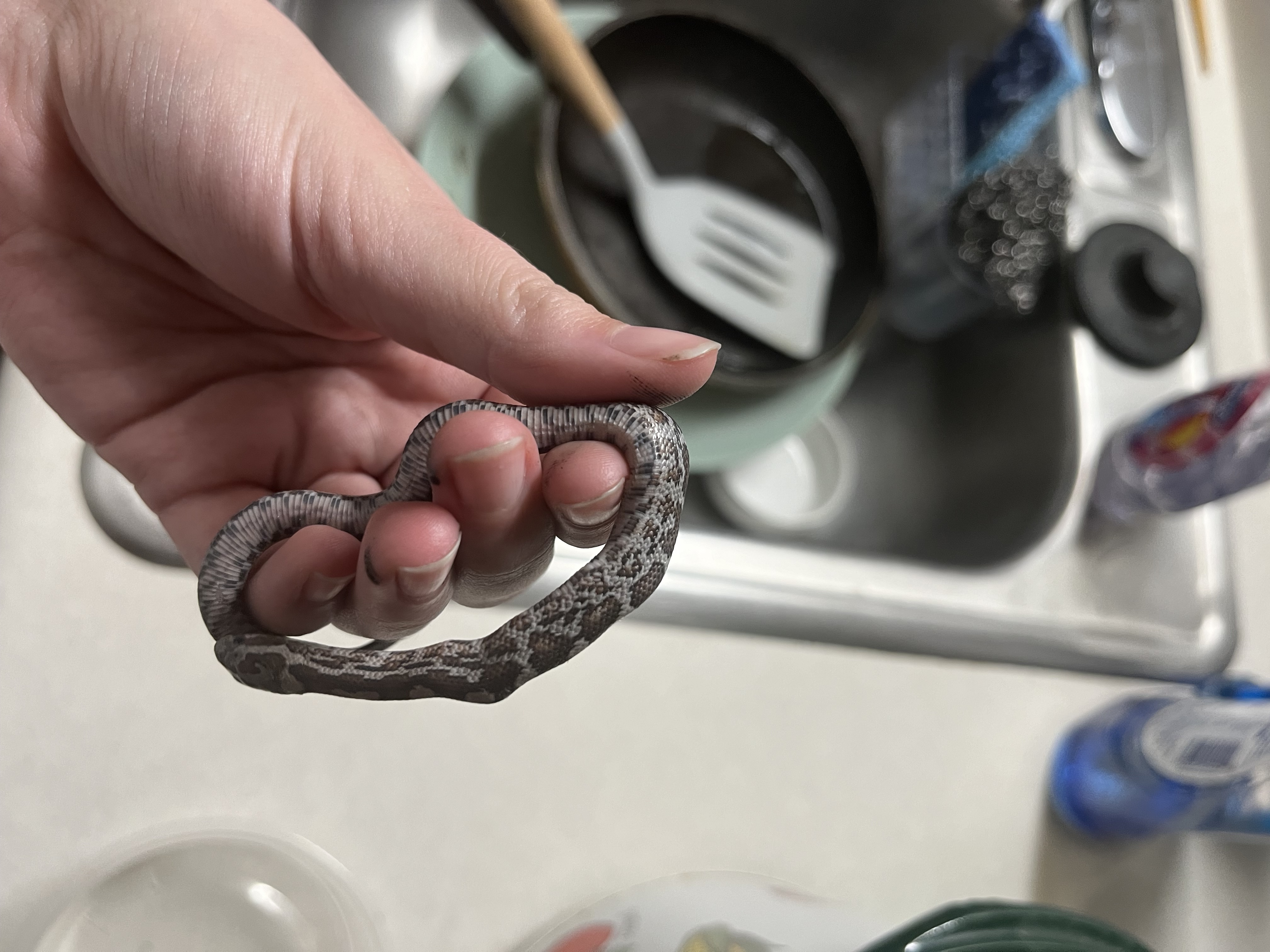
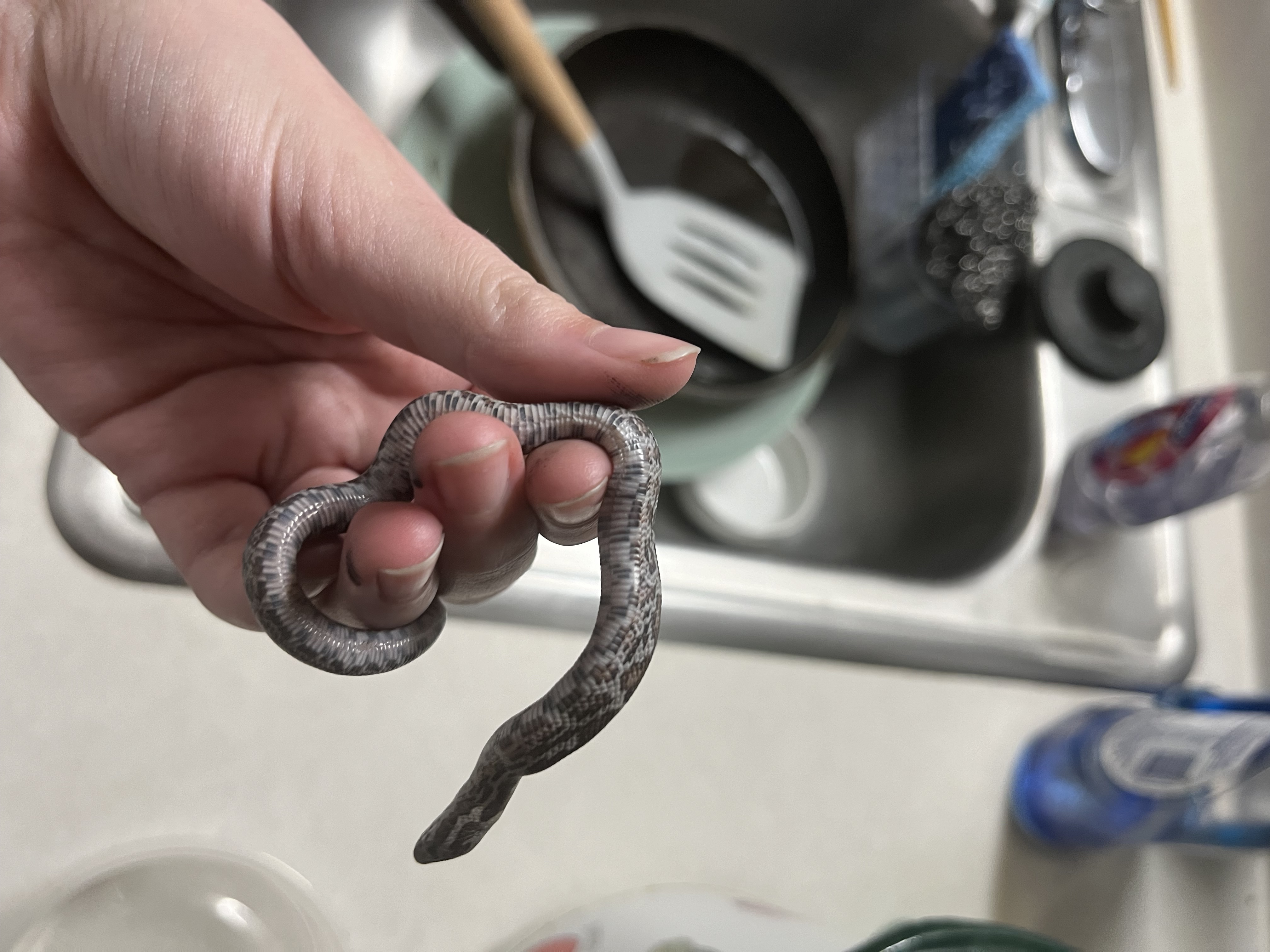
Here’s some slightly brighter belly pics, his belly scales are definitely wayyyy narrower than the average corn’s, which is a bit of a yay for bantam, still seeing the nay side with how he could just be deformed. Some other babies definitely were on the chunkier side out of the ones that didn’t survive, but none were as expressive as this little guy. I probably plan to do this pairing again this spring or summer if momma seems up for it
4 Likes
I try not to ID much before first shed. Out of egg, that stuffed full of yolk look can throw things off.
3 Likes
I would be hesitant to repeat a pairing with that high of a mortality rate and deformities. It sucks when it looks like a great pairing with what could have been… But I’ve been there.
I breed ball pythons, so my rates are a bit different. I have a 2 strike policy with my breeders. Usual clutch is around 6-7. So small sample size without double clutches.
One mom tossed a congenital issue in her first clutch. And then 2 more in her second. No issues from the incubator.
1st was an enlarged heart.
2nd was a kink in genes not known for it. The other was a full term DIE. Looked like some internal issue and hard belly.
She’s now retired from breeding because I don’t want to try a 3rd male with her just to repeat another problem.
If this were my pairing I wouldn’t repeat with this male and try a different one instead. Sometimes it’s just a specific pair.
Maybe it’s different with corns… But if the incubator was stable and the adults both were in good health that would make me worry regardless
3 Likes
So this is possibly why Flip passed. If you were giving 1ml and not something like .1ml, that is a significant amount, essentially a quarter of the snake’s mass per feeding. Critical care is meant to be given at 2.5-5% of the snake’s total weight, and fed daily, not bolused. I’d also worry that a pipette is not soft nor flexible enough to prevent injury to the esophagus depending on how they’re used. Snakes lack a lower esophageal sphincter, so they can’t really prevent liquids from refluxing. This is why if you pick up a snake after they’ve had a big drink of water, that water can sometimes just come straight back up.
5 Likes
This could absolutely be it as I bet you have way more experience than I do. I was going off of what some old video guides said as far as how much to give a baby snake since I can’t really find much info out there as for how much to give, if it should be like a regular snake meal or less and more frequent of meals. I started him off on 0.5 ml and probably should’ve stayed there. I really appreciate the input since I definitely don’t want to be the cause in the future. This is my first time liquid feeding as I find baby balls a lot easier to trick into eating (ironically with as finicky as they’re known to be)
5 Likes
The reason why there’s not a lot of info out there on liquid feeding is because it’s generally considered a last resort option. It’s very tricky to do properly, especially in very small hatchlings, even if you have the experience. Oxbow, who make critical care, suggest only doing so under veterinary instruction. Corn snakes aren’t meant to take liquid meals, it increases the risk of aspiration and as I previously mentioned, they don’t have a lower esophageal sphincter so you have to do smaller amounts more frequently to avoid reflux. This is why the suggested order of options for non-feeders is going through drop feeding, tease feeding, scenting, assist feeding, and eventually force feeding an appropriately sized meal (either a pinky or pieces of one). Equipment also matters. You need either a feeding needle or a feeding tube to make sure the food is getting far enough down and not just flooding the mouth (aspiration risk if it gets into the glottis), and they’re made to be very smooth as to not damage the esophagus. Even feeding needles can cause damage if used improperly as they are rigid. It’s also entirely possible Flip wouldn’t have made it either way. Considering the mortality rate of the clutch there could have been an underlying issue that was the reason he wasn’t wanting to feed willingly and was so small.
4 Likes
In case you wonder if anyone listens, you scared this old timer away from syringing with this comment! I bought some Reptilinks, and I’m forcing those instead. More labor intensive, but safer, and probably better nutrition. Thanks Jess @noodlehaus .
2 Likes
I’m not saying it’s never something to do ever, but at least in smaller species like corns, it’s best left as an absolute last resort if they won’t otherwise make it due to how fussy a process it is. As you said, it’s a bit more labor intensive to force feed something like a link or a whole prey item, but it’s safer and more complete nutrition that doesn’t require as intense a schedule. That said, I can point you to some properly sized feeding tubes if you ever need it as an option, however they are not marked for snake use.
3 Likes
You just have to be careful which passage to thread the tiny tube. You don’t want to drown the baby’s lungs etc.
My vet showed me long ago but I have never had the need to do it since……
Edit to add so I am not encouraging a possible deadly act:
NEVER ATTEMPT TUBE FEEDING ON ANY SNAKE, MUCH LESS A TINY CORN. THIS IS AN EXPERIENCED REPTILE VET AREA OF EXPERTISE…….
3 Likes
There’s a reason why I’m not actively posting any specific details or instructions in this thread. Using a properly sized tube for the size of the snake can ensure that it’s physically too large to possibly be threaded into the glottis by mistake. Knowing anatomy is also very important to avoid such fatal errors and why it’s really only recommended tube feeding be done under veterinary instruction or as a last resort.
3 Likes
Agreed! If I ever needed it my vet would be doing it. I am only saying she showed me how, and how easy it is to “mis thread the tiny little tube. I am in NO WAY advocating for ANYONE to “try this at home”……
3 Likes