Update on the feeding results: The larger babies finished all their food, there was maybe one tiny piece of organ meat left. The smaller ones did not finish and left the equivalent of 1/2-3/4 of a large pinky. The larger siblings were very bold, started feeding immediately, and were fighting over bits of food. The smaller siblings took a good 10-15 minutes to even start taking bites and were much more shy. Everyone now has visibly full bellies and I suspect the littles will start catching up now that they don’t have as much competition.
8 Likes
Do you notice any trend with the sizes vs het or visual albino? I.e. the albinos seem smaller than the hets?
6 Likes
Indeed I do! The groups are split, 6 larger, 5 smaller. Of the larger siblings, the majority were wild types, with only two albinos making the cut. The smaller siblings are majority albino, with only one wild type joining them.
6 Likes
That’s so interesting! I’ve always wondered if gene expression has a hand in baby sizes, of course this one litter doesn’t prove anything but it’d be interesting to keep track with subsequent litters and see if the overall trend is that visual albinos hatch out smaller than non-visuals!
7 Likes
I feel like a lot of the size difference in this case is the competition. There could also be some sex relationship to it as well, but they’re so small sexing isn’t reliable yet. But I do feel like some aspects of that could be because of the morph traits.
Basically, albino may cause photophobia or light sensitivity to affect them. Not being able to see as well in bright spaces, they’re less likely to jump in to feed and get bullied.
The ones that are more active and eating will grow more and continue to bully smaller competitors away from food. Causing stress to further keep the others a bit more stunted in comparison.
It’s the same as you’ll see with litters of puppies or kittens. I see it all the time with mice and rats as well.
Edit: I know Jess tends to track her data VERY well, so she could potentially have that albino weight vs wt weight available already. Hahah
7 Likes
Thanks for the input on your observations/thoughts! That’s all incredibly reasonable as well and makes sense. I do think if each was weighed off the bat before first feeding it’d give us an idea if it’s the morph expression vs external factors like what you described, but also understand most people will likely wanna get them all eating good before messing with them too much!
5 Likes
Oh how well you know me! Lol. Definitely have it all at the ready.
Well you’re in luck, because I weighed everyone after birth as it’s one of the metrics I really do like to have. Getting a post-hatch/birth weight before feeding gives me a better idea of growth overall.
Doing a bit of quick maths with their birth weights (garters are ovoviviparous, so they hatch internally and are born ready to go), and keeping in mind there was one more albino than wild type, the average birth weight was 1.7g for the wild types and 1.61g for the albinos, so no significant difference there. If I drop the weight of the smallest albino and recalculate the average goes up to 1.64g, meaning there’s only a .06-.09g difference between the morphs at birth.
It very much does seem to be competition based, but Christina is right in that the albinos are more sensitive to light and thus may not be as comfortable venturing out when I feed during daylight hours or with the main room lights on. It may be worth feeding in the evening with the lights dimmed to see if that changes anything. That said, there are two larger albinos that have no problems with being out and about and are often the first ones to the food dish. I’m not well versed at sexing garters, and they’re currently so small I don’t even dare attempt it, so that variable will remain unaccounted for, at least for the time being.
6 Likes
So cool! Thank you for the input, even the minor difference in weight is interesting to me. It may not seem like much, but at that size I think even a 0.6-0.9g difference in the trending size is something to take note of, considering how small they are off the bat! Would be interested in seeing future data if they just follow that trend in general!
After that fact it definitely is competition based, and the albinos are at a disadvantage with possible light sensitivity. What does this information do long-term? Nothing crazy, I’m sure, but overall I just find it fascinating!
5 Likes
I don’t really have enough data based on a single litter to really determine whether or not the birth weight discrepancy is significant just yet. I’ll be logging their progress as they age, so with time (and more breedings of the parents) comes more data. Their dam was still rather young/small, so that could be part of it.
This being my first year breeding this species, I’m starting with a blank slate and building my knowledge base. It will be very interesting to see how they progress now that they’ve been split into two groups, whether or not the smaller siblings start catching up and closing the gap, or if it will remain.
5 Likes
Oh definitely! It’ll take a good several litters to really dictate a trend, plus this being specific to this pairing rather than a general consensus amongst the species overall. I appreciate the desire to track these things, obviously, and not that it makes any significant difference overall but it’s still cool to know!
5 Likes
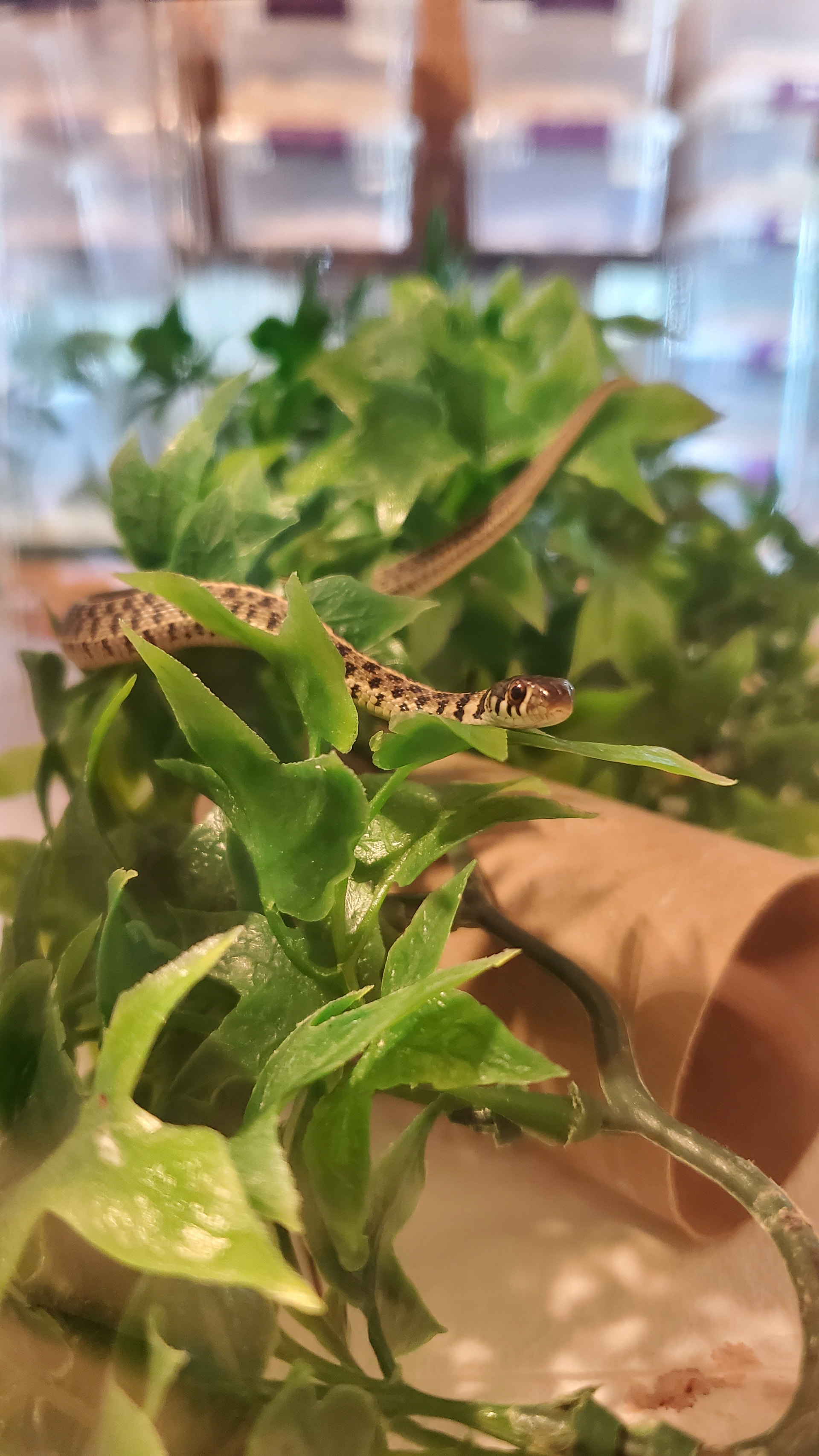
I am a huge fan of data collection and analysis so there will for sure be more reports on my findings to come! For now, here’s a picture of one of the chunky WTs just hanging out:
9 Likes
Your data collection capacity is so admirable, Jess. I’m loving following this thread…
4 Likes
Got updated weights on everyone before feeding today. The largest is now 3.6g, and a couple from the big kids bin are going into blue for their first “official” sheds! I say official because they all shed just after birth. Can’t wait to see how their colors develop as they get older. I also figured out who is in which bin, and I will likely be working to update their ID photos as the ones I initially took are not the greatest. It’s so cool to see their personalities developing and how they’re reacting to repeated handling. There are definitely a few much more chill with the giant plucking them out of their homes than others.
7 Likes
So cool to read about anecdotes on the variation in personality/behavior on the clutch - litter? -mates! Garters really seem to be incredibly interesting snakes, and the more I read this thread the more I think I need a communal setup! 
Awesome that they all seem to be thriving for you, and I look forward to seeing the updated baby pics!
7 Likes
It really is intriguing to consider variables in how the different morphs grow and develop. It’s also really interesting (to me, at least) to observe the individual personalities. Plus they are all just too absurdly adorable!
5 Likes
I know right?! In the case of garters I almost think it would be cruel to keep just one by itself, since we all know firsthand thanks to @noodlehaus that they thrive communally. A lone garter seems like a neglected garter!  . However they do seem to remain quite expensive!!! But I think it would be incredibly convenient to own a colony, as @emfraise suggested that he was thinking about…..!!!
5 Likes
So…Updates are going to be somewhat sparse for the next few weeks. I had a nightmare scenario happen today and my bedroom has been contaminated by fiberglass. Running a HEPA filter full blast right now, and tomorrow we will be moving and decontaminating all the snakes and their enclosures. I am devastated and feeling incredibly defeated. This whole issue was caused by replacing the cover on my Sleep Number bed, of which there was ZERO warning or indication there was fiberglass within.
8 Likes
Oh no, Jess! How awful! I’m so sorry. I hope that deal with this doesn’t cause you health issues and that your animals are unaffected. Do what you need to do. We’ll be here. Hugs and prayers.
5 Likes
Good luck with that! Hopefully very little became airborne.
5 Likes
Holy cow! What an incredibly horrible situation! I sincerely hope everything turns out for the best! 
5 Likes